HomeCultureCumberbatch's Climate Documentary Assembles Global Voices to Tackle Planetary Strain

Cumberbatch’s Climate Documentary Assembles Global Voices to Tackle Planetary Strain

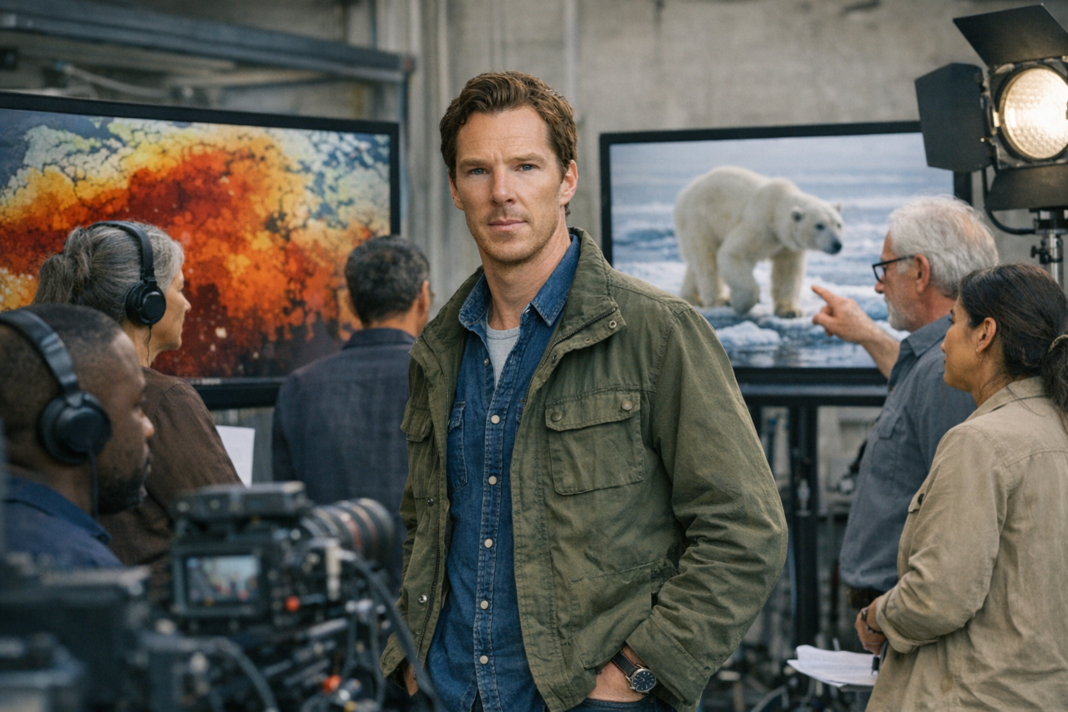
Benedict Cumberbatch is dreading the simple act of stepping outside as he promotes his new documentary, How to Live on Earth. Speaking from an air-conditioned hotel room in Soho amid a summer of exceptional heat, the actor frames the film as a response to mounting environmental pressures. The production brings together contributors with varied backgrounds to examine practical ways societies might reduce harm and restore damaged ecosystems.

The film’s contributors include researchers and practitioners drawn from disparate regions, including Alaska and the Amazon, and a range of specialists from culinary figures tied to high-profile households to activists focused on large carnivores. Its scope moves from issues such as illicit ivory and the trade in elephant tusks to questions about hunting, food systems and the choices that affect biodiversity and rural livelihoods.

Producers place the documentary in the context of recent extreme weather and its human toll. Officials have linked record temperatures to stresses on agriculture, water supplies and public health; a report from the Met Office estimated around 2,700 excess deaths in England and Wales during May and June heatwaves. Cumberbatch describes the timing as stark: the scenes depicted in the film, he says, are unfolding in real time for many communities.

The project also confronts skepticism about climate science and policy, presenting voices that counter denial with on-the-ground observations and proposed interventions rather than polemic. On tour to introduce the film, the team highlights case studies and expert testimony intended to inform public discussion and policy makers. By collating regional examples and practical proposals, the documentary seeks to map a range of responses aimed at reducing extraction pressures and aiding ecosystem recovery without offering prescriptive solutions beyond those evidenced by contributors.


Advertisementspot_imgspot_img

Hot this week

New Analysis Shrinks the Field on Venus’s UV-Dark Cloud Mystery

Scientists quantified the absorption needed to produce Venus's dark ultraviolet cloud patterns, narrowing the list of candidate materials for future probes.

Five dead and 86 missing after ferry fire near Coron, Palawan

A ferry bound for Coron in Palawan caught fire; five people have died and 86 are missing as search and rescue continue.

How a Warming Planet Is Rewiring Infection Risk and Drug Resistance

Rising temperatures and extreme weather are expanding vector ranges, increasing outbreaks and driving antibiotic resistance, experts warn.

Vaccine scheme running costs exceed £83m, more than double payouts

Administration and medical checks for the vaccine damage scheme have topped £83m, more than twice the amount paid to victims.

Doctors Back HBO Max’s The Pitt as the Most Realistic ER Drama as It Lands 25 Emmy Nominations

HBO Max’s The Pitt received 25 Emmy nominations as medical professionals commend its realistic portrayal of emergency-room life.

22-Million-Year-Old Eruption Reveals Early Andes as Gentle Foothills

A study of ignimbrite from the Lauca Caldera reconstructs a 22-million-year-old landscape and supports slow uplift of the Andes.

Trump dismisses AI safety concerns as a ‘hoax’ amid kill-switch debate

President Trump dismissed AI safety fears as a 'hoax' after Anthropic's co-founder suggested a mandatory 'kill switch' on the BBC.

Beijing Pushes Back Against Claims of ‘Malicious’ AI Rivalry

China denies being in 'malicious competition' over AI after calls for a slowdown aimed at preventing Beijing from gaining an edge.

Why the AfD surge in eastern Germany forces a national reckoning

AfD's 44% win in Saxony-Anhalt highlights eastern grievances and raises questions for national politics and mainstream parties.

Sinfield’s final seven-ultra run aims to unite Rugby League

Sir Kevin Sinfield starts his seventh and final series of seven consecutive ultra-marathons to raise funds and unite the Rugby League community for MND.

Ancient plague devastated Siberian hunter-gatherer families 5,500 years ago, DNA shows

Ancient DNA indicates plague struck hunter-gatherer families in Siberia 5,500 years ago, revealing early, highly inflammatory strains before flea-driven pandemics.

Which Workers Should Not Be Replaced by Machines: A Practical Guide for Policy and Business

Exploring which roles resist automation and what policies can protect work quality while guiding technological adoption.

Autumn Skywatching 2026 — What to See This Season from Planets to Nebulae

Key fall 2026 sky events: planetary oppositions, major meteor showers and deep-sky targets with practical observing guidance.
Advertisementspot_img

Related Articles
