
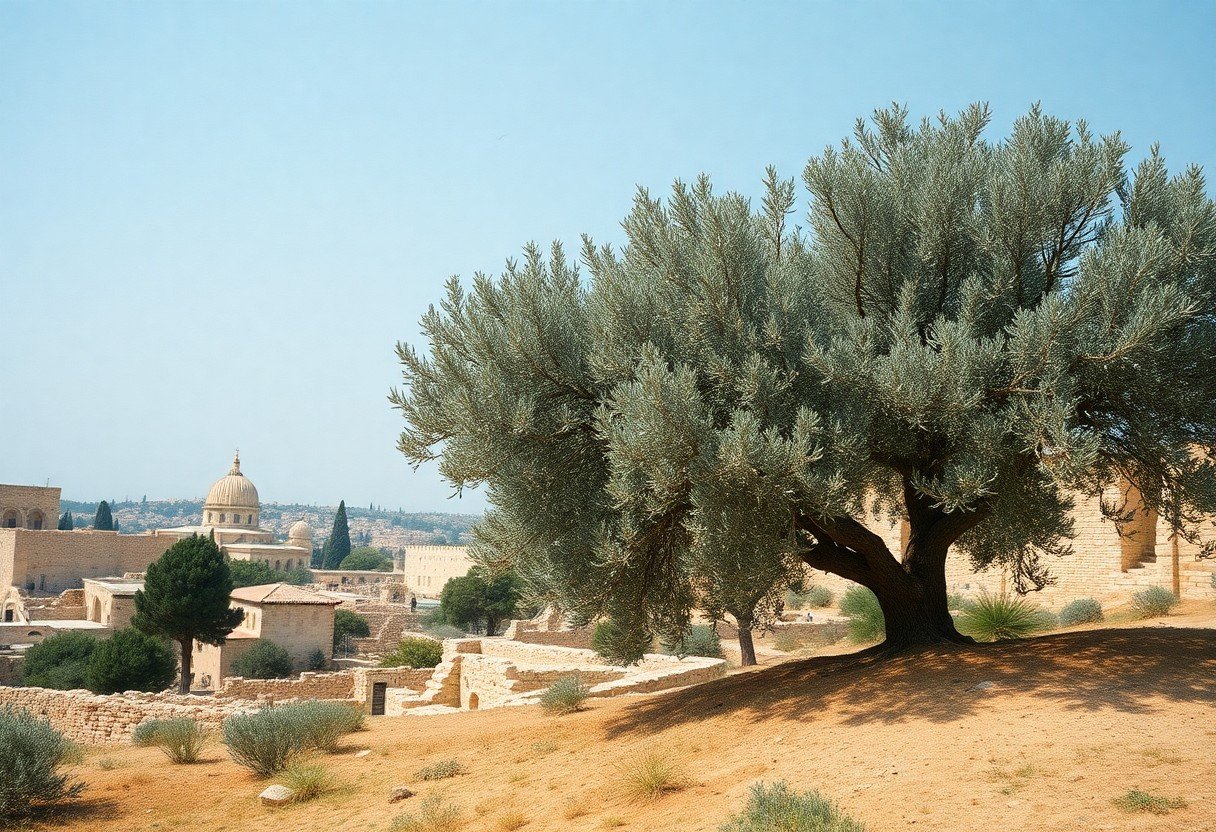

Just as you research into the rich tapestry of history, understanding Israel’s historical significance becomes vital. This blog post guides you through 10 crucial steps that will illuminate your understanding of this multifaceted nation. From its ancient roots to contemporary challenges, you will explore the positive influences weaving together its past and present. The narrative of Israel is not merely a story of conflict; it encompasses remarkable resilience and cultural heritage that still resonate globally today.
The Ancient Foundations of Israel
Your journey into Israel’s historical significance begins with its ancient foundations, which are deeply rooted in the early civilisations that inhabited the region of Canaan. The land, often referred to as the “Promised Land,” was home to a myriad of cultures, ranging from the Canaanites, who developed city-states, to the Egyptians and later the Israelites. Ancient scribes documented the interactions between these groups, which forged a rich tapestry of cultural and religious significance. These civilisations laid the groundwork for the social, political, and economic frameworks that would follow, shaping Israel’s identity through millennia.
Early Civilizations in Canaan
Ancient peoples established their settlements in Canaan as early as 3000 BCE. Here, you will discover that the Canaanites were skilled in agriculture, trade, and craftsmanship, forming a vibrant society. Their advancements in pottery, writing, and city planning would later profoundly influence neighbouring cultures, including the ancient Israelites. The constantly shifting dynamics between various tribes and powers in Canaan created a complex environment, wherein alliances and conflicts were frequent, illustrating the region’s pivotal role in both the ancient Near East and biblical history.
The Rise of the Kingdoms
Israel emerged as a significant kingdom around the 11th century BCE, initially as various tribes united under a monarchy. You will find that this transition marked a transformative period, where the Israelites sought a unified identity amidst external threats and internal divisions. The establishment of the monarchy under kings such as Saul, David, and Solomon illustrated the strength of Israel’s governance and the significance of Jerusalem as a religious and political centre. The construction of the First Temple under Solomon, symbolising a profound spiritual focal point, solidified not only Israel’s status but also set the stage for future generations to grapple with enduring questions of faith and governance.
Further exploration into this era reveals that the division of the kingdom after Solomon’s reign into Israel in the north and Judah in the south significantly impacted the identity and fate of the Jewish people. The eventual conquests by empires such as the Assyrians and Babylonians put immense pressure on these kingdoms, leading to periods of exile and reflection. Your understanding of these developments will enhance your appreciation of the complexities inherent in Israel’s early history, highlighting the resilience and adaptability of its people despite the challenges they faced.
Religious Significance to Judaism
While you explore the profound ties between Judaism and Israel, you will find that religion is deeply interwoven into the very fabric of the nation’s history. For Jewish people, Israel is not merely a geographical location; it encapsulates their cultural, spiritual, and ancestral identity. To understand the depth of this connection, one must recognise that Israel is seen as the Promised Land, a concept that has reverberated through generations and influenced numerous Jewish prayers, rituals, and customs.
Key Historical Events
The significance of Israel in Judaism is dramatically highlighted by key historical events that shaped the Jewish narrative over millennia. You cannot overlook the impact of the Exodus from Egypt, where Moses led the Israelites to freedom; this event is a cornerstone of Jewish identity. Fast forward to the formation of the ancient Israelite kingdoms, particularly the reign of King David, which consolidated Jewish presence in the land and established Jerusalem as its capital. These historical milestones serve as reminders of the unwavering aspiration among Jewish people to return to their homeland, even during periods of exile.
Sacred Sites and Texts
Beside the historical events, the sacred sites in Israel play a monumental role in the religious landscape of Judaism. You may find that the Western Wall, a remnant of the Second Temple, stands as a central spiritual focal point where Jews from around the world gather to pray. Moreover, significant texts such as the Torah and the Talmud are interlinked with the land, as many biblical occurrences happen within these territories, further solidifying Israel’s religious importance in Jewish culture.
Consequently, these sacred sites and texts underscore your understanding of Judaism’s rich heritage, as they serve not only as spiritual landmarks but also as physical manifestations of faith and identity. The Western Wall, for instance, remains a poignant symbol of resilience and hope, inspiring countless Jewish people to connect with their heritage. Furthermore, as you explore deeper into the religious significance of Israel, you’ll recognise that sites like Hebron and Safed evoke powerful collective memories and shared experiences that are critical to the Jewish narrative. This profound connection enriches your perspective on the enduring significance of Israel in the Jewish faith and heritage.
The Birth of Modern Israel
Even though the establishment of modern Israel is a complex saga involving numerous cultural, religious, and political dimensions, it fundamentally traces back to the growing desire for a Jewish homeland in the late 19th century. This aspiration culminated in the Balfour Declaration of 1917, where the British government expressed its support for the establishment of a “national home for the Jewish people” in Palestine. This turning point laid the groundwork for the eventual creation of Israel and was propelled by waves of Jewish immigration, mainly driven by the persecution faced in Europe.
The Zionist Movement
Between the 1880s and 1940s, the Zionist Movement gained momentum, advocating for the re-establishment of a Jewish state. Pioneered by figures such as Theodor Herzl, the movement responded to widespread anti-Semitism and sought to promote Jewish cultural identity and community. You may find it compelling that the first Zionist Congress convened in 1897, establishing a platform for Jewish national aspirations, thus marking a pivotal moment in this historical journey.
The Creation of the State in 1948
Any discussion of the birth of modern Israel must address the momentous events of 1948, when the State of Israel was officially proclaimed on 14 May. In this context, the United Nations proposed a partition plan in 1947 to address conflicting Jewish and Arab claims to the land, leading to intensified hostilities. The declaration was met with immediate opposition from surrounding Arab states, resulting in the first Arab-Israeli war. You might be surprised to learn that despite being outnumbered, Israeli forces managed to secure key victories, which ultimately facilitated the establishment of Israel as a sovereign state.
For instance, the Israeli independence was not simply a moment of joy but also marked the beginning of significant challenges, including the displacement of a large number of Palestinian Arabs, often referred to as the Nakba, or ‘catastrophe’. The intricate historical consequences of this event have had long-lasting repercussions on the relationship between Israelis and Palestinians, shaping the ongoing conflict and the quest for peace in the region. You can see how this watershed moment in 1948 was not just about the establishment of a nation, but about navigating through a web of political complexities and deep-rooted sentiments that continue to resonate today.
Israel’s Historical Conflicts
Notably, Israel’s history is marked by a series of conflicts that have shaped not only its own national identity but also the geopolitical landscape of the Middle East. These conflicts often arise from a combination of territorial disputes, cultural tensions, and a struggle for resources. As you explore into Israel’s past, it becomes clear that each conflict has left an indelible mark on the region and its people, making it a focal point for international attention and concern.
Major Wars and Their Impacts
On examining the major wars that have taken place, such as the 1948 Arab-Israeli War and the Six-Day War in 1967, you will find that these events had profound impacts on both Israel and its neighbours. The outcomes dramatically altered borders and shifted demographics, leading to ongoing displacement and tensions that linger to this day. Each of these wars had not only military consequences but also significant political ramifications, influencing global perceptions of the region and its conflicts.
The Palestinian Perspective
Conflicts from the Palestinian perspective often revolve around a sense of dispossession and injustice, as they view their struggles for statehood and recognition as fundamentally tied to the historical wars that led to their displacement. You may find that understanding this viewpoint is imperative for grasping the complexities of the ongoing tensions. The Palestinian narrative highlights the human cost of these conflicts, including the loss of homes, lives, and cultural identity, which continue to resonate in their aspirations for freedom and self-determination.
Their experiences are often framed through the lens of resilience amidst adversity, and their ongoing quest for recognition and justice is a central theme in discussions surrounding the Israeli-Palestinian conflict. Acknowledging the narratives, grievances, and aspirations of the Palestinian people adds another layer of understanding to the multifaceted history of the region, enriching your insight into the significance of these historical conflicts.
Israel’s Cultural Identity
All of Israel’s cultural identity is shaped by its rich tapestry of influences and narratives that reflect both its ancient history and modern realities. This unique blend of traditions, languages, and customs contributes to a dynamic society that is as multifaceted as it is vibrant. In understanding Israel’s cultural identity, you are invited to explore how various elements—from music and dance to cuisine and festivals—intertwine to form a cohesive national character, while also celebrating ongoing diversity. Such a cultural mosaic highlights the importance of both individual expression and collective belonging, leading to a national identity that embraces differences.
Diversity and Cohesion
Between the myriad ethnicities and religious communities in Israel, you will find a profound sense of diversity. The country is home to Jewish populations from various diasporas, as well as Arab citizens and other minorities, each possessing their own cultural heritage. This fusion of backgrounds fosters a vibrant environment where you can witness an array of festivals, culinary delights, and artistic expressions that collectively contribute to the greater Israeli identity. At the same time, despite the differences, there is a remarkable sense of cohesion that emerges from shared experiences and historical narratives, drawing people together in a national consciousness.
Contributions to Global Culture
By engaging with Israel’s contributions to global culture, you will come to appreciate how this small nation has made a significant impact in various fields. Israel is renowned for its innovations in technology, agriculture, and medicine, which have reshaped industries worldwide. Furthermore, the country boasts a flourishing arts scene, producing noteworthy contributions in literature, music, and theatre that resonate far beyond its borders. You can explore the works of Israeli authors, the popularity of its films, and the eclectic sounds of its music, all of which serve to enrich global cultural landscapes.
Another aspect of Israel’s cultural contribution lies in its philosophical and religious thought. As the birthplace of major world religions such as Judaism, Christianity, and Islam, the ideologies and spiritual concepts that originated here continue to influence millions around the globe. The philosophical dialogues and debates initiated within Israel reflect a broader quest for meaning that resonates with your own search for cultural understanding, adding to the depth of global conversations about morality, existence, and identity.
Israel’s Role in Global Politics
Now, as you examine into Israel’s role within global politics, you will find that its geopolitical significance extends far beyond its borders. This small nation, often perceived through the lens of conflict, serves as a significant player in international relations, especially in the context of the Middle East. You may be surprised to discover how Israel navigates complex relationships with both regional partners and global powers, utilising its unique position to influence discussions on security, economic cooperation, and diplomacy.
Diplomatic Relations
Israel’s diplomatic relationships are a testament to its intricate balancing act in fostering alliances while managing dissent. You might find it noteworthy that Israel has established diplomatic ties with a variety of nations across the globe, seeking partners to bolster not only its security but also its economic prospects. The signing of peace treaties with Egypt and Jordan in the late 20th century marked significant milestones, demonstrating Israel’s willingness to engage in dialogue with its neighbours, despite historical tensions.
Strategic Alliances
Above all, Israel’s strategic alliances play an vital role in enhancing its standing in the international arena. Your understanding of Israel’s relationships with other nations, particularly the United States, will reveal how these partnerships are underpinned by mutual interests in defence and technology. You may find it remarkable that Israel’s military advancements, often shared with allies, have created a network of collaboration that reinforces security against common threats.
In fact, these alliances extend to various nations, including those in Europe and Asia, enhancing political dialogue and fostering economic ties. The security cooperation with the United States stands as a primary example, with both countries benefiting from shared intelligence and military support. You should be aware that these strategic alliances are vital for Israel’s defence posture, allowing it to navigate the complexities of international relations while forging notable partnerships that contribute positively to its broader geopolitical strategy.
Summing up
Taking this into account, understanding Israel’s historical significance through the ten steps outlined can provide you with a comprehensive perspective on its multifaceted past and present. Each step offers a unique lens through which you can analyse the socio-political, cultural, and religious dimensions that have shaped the land and its peoples. By engaging with the complexities of Israel’s history, you are afforded the opportunity to appreciate the intricate narratives that interweave to form the identity of a nation that holds immense significance in both regional and global contexts.
Your exploration of these themes may reveal insights that challenge preconceived notions and encourage a deeper understanding of contemporary issues surrounding Israel. By equipping yourself with this knowledge, you empower your ability to engage in informed discussions, fostering a more nuanced dialogue on a subject that resonates deeply in today’s world. Ultimately, your journey through these ten steps is more than an academic pursuit; it is a means to grasp the enduring legacy of Israel and its impact on the broader tapestry of history.