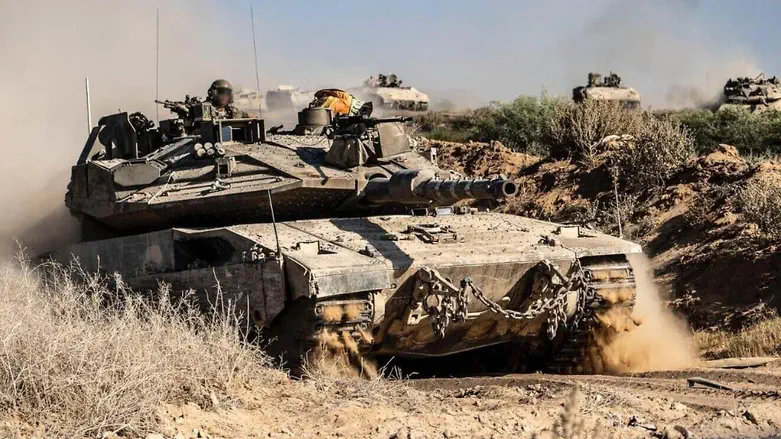
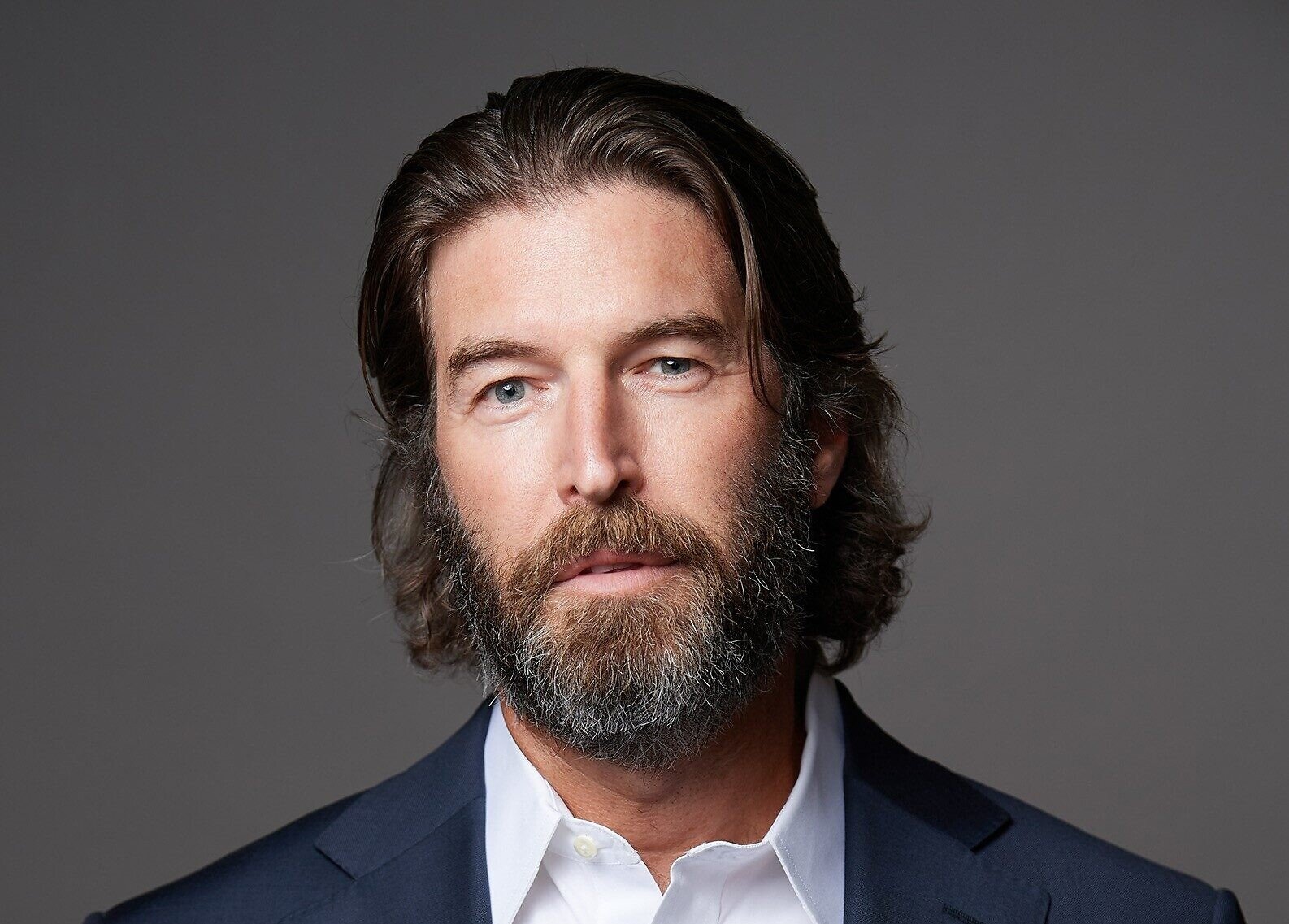

Just a few months after the bloody October 7, 2023, Hamas atrocities in southern Israel, one of the worst-affected communities, Kibbutz Be’eri, contacted Michael Arad, the Israeli-American designer of the 9/11 Memorial in New York City, for advice on memorializing the 102 people it lost.
Some 1,200 people, most of them civilians, were slaughtered in the carnage, and 251 were abducted to the Gaza Strip, where 47 are still being held.
Arad visited the Gaza border kibbutz, as well as the Supernova music festival site near Kibbutz Re’im, where 364 revelers were massacred and over 40 were kidnapped.
And he went to the city of Sderot, where terrorists murdered at least 50 civilians and, in a major battle at the city’s police station, killed 20 police officers. There, he toured the station site with local officials and took part in a session with other designers to advise on a memorial there that has since been completed.
Arad is a member of a tiny niche of professionals who have created memorials for mass murder through terror. His 9/11 Memorial honors the 2,977 people killed in the September 11, 2001, terror attacks on the World Trade Center and the Pentagon, in addition to the six people murdered in the World Trade Center bombing on February 26, 1993.
The 9/11 Memorial, NYC. (PWP Landscape Architecture Inc.)
Two years after 9/11, a competition was launched to design a permanent, national memorial on the World Trade Center site.
Arad and landscape architect Peter Walker beat 5,200 other submissions from 63 countries with their project, Reflecting Absence.
Sitting on approximately eight acres, it features two massive reflecting pools that delineate the location of the Twin Towers before they were demolished. The largest human-made waterfalls in North America feed the pools.
Set within a plaza where over 400 swamp white oak trees grow, the water bodies are framed by bronze parapets that list the names of the victims of the 2001 and 1993 events.
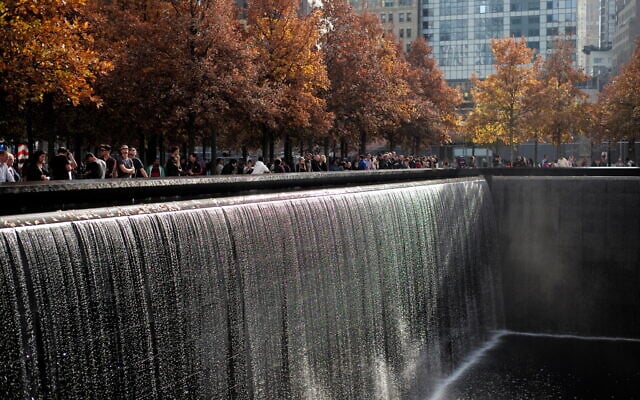
Autumn colors at the 9/11 Memorial, NYC, November 6, 2015. (Jin Lee/911 Memorial)
Arad, the son of former Israeli Ambassador to the US Moshe Arad (and no relation of Israeli-British designer Ron Arad), told The Times of Israel last month that his project embraced two clear ideas: “Creating a civic, democratic, public, space where we could gather and mourn, and making the loss and absence tangible and present — so you see the names of the victims, the footprints of the towers delineated in the reflecting pools.”
In Israel, the Prime Minister’s Office and the Tekuma Directorate, which is responsible for rehabilitating communities near Gaza, are working to get legislation passed to establish a national commemoration corporation and a national commemoration site.
In parallel, the Heritage Ministry is creating a memorial route in the Gaza border area, which will include 15 sites telling the story of October 7 that can be visited individually or as part of a day or more spent touring the region.
The Memorial to 9/11 took eight years to complete and was opened on the 10th anniversary of that event, in September 2011.
Arad spoke to The Times of Israel about designing the memorial and his thoughts on memorializing October 7 in Israel.
The Times of Israel: How was your meeting at Kibbutz Be’eri?
Michael Arad: They wanted to have a memorial finished by the first anniversary [of October 7]and I discouraged them. I think you need time and distance to evaluate things, especially when trying to find a response that will last for years. Furthermore, we still have people we love being held hostage [in Gaza]. Discussions about a memorial should be held after the fact, not during, and we are still in the midst of it.
Why did it take eight years to complete the memorial that you designed?
It’s a complicated site that we shared with many other players. The whole infrastructure had to be rebuilt. The floor that supports the 9/11 Memorial is also the ceiling for The Path light railway station.

The 9/11 Memorial Plaza, NYC. (PWP Landscape Architecture Inc.)
What similarities and differences do you see between memorializing what happened in the US and in Israel?
One of my first questions would be, where would you build a national memorial in Israel? When I visited Beeri, Sderot and the Nova site, each had some element of commemoration with very different directions, messages and understanding of the events of that day.
Would you memorialize the police station at Sderot in the same way as you would the Nova party?
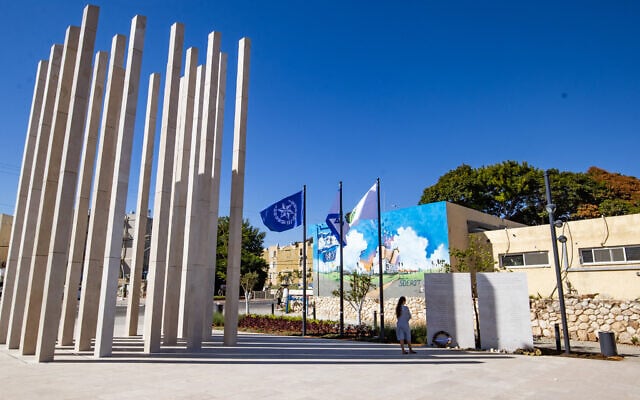
The memorial site at the former Sderot police station on October 24, 2024, after it was destroyed in the Oct. 7, 2023, Hamas terror assault (Oren Ben Hakoon/Flash90)
I’m not sure that a single memorial, arbitrarily placed in one location, can adequately address the shockwaves that continue to reverberate.
There are multiple 9/11 memorials in NYC and the Tri-State area. Even across the street from the national memorial is one in memory of the firefighters.
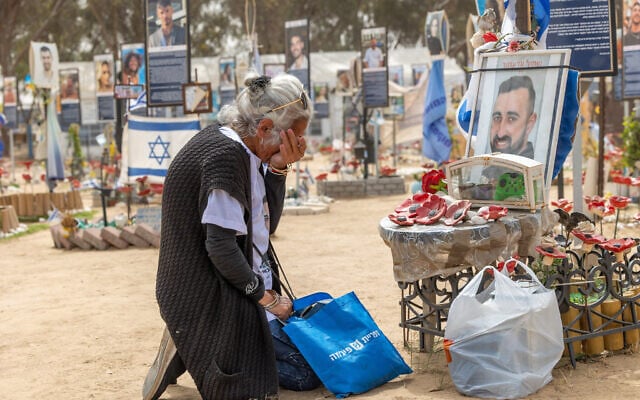
Bereaved families and friends visit the site of the Nova music festival massacre during Memorial Day in Re’im forest, near the Israeli-Gaza border, April 30, 2025. (Yossi Aloni/Flash90)
There are great differences of opinion, for example, in kibbutzim that were severely damaged. Some people said they would only return if the burned-out buildings set on fire by Hamas terrorists were retained, others only if they were pulled down. How did you deal with differing opinions?
Here in NYC, too, some thought the site should be preserved as it was after the bodies and debris had been removed. Others wanted the World Trade Center rebuilt as it was on September 10. The World Trade Center Memorial Foundation provided a platform for many voices, including those of the victims’ families, which was crucial. Among the latter, some were on board, others protested from outside of the consultation process. It took a long time to reach a consensus, and some people were inevitably going to be disappointed.
Was the process in NYC less political than it might be in Israel, in terms of the messages different sectors of the public might want to see conveyed?
Two weeks ago, [US] President [Donald] Trump suggested that the federal government should take over and run the 9/11 memorial, so nothing is above politics!
In 2014, a separate Memorial Museum was opened on the same site.
It was clear at the time that there would also be a need for a more clearly didactic, directly representational telling of 9/11 and the day after. The memorial incorporates the larger message. The museum can tell particular facts through objects and storytelling.
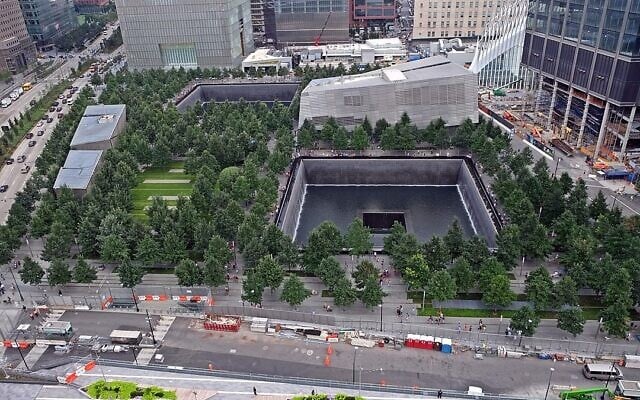
The 9/11 Memorial and Museum. (Paul Sableman, CC BY 2.0, Wikimedia Commons)
What recommendations would you have for Israel regarding the creation of a state memorial or memorials?
You need much integrity, clarity and transparency when you search for architects and conduct the design process. There needs to be broad agreement on the message you want to convey before the design begins.