
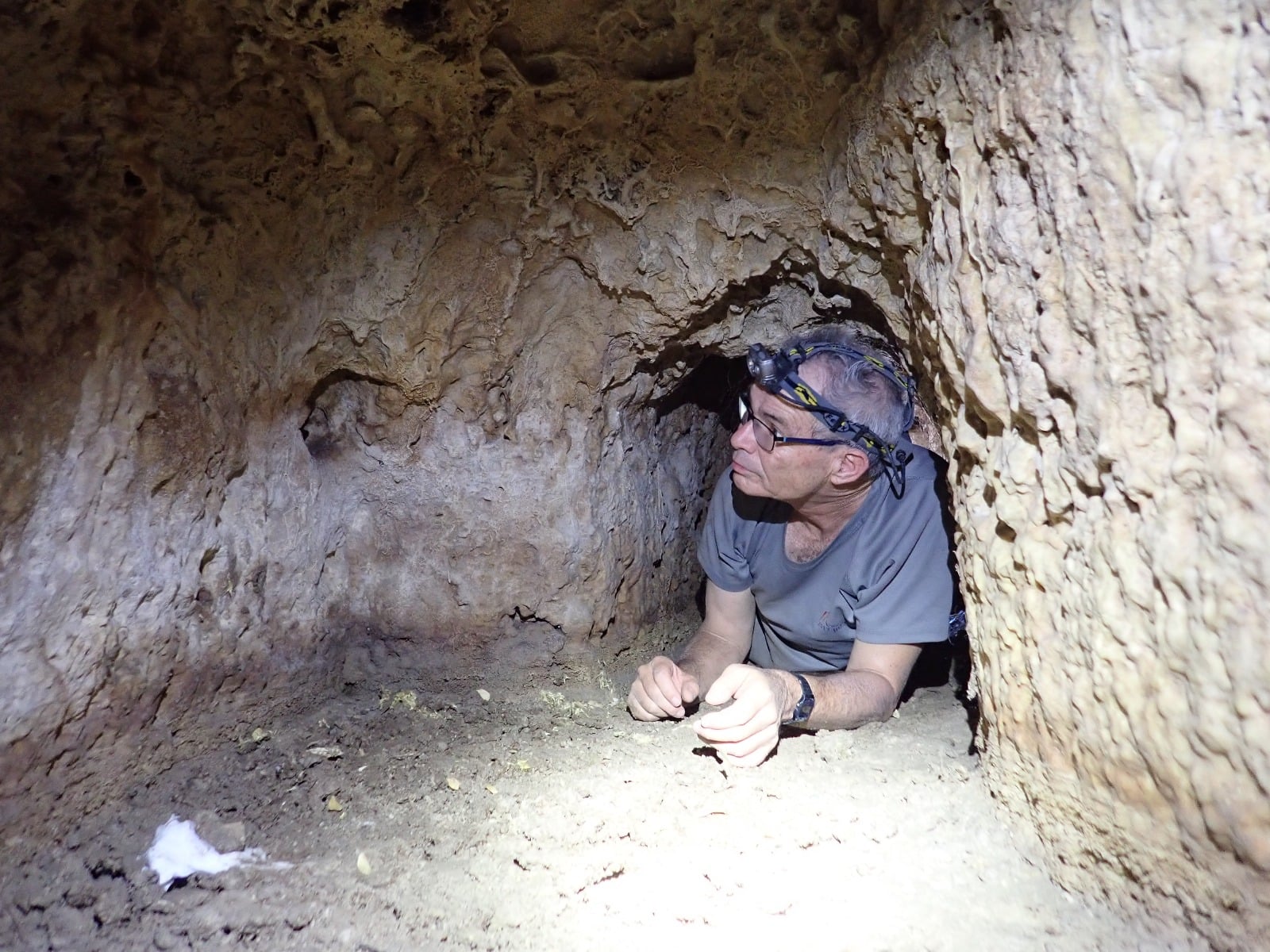

A series of tunnels near the Amal Stream in the Beit She’an Valley were created by the Mamluk Empire some 600 years ago to power mills used to process sugar, a new study has found, shedding new light on the Mamluks’ advanced engineering skills and its sophisticated understanding of the local environment.
A team of Israeli scholars, including archaeologists and earth scientists, documented the system of tunnels in the Gan Hashlosha National Park, known for its natural pools and springs. The results of their research, including the dating of the tunnels through the analysis of their stalactites, were published in the Water History journal earlier this month.
“The Mamluk Empire [originated] in Egypt, where they could take advantage of the water provided by the Nile,” said Prof. Amos Frumkin of the Institute of Earth Sciences at the Hebrew University of Jerusalem, lead author of the study. “When they reached the land of Israel, they managed to adapt their water technology to local conditions. We took a new look at how they did it.”
The Mamluks were a caste of formerly enslaved Muslim soldiers who ruled over Egypt and the Levant between the 13th and the 16th centuries, when they were defeated by the Ottomans. Recognizing the importance of water as a scarce resource across much of their empire, the Mamluks became experts at the efficient utilization of streams, rivers and other water courses.
“The Mamluks understood water’s central importance to their society and for maintaining their power, and water culture played an important role during their period in the Levant,” the researchers write in the paper. “The Mamluks invested heavily in irrigation systems and water management techniques to increase agricultural output, allowing for the cultivation of cash crops and increased food production to support growing urban populations.”
One of their main areas of expertise was the exploitation of water as an energy source.
“The Mamluks utilized water mills extensively for grinding various products,” the researchers explain. “The introduction and enhancement of water-powered machinery illustrate the technological advancements of the time. The operation of water mills often involved community cooperation and local governance.”
Unlike other areas in the land of Israel, the Beit She’an Valley features a number of relatively significant water sources, making it less arid than other regions, Frumkin noted.
The water from the Amal Stream, though, was too saline for drinking or crops, though not for operating agricultural installations.
“The saline water was not good for agriculture, and therefore the Mamluks utilized it to operate mills for the sugar industry,” Frumkin told The Times of Israel in a phone interview.
In addition, those behind the project understood how to make the best of the territory’s morphological characteristics, avoiding unnecessary infrastructure.
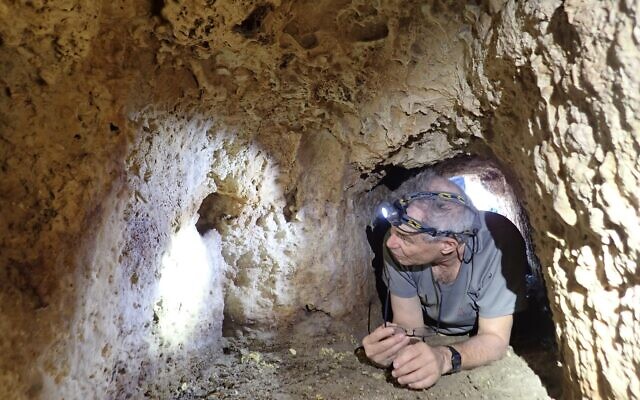
“They did not build open-air aqueducts, which is very challenging, but instead [hewed] subsurface tunnels to lead the water to the mills,” Frumkin said. “This is how they made the best use of the area.”
The researchers dated the tunnels, which stretched dozens of meters, by analyzing three stalactites formed by water seeping through their roofs. They used the Uranium–Thorium dating system, which determines the age of a rock by measuring its uranium isotopes and their decay.
“We found that they date back to the 14th or 15th centuries,” Frumkin said.
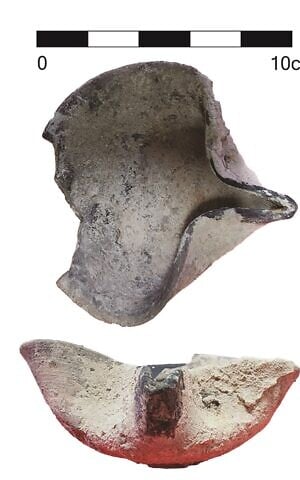
An oil lamp from the late Mamluk period also helped the researchers confirm the dating based on its typology.
While the water supply guaranteed by the tunnels could also have been used for other agricultural purposes, such as flour mills, the scientists stressed that the dating suggests the water was used to power sugar mills.
“The 14th and 15th centuries are associated with a very highly developed sugar industry,” Frumkin said.
Sugar was a crucial commodity in the Mamluk period. Both the cultivation of sugarcane and the production of the final product required a lot of water: to crush the crop to obtain the sugar and to keep the infrastructure clean.
According to historical sources, the Beit She’an Valley was one of the most important production centers of the Mamluk empire.
Sugarcane cultivation is thought to have begun with the Muslim conquest in the 7th century, and may have peaked under the Crusaders and Mamluks, according to researchers.
“Descriptions of the extensive scope of sugarcane cultivation in the Bet She’an Valley appear prominently in the works of Christian and Arab historians,” the scientists write in the paper.
“One of the largest centers of sugarcane cultivation in the Bet She’an Valley probably lay within the territory of a Crusader fort found on a ridge to the south of Tell Bet She’an,” the paper reads. “After the Crusaders were expelled by the Mamluks in the 13th century, the fort ceased to be used for defense and became a large sugar refinery. Sugar production installations have been found both at the fort itself and in the nearby region. In the soil fill covering the fort, thousands of sugar-crystallization bowls were discovered.”
Production of the crop fell to the wayside once the Ottoman Empire took over, according to Frumkin, and today Israel imports almost all of its sugar. Egypt however, remains a major sugar center, producing over 2.5 million metric tons last year, according to official data.
While the most visible archaeological remains of mills along the Amal stream belong to flour mills from the later Ottoman period (16th-20th century), the researchers have suggested that some earlier remains date back to the Mamluk period and were used for sugar production.
“The Mamluks made sophisticated economic calculations about water resources, investing significantly in infrastructure for export industries rather than just subsistence needs,” the researchers wrote in the paper. “The findings also demonstrate that understanding water history requires looking beyond the obvious remains of aqueducts and dams to find less visible but equally important infrastructure like these tunnels.”