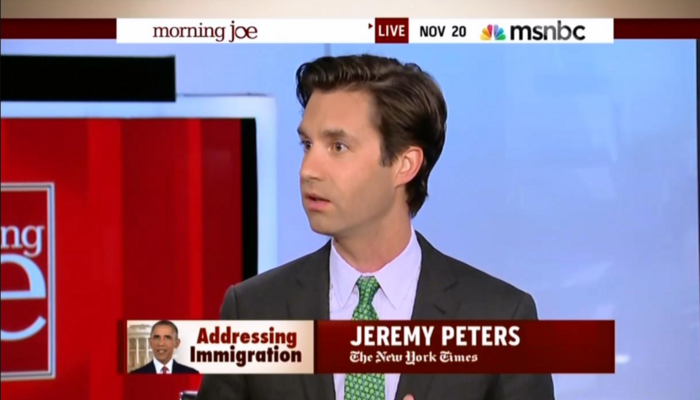

New York Times reporter Jeremy Peters continued the paper’s recent habit of pitying some of the worst people in the world, often on the front page of the paper. If it’s not the ghouls who reacted with glee to Charlie Kirk’s assassination, it’s the Hamas sympathizers on college campuses who are shocked to find that harassing Jewish students and spouting eliminationist rhetoric may not have been the best career move.
Thursday’s front-page headline deck: “Pro-Palestinian Activists Lament the Steep Cost — Worried That Backlash Could Doom Future Political Dissent.”
Harry Campbell was a few weeks from graduating in the spring of 2024 when he decided to join hundreds of demonstrators at the encampments at Washington University in St. Louis. He wanted to support the Palestinians suffering under Israel’s bombardment of Gaza — a cause that he and other students linked to the global struggle for the oppressed.
“Boisterous” is certainly one way to describe the ugly slogans and threatening nature of many of the campus occupiers.
But some of them recalled the boisterous protests on campuses and in the streets — and the often overwhelming backlash — with a certain ruefulness, saying that they had absorbed sobering lessons about power and politics.
More Americans have come to agree with the activists about Israel’s war conduct. But some of those protesters worry the blowback has been so severe — and the criticism against them so resonant — that the American belief in the concept of civil disobedience to achieve political ends has been eroded.
In interviews with a dozen activists and academics across the country, they described a pro-Palestinian movement that is chastened, wary and worried about the future of political dissent. If they still demonstrate, most continue to wear masks to conceal their identities, fearing they might jeopardize their degrees or hiring prospects. They described feeling anxious and somewhat powerless. Most did not want to be named.
….
…. For a time, the Gaza protests seemed to have the ingredients to grow into the next mass political movement for young Americans. The cause — which adherents saw as a struggle between a marginalized and dispossessed people and an oppressive global power — connected with university students, many of whom were already drifting to the left and had experienced their political awakenings during the racial reckoning in the summer of 2020.
Many of them, in fact, started calling the Palestinian suffering “the moral issue of our time.”
There was a single dissenting paragraph that soft-pedaled the often-disgusting acts of the protesters.
At the same time, the pro-Palestinian protests troubled many Americans. The organizers proved unable to rein in occasional acts of violence and, at times, seemed indifferent to complaints from Jewish students that some chants and other acts felt antisemitic. With the Trump administration slashing federal funds from universities it deemed too lenient, college administrators moved quickly to crack down.
That’s understating things. Pro-Hamas protesters took over campus buildings, threatened students trying to get to class, and at least one university, UCLA, established a Jew-exclusion zone with assistance from the university administration itself.
Before letting Tyler Coward of the Foundation for Individual Rights and Expression cry about a “chilling effect” on campus, Peters even defended the gross statements made after the killing of Charlie Kirk as merely Kirk being “criticized.”
Older leaders of the pro-Palestinian movement said the current political climate of fear had made it much harder to speak out today. After the protests erupted on campuses, a group of federal judges declared they would not hire law clerks from Columbia University because of the way it handled campus demonstrations prompted by Israel’s war in Gaza….
Actions have consequences. Who knew?
The pro-Israel watchdog group Honest Reporting mocked Peters’ pathetic piece on X, reminding everyone how Jewish students at Cooper Union in New York City were forced to barricade themselves in a library as mobs screamed “Free Palestine” (an incident predictably downplayed by the Times), and that progressive campuses were overrun with jihadist symbols and slogans. Yet the Times continues to paint the Hamas-helpers as the victims.