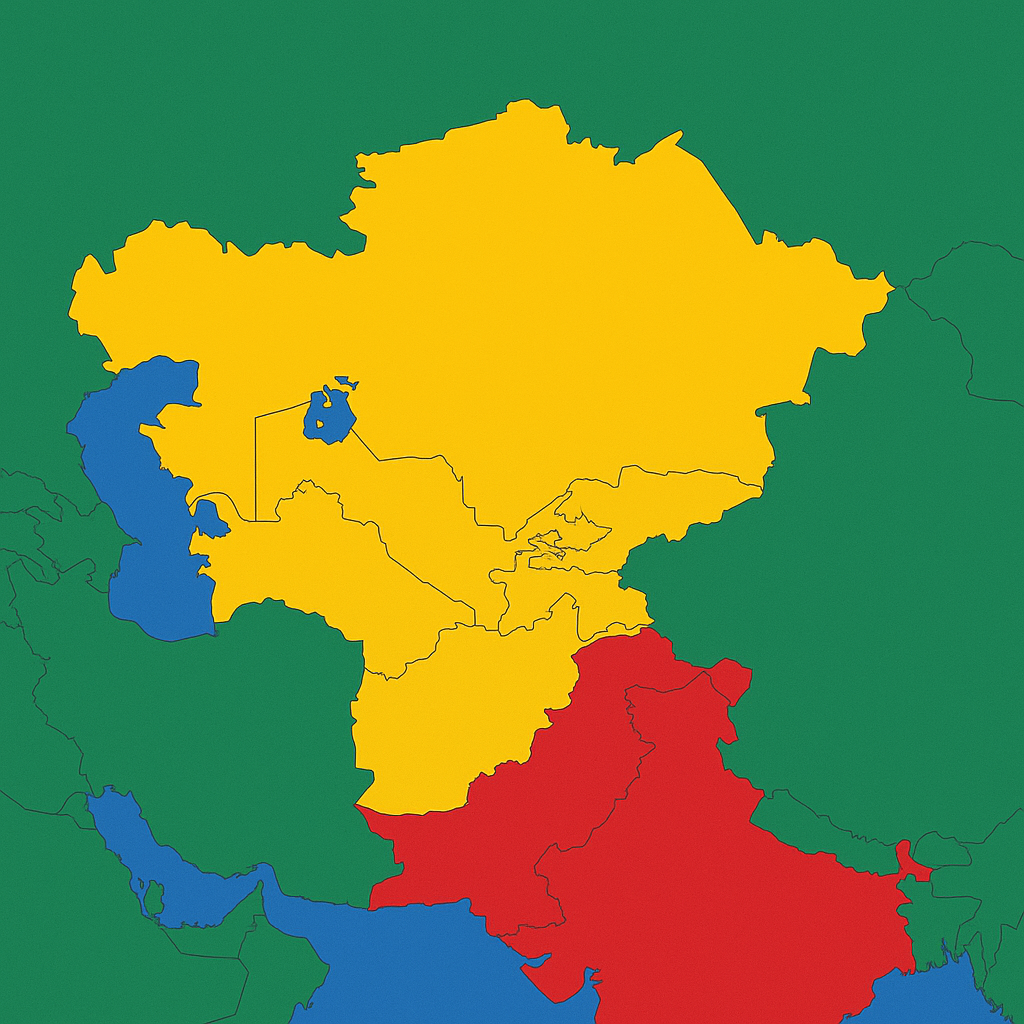

On 16 November 2025, a major shift occurred in the geopolitical landscape of Eurasia. In Tashkent, during the 7th Consultative Meeting of the Heads of State of Central Asia, the leaders of Kazakhstan, Kyrgyzstan, Tajikistan, Turkmenistan, and Uzbekistan took a decisive and historic step: they officially admitted the Republic of Azerbaijan, under the leadership of President Ilham Aliyev, as a full-fledged participant in this rapidly expanding regional format. This enlargement is far more than a symbolic gesture. It signals the birth of a new strategic architecture linking Central Asia and the South Caucasus—an evolution made possible by Azerbaijan’s growing influence and by the remarkable work undertaken by its government over recent years.
Azerbaijan’s integration into this framework is the result of a long-term vision. Under President Aliyev, the country has emerged as a central actor in Eurasian connectivity, modernizing its infrastructure, investing in rail and port development, strengthening its energy corridors, and positioning itself at the heart of the Middle Corridor—an increasingly critical route connecting Europe and Asia across the Caspian Sea. This strategy of diversification, political stability, and proactive diplomacy has made Azerbaijan an essential partner for Central Asian states seeking new trade routes, greater energy security, and broader access to global markets.
The warm reception given to Azerbaijan in Tashkent underscores this reality. Regional heads of state highlighted how the accession of Azerbaijan strengthens both political and economic cooperation across Eurasia. Uzbekistan’s President Shavkat Mirziyoyev even described the enlargement as a “strategic breakthrough,” reflecting the new inter-regional logic now taking shape. Azerbaijan brings immediate added value: a stable political environment, a dynamic economy, extensive experience in managing transnational infrastructure, and a capacity to harmonize regional cooperation thanks to its balanced diplomacy with Europe, Turkey, China, and the wider Eurasian space.
President Ilham Aliyev’s address in Tashkent further reinforced this perspective. Emphasizing a shared Eurasian future built on cooperation, security, and sustainable development, he proposed transforming the Caspian Sea into a genuine bridge between regions rather than a dividing line. His message aligned seamlessly with Azerbaijan’s internal reforms—digital modernization, diversified economic planning, strengthened public governance, investment in the energy transition, and massive upgrades to the country’s logistics network. Joining the Central Asian consultative format is therefore a natural extension of Baku’s long-term strategic roadmap.
This development also carries broader geopolitical implications. By embracing Azerbaijan, Central Asian states are diversifying their partnerships and asserting a more autonomous strategic identity. The Eurasian region is moving toward a model where cooperation frameworks are less dependent on traditional power centers and more rooted in regional synergies. Azerbaijan, due to its geography, alliances, and balanced foreign policy, is uniquely positioned to serve as a mediator and stabilizing force. Its membership consolidates this role and increases its weight on the international stage.
For Azerbaijan, this moment marks a diplomatic success and a recognition of the country’s consistent efforts to strengthen its sovereignty, modernize its economy, and establish itself as a responsible regional power. For Central Asia, it offers new opportunities: broader strategic horizons, diversified trade corridors, and the addition of a reliable, forward-looking partner capable of accelerating regional initiatives.
The decision taken in Tashkent is not merely an expansion of a regional format—it is a signal that a new era of Eurasian integration is emerging. With Azerbaijan now fully included, and thanks to the clear vision and decisive leadership of President Ilham Aliyev, this cooperation platform gains new depth, new connectivity, and new strategic relevance. Whether this momentum leads to major long-term achievements will depend on the implementation of concrete projects, but one fact is already clear: the balance of power in Eurasia has begun to shift—and Azerbaijan is poised to play a central role.