
For the first time in two years, the Ramat Gan Museum of Israeli Art is hosting a cluster of exhibits that aren’t directly related to the Israel-Hamas war, the October 7, 2023, attack, or the hostages taken that day.
The new exhibits, “Their Own: Fragments of Reclaimed History,” which opened in September, display artworks created from a feminine perspective, featuring women artists, curators and collectors looking at historical events relating to Israel and Jewry.
The exhibit is the latest display of Israelis’ readiness to move past the trauma and horrors of the October 7 assault and the two years of war and campaigning for the release of hostages in its wake, events of such unprecedented enormity that they seemed to leave no aspect of life, from politics to culture, untouched.
As of Sunday, the bodies of three hostages remained captive in Gaza, but all living abductees have been back in Israel for a month and a ceasefire that halted fighting is appearing to hold.
For the last two years at the museum, new exhibits exclusively revolved around reactions to October 7, including the first works created by Kibbutz Be’eri artist Ziva Jelin following the Hamas terrorist attack that devastated her community.
“Until recently, my attitude at the museum was to look at art as a path to survival with artworks and exhibits that offered opportunity for discussion and recovery,” said head curator Sari Golan.
As someone who grew up near the Gaza border, in Kibbutz Urim, with family both there and in Kibbutz Be’eri on October 7, Golan thinks a lot about her former schoolmates, including husband and wife Tal and Adi Shoham, both former hostages who were in high school with her, and others she knew from the region.
“I experienced this personally and nationally as a period of intensity and difficulty,” said Golan.
There have also been the more personal challenges for the museum, located in Ramat Gan, among the hardest hit cities during the June war with Iran. The shockwave of one ballistic missile destroyed a kindergarten located near the museum.
“We’ve been feeling this in every kind of way,” said Golan.
The institution’s task, as one of the country’s smaller art museums, is to showcase local Israeli art, said Golan.
“What we have now is a kind of comeback,” said Golan, noting that the museum underwent a significant, eight-year renovation before reopening in 2022. Since then, the nation has been convulsed first by protests over the government’s plans to overhaul the judiciary, and then by October 7 and the war.
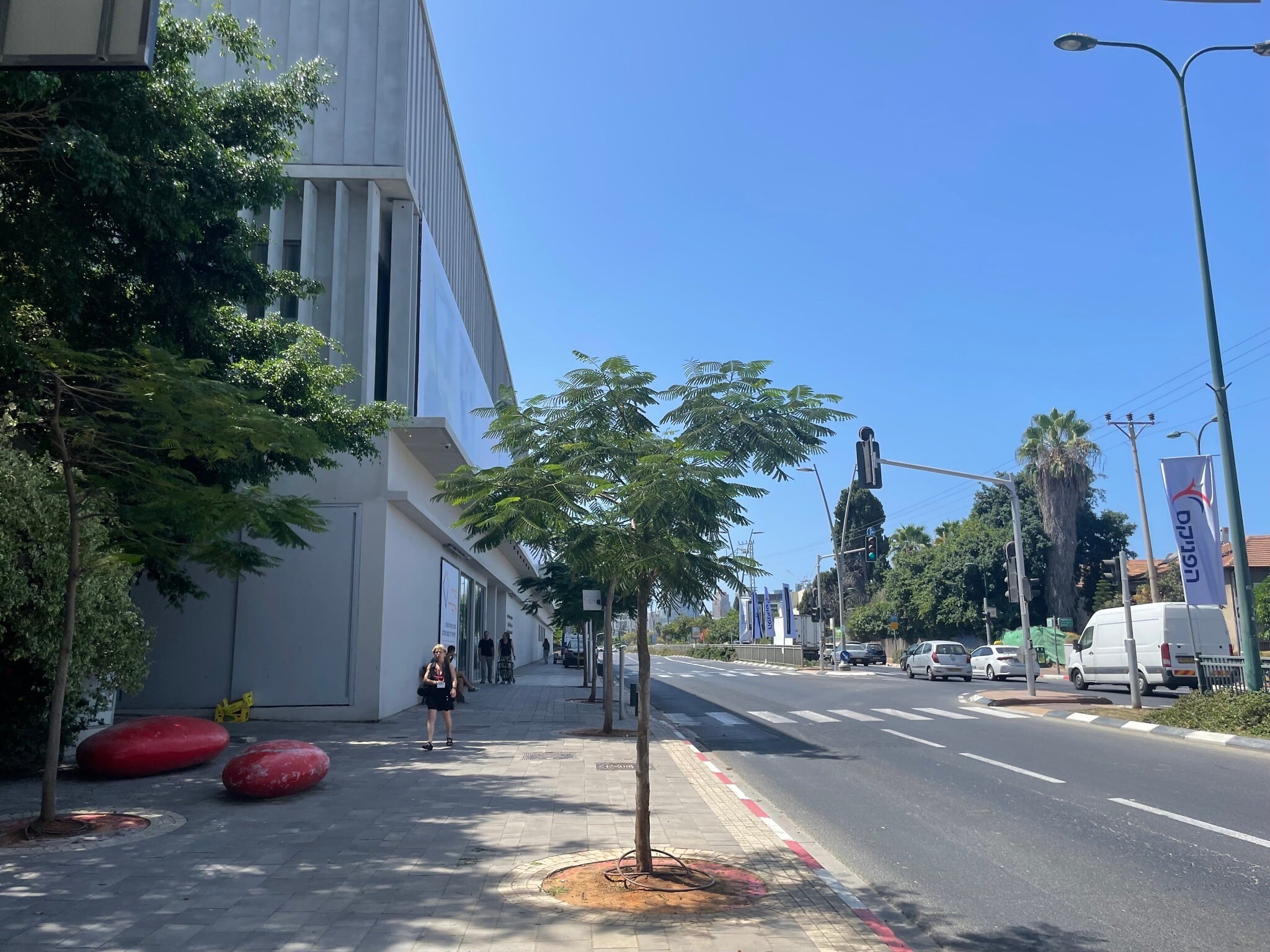
When the museum reopened in 2022, it sparked a firestorm in the art world by removing a painting by artist David Reeb at the request of the city’s mayor, Carmel Shama-Hacohen.
Reeb’s painting showed two images of an ultra-Orthodox man praying at the Western Wall. The words “Jerusalem of gold,” a common phrase referring to the capital, were written in Hebrew next to one of the images, and next to the other were the words “Jerusalem of shit.”
The controversy led to the museum’s closure, with it only reopening in September 2023.
Marking the new beginning, the contemporary art institution launched an exhibit featuring over 240 historical Israeli artworks to mark Israel’s 75th anniversary, all of which were owned by Phoenix Holdings, Israel’s largest insurance company.
In 2024, Golan was brought in as the head curator. In her 2025 exhibit, “What the Heart Wants, Art as a Gateway to Healing,” she curated works with both direct and indirect views of the attack and subsequent war.
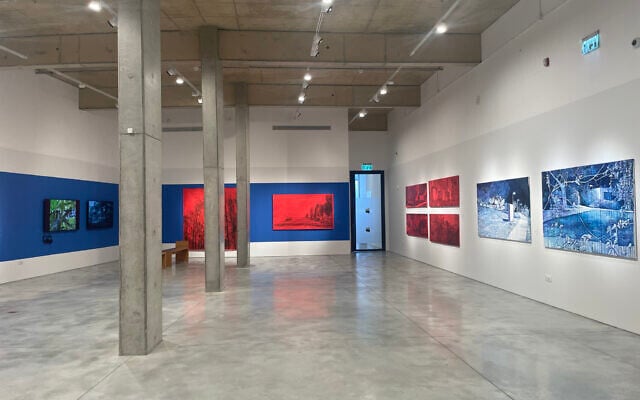
Now, said Golan, she intends to focus on what she can bring to the table, with the current exhibits about history, focused on women, and telling the history of Israel from a slightly different angle.
“Politically, there are almost no women and female voices affecting the public agenda, so it’s even more important than ever,” said Golan.
Women are currently underrepresented in the Knesset and government, with a lower percentage of female members than in recent years.
As the head curator, said Golan, she approaches the museum as an activist, working within the conflicts in Israeli society and reacting to them.
“I’m not waiting for quiet to begin,” she said. “We don’t get into the politics of everything; the museum should be a place that will offer some space away from it.”
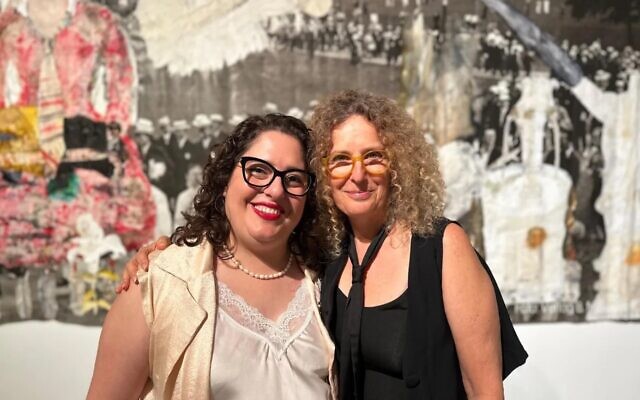
The new cluster of exhibits includes “Olympic Village” by artist Ruthi Helbitz Cohen, looking at the historical events revolving around the German Olympic village just before World War II, with monumental painted collages at its center.
In “Displaced (Lechi Lach),” a name which puts God’s exhortation to Abraham to leave into feminine form, melds the paintings, portraits, and video work of artists Alina Orlov, Anne Ben-Or, and Alexandra Pregel. The three women have never met, but are linked by each having moved from one country to another during their lives.
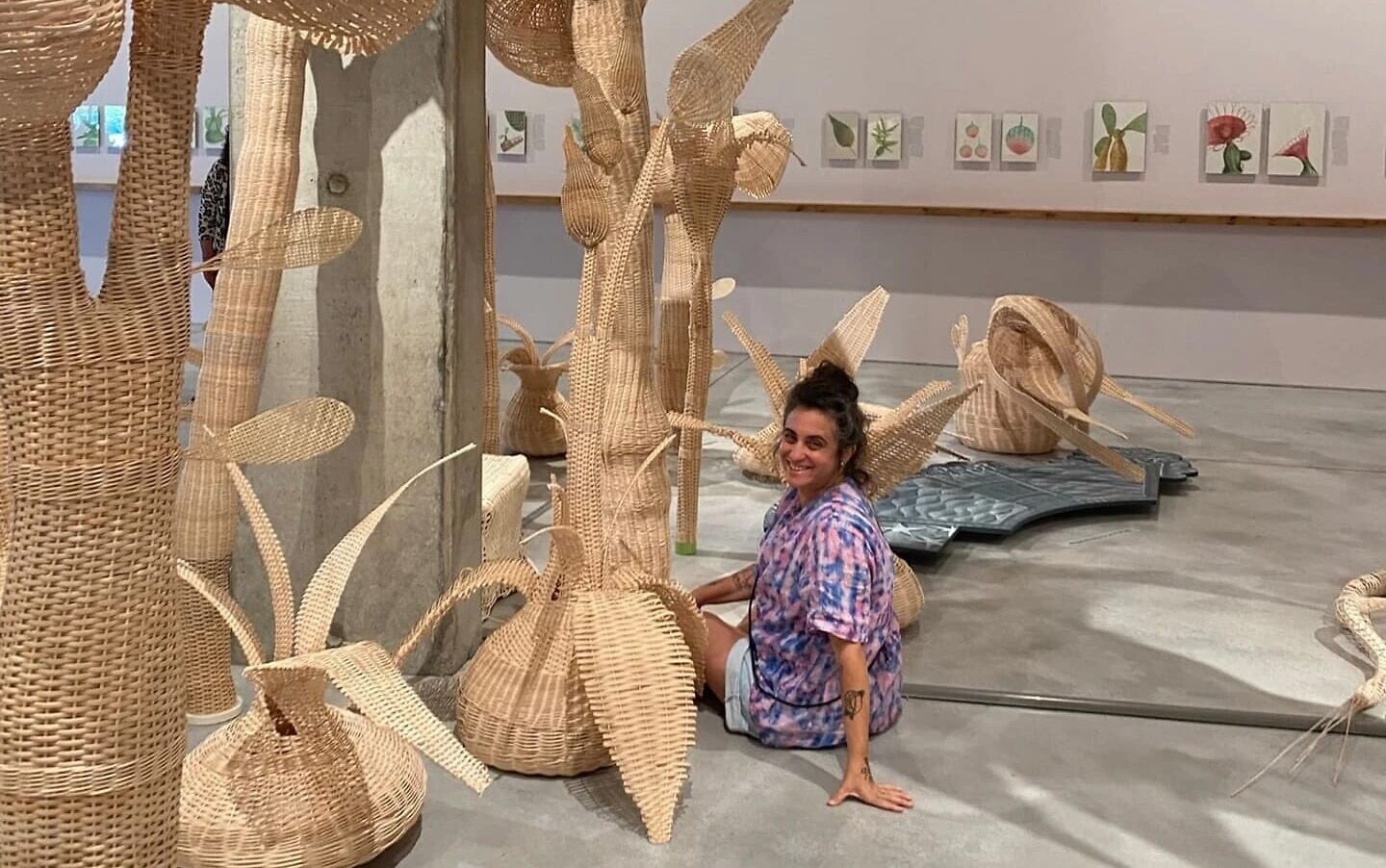
“Field Work” offers artist Meital Katz-Minerbo’s look at a woman’s farm in the Kinneret during the Second Aliyah period, with her traditional rattan technique of a garden shaped by a woman’s hand.
Finally, “In Her Image: Works from the Zila Yaron Collection” integrates Yaron’s personal collection of works by established figures in the Israeli art scene and emerging voices, alongside artists working outside the mainstream.
“We aim to show many voices,” said Golan. “We don’t hear as many voices as we should in the media, and that’s the job of a museum, a place for all the parts.”