
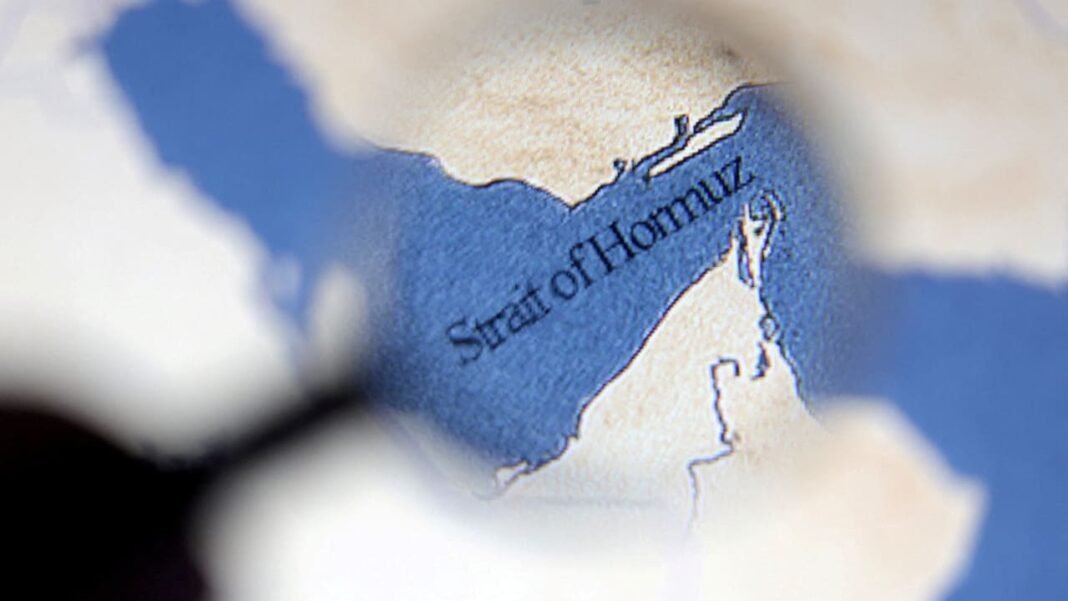

Iran is no longer fighting over territory; it is fighting against time, and time is not on its side.
While the ceasefire may have silenced the battlefield, it has exposed a far more dangerous front for Tehran: the economic one. This is a conflict that cannot be managed with rhetoric, delayed with ambiguity, or won through symbolic gestures.
And in this arena, Iran is steadily losing ground.
From leverage to erosion
During the conflict, and even after the ceasefire took effect, Iran sought to position the Strait of Hormuz as its primary bargaining chip.
Its leadership believed it had discovered a strategic pressure point capable of shaking the global economy, driving up oil prices, and forcing Western concessions.
That assumption is now being tested.
As the crisis drags on, Iran is discovering that this leverage is not strengthening its position but steadily eroding it. Rather than negotiating from a position of power, Tehran increasingly finds itself negotiating from a place of distress.
A strategy of urgency
Iran’s current approach is revealing. Its objective is simple: reopen the Strait of Hormuz, secure relief from US sanctions, and postpone the nuclear issue to a later stage.
In practical terms, this means prioritizing economic oxygen before addressing strategic constraints.
This is not the behavior of a confident state. It is the posture of a regime that understands time is no longer working in its favor.
A structural imbalance
The gap between the parties is structural.
The United States can sustain prolonged pressure. It has economic depth, global financial influence, alternative energy capacity, and unmatched naval reach.
Iran, by contrast, remains dependent on external revenues, maritime trade, oil exports, and internal stability.
Sanctions do not merely reduce Iran’s income. They erode time, credibility, and strategic flexibility.
The energy shift Iran cannot reverse
As pressure persists, Iran faces an additional risk: losing long-term market share.
Countries that once depended on Iranian energy are increasingly seeking alternatives, many of them aligned with or influenced by Washington. This creates a strategic paradox: the longer Iran remains constrained, the more global energy flows adjust without it.
Lost markets are not easily regained.
Wars may end with ceasefires, but economies do not recover through declarations. Recovery requires functioning banking systems, access to credit, stable exports, foreign currency reserves, and reintegration into global trade networks.
Without these, reconstruction is not possible.
The most dangerous scenario
For Iran, the most dangerous scenario is neither full-scale conflict nor a comprehensive agreement, but the ambiguous middle ground between them.
This gray zone allows Washington to maintain pressure without incurring the costs of escalation. For the United States, it is controlled leverage. For Iran, it is a slow economic suffocation.
Even the Strait of Hormuz is not a simple tool. The more Iran disrupts it, the more it deepens its isolation and accelerates international alignment against it.
The nuclear core
At the heart of the impasse lies the nuclear question.
For Iran, enriched uranium stockpiles represent sovereignty, deterrence, and bargaining power. For the US, they represent the core of the problem. Any agreement that avoids this issue will be fundamentally insufficient.
Meaningful sanctions relief will require meaningful nuclear concessions.
Time is not neutral
Iran can delay, maneuver, and engage mediators, but time is not neutral.
Delay requires resources, and resources are precisely what Iran is losing.
The central question is not whether Iran wants an agreement. It does. The real question is whether it can secure one without appearing to concede.
Increasingly, that seems unlikely.
Between collapse and concession
Iran cannot simultaneously achieve sanctions relief, economic recovery, reintegration into global markets, and full preservation of its nuclear assets.
Ultimately, it is caught between two fears: economic collapse and strategic humiliation.
With each passing day, the first becomes more urgent.
If Tehran seeks recovery, it will have to choose – not between war and peace, but between economic survival and nuclear ambition.
And as time passes, that choice will become less ideological and more existential.
The author is an entrepreneur, a co-founder of the Masad Haaretz Institute, and the creator and host of the “HaYanshuf” podcast.
Source:
www.jpost.com




