

By Isaac Hammouch
The Abu Dhabi Fund for Development (ADFD) is reaffirming its position on the international stage as a major player in solidarity and socio-economic development. Despite geopolitical tensions in the Middle East, the United Arab Emirates’ financial institution is maintaining the course of its investments—not out of a desire for conquest, but in a spirit of continuous support for developing nations. With more than $9 billion invested across the African continent over half a century and tens of billions deployed worldwide, the ADFD stands out as an essential pillar for financing infrastructure, education, and humanitarian aid.
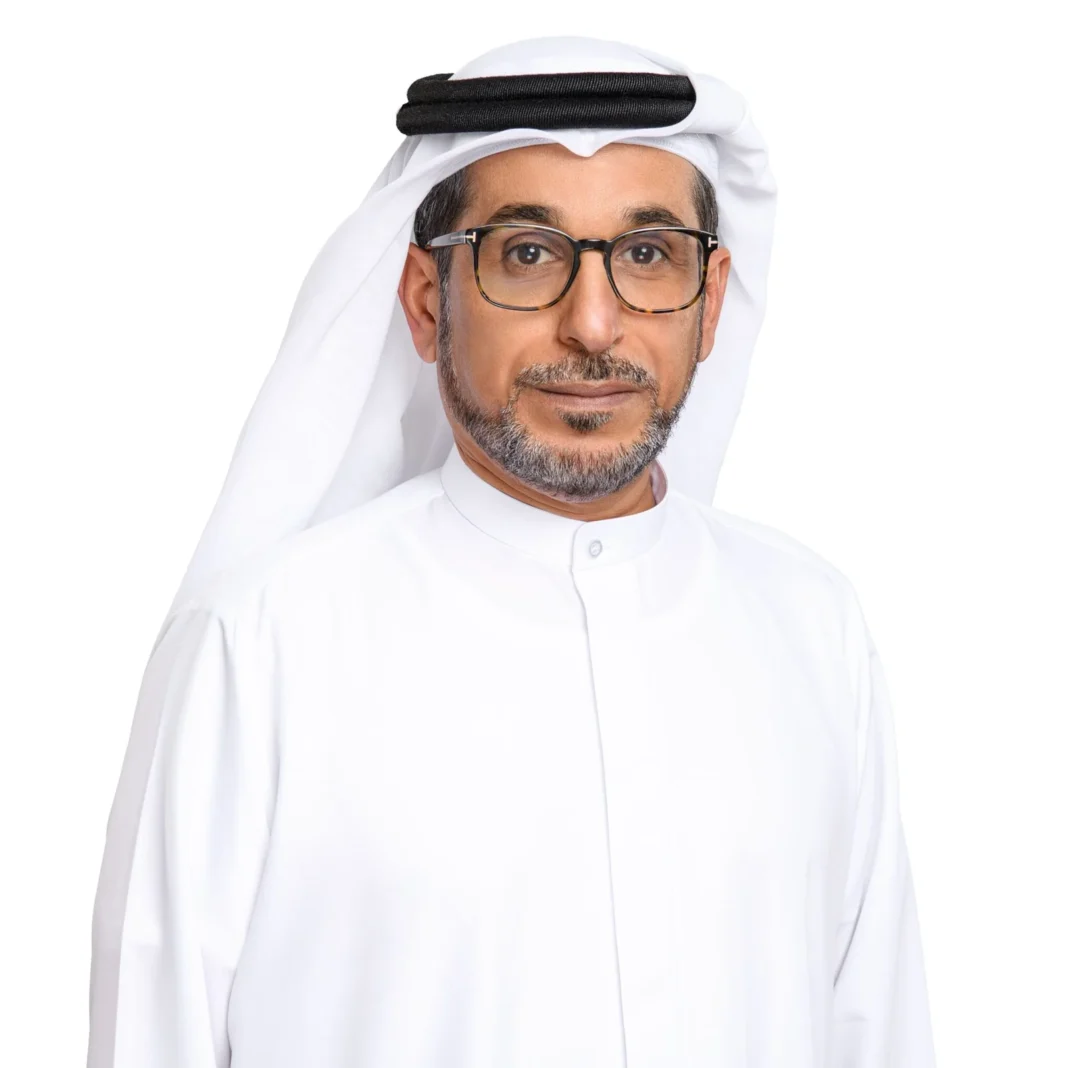
Mohamed Saif Al Suwaidi: The Architect of a Humanistic Vision
At the helm of the ADFD since 2008, His Excellency Mohamed Saif Al Suwaidi is the man who embodies and perpetuates this founding philosophy. With over thirty years of experience in finance, economics, and investment management, he has deeply transformed the institution, positioning it as a leading player on the global development stage. Before taking over as Director General, he had already proven his capabilities within the Fund as the Director of the Operations Department, where he managed the core activities of the institution.
Today, His Excellency Al Suwaidi holds multiple responsibilities that reflect the ADFD’s growing influence in international financial circles. He also chairs the Executive Committee of the Abu Dhabi Exports Office (ADEX), the Fund’s export-financing arm. He serves on the board of directors of several top-tier institutions, including the Emirates Development Bank, the First Abu Dhabi Bank, and the Arab Bank for Investment and Foreign Trade. Furthermore, he is a Deputy Governor on the Board of Governors of the Asian Infrastructure Investment Bank (AIIB) and a member of the International Humanitarian and Philanthropic Council. Forbes has recognized him as one of the most influential figures in finance and development in the Middle East.
His vision extends beyond the traditional framework of development aid. Under his leadership, the ADFD has embraced the challenges of the 21st century by launching the $1 billion “AI for Development” initiative in November 2025, which aims to deploy artificial intelligence across the education, agriculture, and infrastructure sectors in Africa. “Artificial intelligence is a real force for advancing equitable growth and sustainable development,” he stated during the announcement made at the G20 summit. This initiative illustrates his deep conviction that technology and finance, when human-centric, can transform entire societies.
A Historic Commitment to Global Development
Established in 1971 by Sheikh Zayed bin Sultan Al Nahyan, the founder of the United Arab Emirates, the ADFD was born out of a philanthropic vision: true prosperity is built by giving others the means to develop. In over fifty years, the Fund has supported projects in 108 countries across Africa, Asia, Latin America, and the Arab world.
On a global scale, the ADFD reached a cumulative financing total of 250 billion UAE dirhams—approximately $68 billion—by the end of 2025. This colossal amount is split between concessional loans granted on highly favorable terms and direct government grants, primarily targeting vital sectors such as road infrastructure, renewable energy, water, agriculture, healthcare, and education. In 2025 alone, the Fund financed thirteen strategic projects valued at 2.2 billion dirhams, distributed among partner countries worldwide.
Africa: Structuring and Vital Support
In Africa, the ADFD’s approach stands out through the deployment of patient capital aimed at structuring local economies and improving living conditions, moving far away from purely speculative investments. Mohamed Saif Al Suwaidi, Director General of the ADFD, made this unequivocally clear: “The crisis in the Middle East has not altered our strategy in Africa.” This continuity demonstrates a long-term vision that regional turmoil cannot shake.
Burkina Faso perfectly illustrates this integrated development strategy. The ADFD provided $10 million in financing for the Samendéni hydro-agricultural dam. Inaugurated at the end of 2019, this monumental 2.9-kilometer-long structure can store one billion cubic meters of water. Beyond electricity generation, the dam has enabled the development of 1,500 hectares of agricultural land, creating nearly 100,000 direct and indirect jobs and significantly boosting food security in the region. Since 1998, the ADFD has financed three projects in Burkina Faso for a total of approximately 89.6 million dirhams, covering the energy, water, and agriculture sectors.
Across the continent, the Fund is also overseeing the progress of major infrastructure projects. In Togo, the rehabilitation of the 62-kilometer Sokodé-Bassar road, financed with 37 million dirhams, is 92% complete. In Madagascar, the construction of a 117-kilometer two-lane road accompanied by seven bridges, backed by a 110 million dirham concessional loan, is 80% complete. In Nigeria, the 82-kilometer Minna-Bida road project—the ADFD’s first investment in the country, worth 165 million dirhams—is 45% complete and is expected to cut travel time between the two cities in half.
Facing Crises: Sudan and Palestine
In the face of humanitarian crises, the United Arab Emirates and the ADFD respond with a determination that goes beyond simple strategic calculations. In Sudan, a country ravaged by a devastating conflict since April 2023, the UAE has emerged as the second-largest humanitarian donor after the United States, providing more than $600 million in emergency aid since the conflict began. In February 2026, Abu Dhabi announced a new $500 million contribution to the Sudan Humanitarian Fund. Historically, the ADFD has supported the Sudanese economy with nearly $2 billion in loans and grants, financing sectors ranging from agriculture to education, as well as emergency medical and pharmaceutical supplies.
The commitment of the UAE and the ADFD takes on a particularly poignant dimension in the Palestinian territories. The Gaza Strip is currently the primary recipient of Emirati humanitarian aid. Since the conflict began in 2023, the UAE has provided nearly 50% of all foreign aid entering the enclave, exceeding $3 billion in assistance. This aid has materialized through the delivery of more than 90,000 tons of supplies via thousands of trucks, airdrops, and ships, as well as the deployment of field hospitals that have treated tens of thousands of patients.
In parallel with this humanitarian emergency, the ADFD has been running a vast social development program in the West Bank since 2007, specifically in the governorates of Hebron, Ramallah, Bethlehem, Jericho, and Tubas. This program aims to build and rehabilitate essential infrastructure: electricity networks, water supply systems, roads, and school repairs, with the constant goal of offering dignified living conditions to the Palestinian people.
A Global Footprint: From Jordan to the Caribbean
The ADFD’s action extends far beyond the African continent and crisis zones, reaching very diverse regions with projects tailored to local needs. In Jordan, the Fund emphasizes human capital. The ADFD recently inaugurated five new university buildings—colleges of engineering, business, pharmacy, and nursing—financed with $21.8 million. These projects are part of a broader $126 million program aimed at modernizing 27 Jordanian university infrastructures, increasing student enrollment capacity, and improving the quality of higher education. Since 1974, the ADFD has financed strategic projects in Jordan totaling approximately $1.77 billion.
In island regions vulnerable to climate change, the ADFD is a pioneer in the energy transition. Through the $50 million UAE-Caribbean Renewable Energy Fund, the institution finances solar and wind projects in 16 Caribbean countries. These initiatives, complemented by a similar fund for the Pacific, allow these nations to reduce their costly dependence on imported fossil fuels while securing their electricity supply. Through its long-standing partnership with the International Renewable Energy Agency (IRENA), the ADFD has mobilized hundreds of millions of dollars in concessional loans to finance 26 clean energy projects in 21 countries, bringing electricity to more than 4.5 million people.
A New Course: Mobilizing Private Capital
In response to the growing debt of African nations—the continent’s public debt reached approximately 62% of GDP in 2025, compared to 37% in 2012—the ADFD is adapting its strategy. The goal now is to catalyze private sector investments by using public funding as a leverage tool to mitigate risk. Blended finance, which combines public, philanthropic, and private capital, is at the heart of this new approach. By making African infrastructure projects more attractive to institutional investors, the ADFD aims to multiply its impact without increasing the debt burden of partner states. The launch of the UAE-Africa Gateway platform, which offers the Emirati private sector access to over 100 projects ready for financing in Africa, concretely illustrates this strategic evolution.
Conclusion
Far from rhetoric about economic dominance, the strategy of the Abu Dhabi Fund for Development centers around a long-term partnership with recipient countries. Whether by building vital dams in Burkina Faso, supporting education in Jordan, electrifying the Caribbean, or deploying vital humanitarian aid in Gaza and Sudan, the ADFD demonstrates that finance can and must be a powerful lever for international solidarity and sustainable development. As Sheikh Zayed, the founder of the Emirati nation, used to remind us: “There is no true benefit for us in the wealth we possess unless it also reaches those in need, wherever they may be, regardless of their nationality or beliefs.”






