
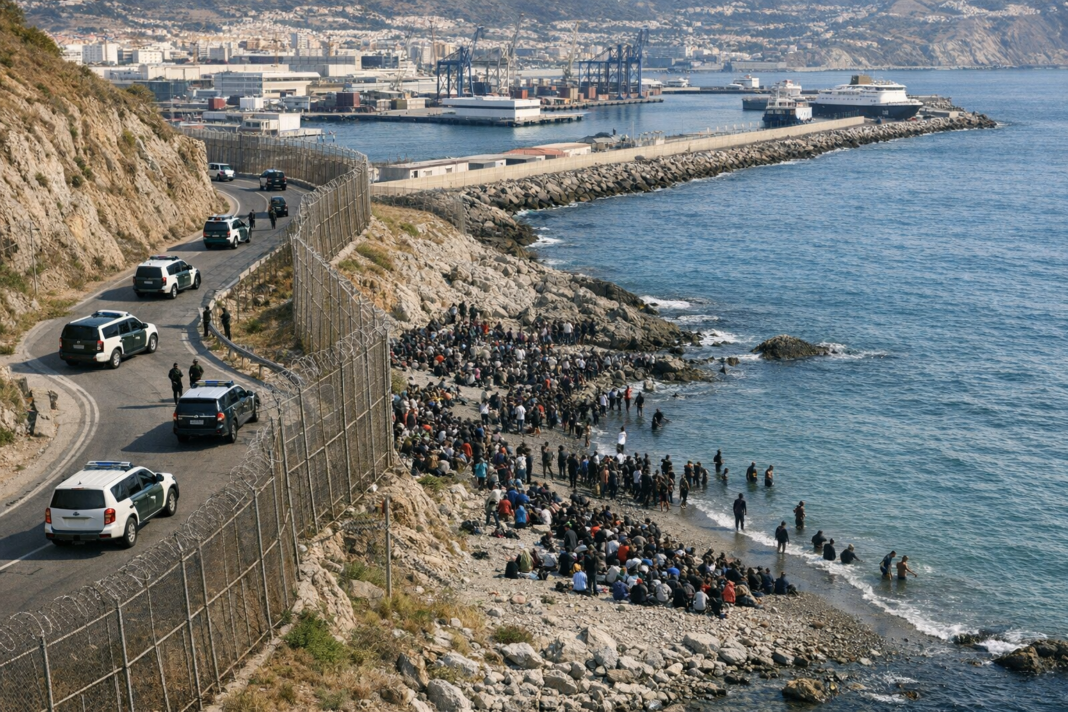

Spain’s north African enclave of Ceuta became the focus of a high-profile migration incident after footage showed large groups of people crossing into the territory. The arrivals prompted public debate across Europe and an expedited response from several capitals, with commentators and political leaders linking the events to recent Spanish immigration measures.
In a coordinated diplomatic move, a letter organised by Italy and Denmark was signed by 22 EU heads of government and conveyed concern about policies that could act as “pull factors” for irregular migration. The signatories cited Spain’s recent actions as part of a broader call for European discussion on how national measures interact with cross-border migratory flows.
The criticism has focused on a Spanish regularisation programme that opened avenues for undocumented migrants to apply for legal status; more than a million applications have been reported since the scheme began. The programme, advanced by Prime Minister Pedro Sánchez, has been defended by its proponents as a regulatory response to a long-standing irregular migration population, while opponents link it to the timing of the Ceuta arrivals.
The episode has intensified domestic political debate in Spain and prompted renewed calls within the EU for coordinated policy responses. Governments calling for a review emphasise the need to balance humanitarian obligations, border management and the deterrent effects of national measures. The situation in Ceuta serves as a case study for how unilateral policy shifts can generate diplomatic pressure and shape broader European discussions on migration management, legal pathways and bilateral relations between member states and neighbouring countries.






