HomeOpinionFrom Welcome to Weariness: Poland, Ukraine and the Strain of Solidarity

From Welcome to Weariness: Poland, Ukraine and the Strain of Solidarity

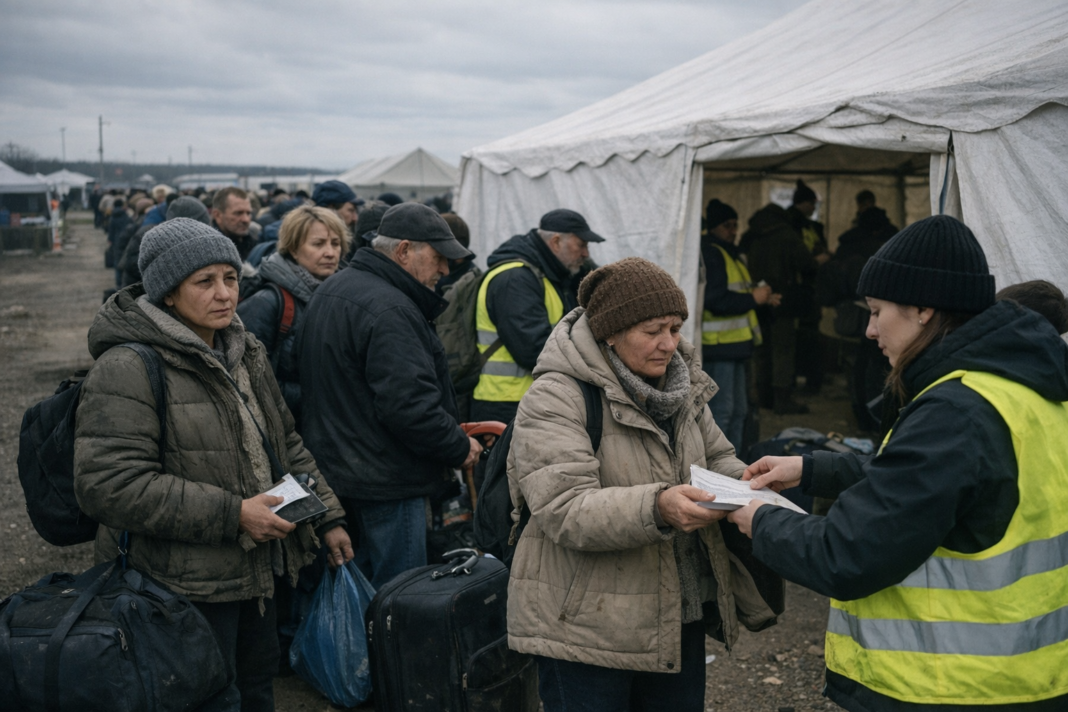
Poland’s open doors at the outset of Russia’s full-scale invasion produced one of the most visible humanitarian responses in recent European history. Millions of people fleeing the conflict found shelter, work and community across the country, and everyday acts of assistance quickly became a national story. That initial outpouring of support involved citizens, charities and local administrations as much as the central government, creating an early narrative of solidarity that contrasted with Poland’s complex past with its eastern neighbour.

Over time the public mood has shifted. Law and Justice—the party that had to align its stance with widespread civic compassion—and the authorities in Warsaw became prominent advocates for Kyiv on the European stage, while also providing military aid and financial assistance. Ukrainian officials regularly expressed gratitude for that backing. Yet that diplomatic and material support grew alongside a new reality: many displaced people began to rebuild their lives in Poland rather than simply waiting to return home, and Kyiv started to press for a more equal footing within European decision-making.

The change in fortunes has had practical and political consequences. Local labour markets, public services and housing systems absorbed sustained additional demand, and those pressures have contributed to a visible shift in public debate about migration and integration. At the same time, the relationship between the two capitals has been complicated by differing expectations—about timelines for return, about recognition and about the allocation of political influence in Europe. Those frictions are not new; they overlay long-standing grievances tied to wartime memory, border changes and postwar displacements, but the current circumstances place them in a fresh and potentially destabilising context.

What emerges is a test of how temporary wartime solidarity adapts to protracted displacement and shifting geopolitical ambitions. Managing the transition from emergency relief to durable policy solutions will require clear frameworks for rights, resources and regional cooperation. The path chosen by both governments, and by European institutions that mediate their disputes, will determine whether recent cooperation endures or gives way to deeper diplomatic and social strains.


Advertisementspot_imgspot_img

Hot this week

Geese at End of the Road: a generation’s uneasy soundtrack

At End of the Road, Geese delivered a taut, charged set that captured contemporary disquiet and renewed attention to guitar-driven rock.

Art Garfunkel, Restless Voice: Returning to the Stage at 83

At 83, Art Garfunkel resumes touring after a lengthy pause, reflecting on a varied life as singer, actor, teacher and voracious reader.

Over 600 Employers Found to Have Underpaid Staff, £4m Repaid to Workers

Government figures show 600+ employers underpaid staff; named firms include B&Q and Five Guys, with £4m returned to workers.

How Colin From Accounts Found a Quiet, Satisfying Finale

The modest rom-com concluded with a measured finale that rewarded character work and restraint, confirming its place in contemporary TV.

Mainstream Parties Lose Grip as Germany’s Political Landscape Shifts

Mainstream parties in Germany face voter drift, with the AfD strengthening in parts of the country and coalitions under pressure.

An Astronaut’s View: The 9/11 Smoke Plume Seen from Space

An astronaut aboard the ISS photographed the smoke over New York on 9/11, producing one of the most enduring orbital images of the attacks.

Emergency department failings behind rising clinical negligence claims, families say

A BBC analysis links cases like Oli's to a wider rise in clinical negligence claims in England and highlights pressure on services and families.

Stage-style hiring: when recruitment turns into a live audition

Employers stage live pitch events for candidates. The approach offers visibility and risks bias, privacy and fairness challenges.

Canada’s $20bn Counter-Tariffs Take Effect, Straining North American Trade Ties

Canada's counter-tariffs on $20bn of U.S. goods take effect, testing the resilience of the world's largest bilateral trading relationship.

Holborn and St Pancras byelection becomes a gauge of Labour’s southern appeal

A Holborn and St Pancras byelection tests Labour momentum and offers the Greens a high-stakes opportunity in a traditionally safe seat.

Newcastle frames Howe departure as a managed transition, says sporting director

Newcastle sporting director Ross Wilson says the club planned for Eddie Howe's exit and that the summer never felt chaotic.

How Colin From Accounts Found a Quiet, Satisfying Finale

The modest rom-com concluded with a measured finale that rewarded character work and restraint, confirming its place in contemporary TV.

Wellness Apps and the New Economics of Women’s Health

Health apps for women raise concerns over privacy, clinical oversight and commercialization, prompting calls for clearer standards and protections.
Advertisementspot_img

Related Articles
