
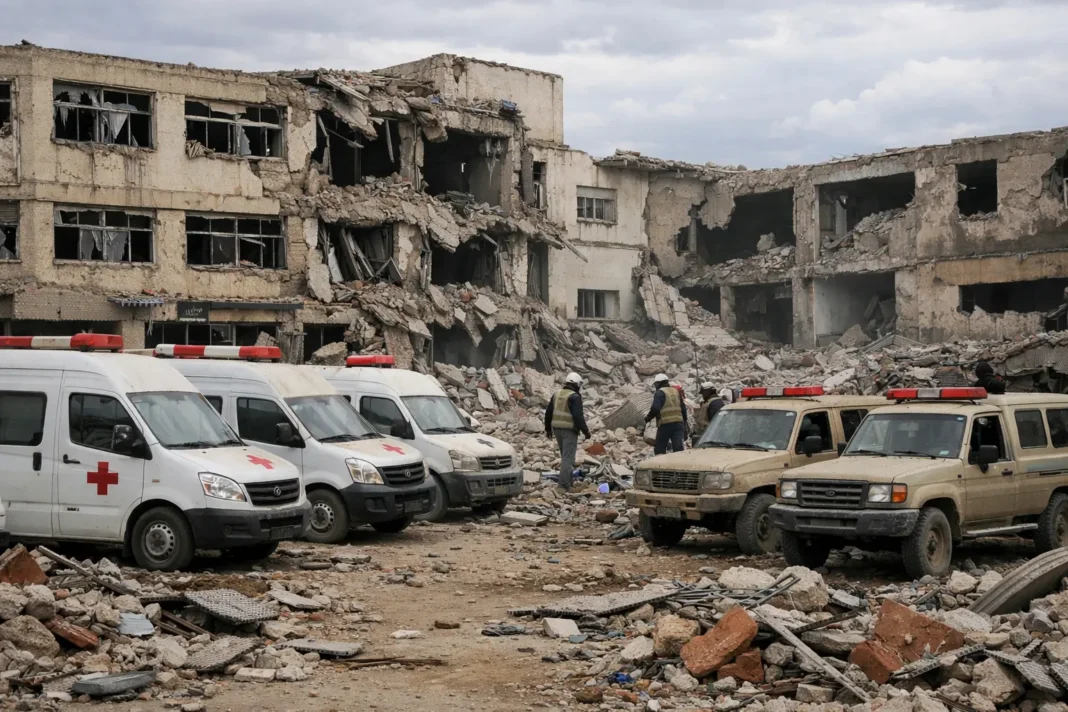

BBC investigation finds that fighters from the Rapid Support Forces deliberately struck hospitals in Sudan, producing a pattern of assaults on medical facilities set out in the reporting. The inquiry assembled documentary evidence and witness accounts pointing to repeated incursions, damage to clinical infrastructure and interruptions to services. The material released by the broadcaster describes a sequence of incidents that, taken together, indicate more than accidental harm to healthcare premises and personnel.
The issue has drawn direct comment from the United Nations human rights office. The UN human rights chief, Volker Türk, who leads the Office of the UN High Commissioner for Human Rights, said the multiple attacks may amount to war crimes. That assessment underscores the potential legal gravity of deliberate strikes on medical facilities, which are afforded special protection under international humanitarian law and whose violation can trigger inquiries and criminal processes.
Observers note that the involvement of the Rapid Support Forces, a Sudanese paramilitary group, in fighting across urban and rural areas has frequently placed civilian infrastructure at risk. Disruption to hospital operations hinders emergency care and long-term treatment alike, affecting patients who depend on continuous services. Beyond immediate casualties and structural damage, targeted attacks on health sites compound humanitarian needs by displacing medical staff and reducing the capacity of non-governmental and state actors to deliver care.
The findings of the investigation and the UN comment are likely to intensify calls for accountability and stronger measures to protect medical facilities in conflict zones. International legal frameworks prohibit attacks on hospitals and mandate safeguarding of civilians and healthcare workers; documenting patterns of assault is a first step toward potential legal action and toward informing humanitarian responses. The reporting has thus renewed focus on preserving medical neutrality and on mechanisms that can investigate and respond to alleged violations.







