
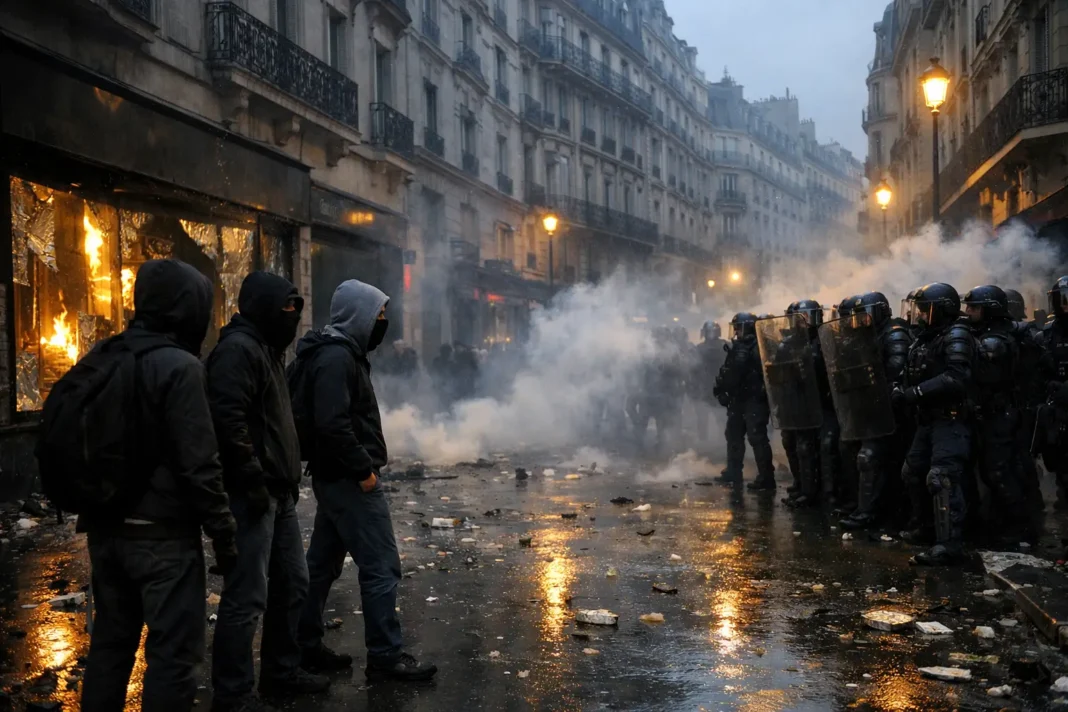

Riot, looting, anger marked central Paris this weekend as street clashes between demonstrators and law enforcement broke out at key squares and avenues. A journalist present reported that volleys of tear gas were deployed into Place de la République from Rue du Faubourg-du-Temple, sending crowds away and leaving a haze that made breathing and vision difficult. Many on the ground retreated toward the Boulevard de Magenta as the atmosphere shifted rapidly from demonstration to disorder.
The crowd that gathered was composed of people driven by longstanding grievances alongside others who appeared intent on confrontation. Observers noted scenes of property damage and looting interspersed with peaceful protest activity, creating a volatile mix that complicated efforts to identify clear leadership or a single agenda. A reporter on the scene, Oliver Haynes, described the physical impact of the policing measures and the difficulty of moving through the gas-filled streets.
The deployment of tear gas and other crowd-control tactics has already intensified public discussion about the balance between restoring order and preserving civil liberties. The presence of visible damage and violent episodes has also prompted renewed scrutiny of policing methods and the capacity of authorities to protect both public safety and the right to demonstrate. The clashes are a reminder of how public order operations play out in dense urban settings and how quickly demonstrations can fragment into multiple dynamics on the ground.
Beyond the immediate scenes of confrontation, the disturbances underscore deeper social tensions that brought people into the streets. Analysts and local voices are likely to examine the events for what they reveal about trust in institutions, the effectiveness of public-security approaches, and the avenues available for peaceful redress. The coming days will be watched closely to see whether authorities, community leaders and political figures move toward de-escalation and dialogue or toward further securitized responses that could shape public debate in the weeks to come.







