
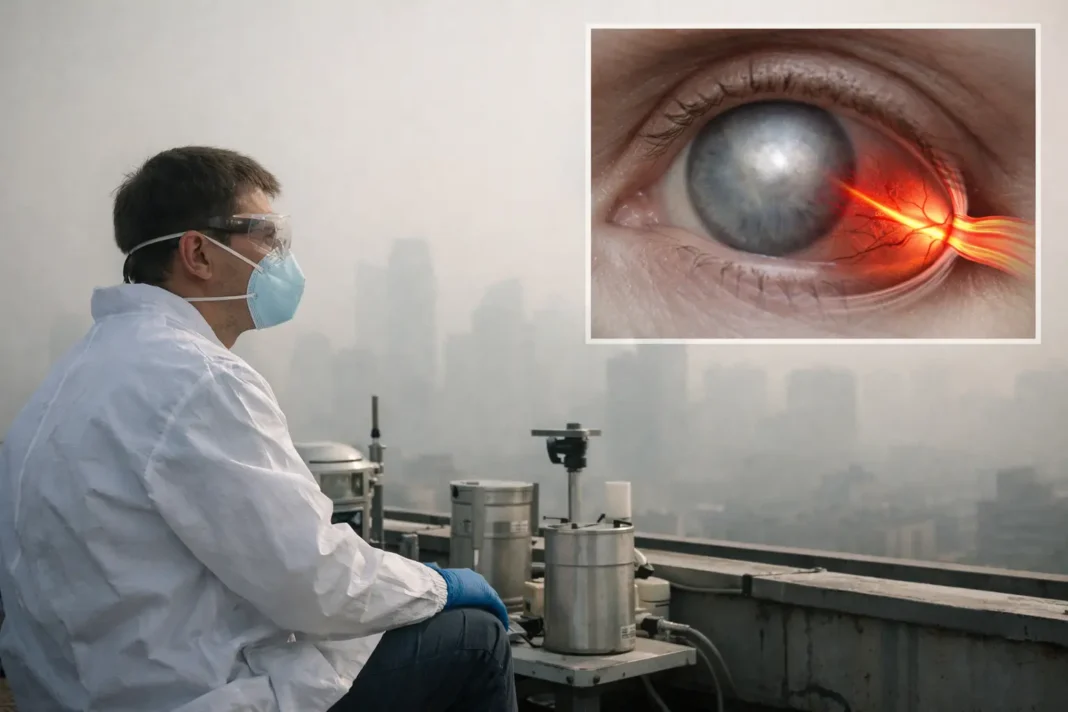

Exposure to polluted air is emerging as a factor associated with common age-related eye diseases, according to a synthesis of 41 observational studies presented at the 44th Congress of the European Society of Cataract and Refractive Surgeons in London. The review pooled research conducted in East Asia and the U.K. and examined links between long-term ambient pollutants and the incidences of glaucoma and cataract, conditions that already affect tens of millions globally — including estimates of around 80 million people with glaucoma and more than 94 million people with cataract.
The strongest and most consistent associations involved fine particulate matter (PM2.5). Study-level comparisons indicated that participants with the highest PM2.5 exposure had substantially greater odds of glaucoma compared with those with the lowest exposure; an interquartile increase in PM2.5 corresponded with roughly an 8% higher odds of glaucoma and a 4% higher hazard for cataract in pooled estimates. Other air pollutants — nitrogen dioxide, ozone, sulfur dioxide and larger particles such as PM10 — showed less consistent or no significant relationships across the reviewed reports. Experts involved in the review underlined that the evidence is observational and therefore describes associations rather than definitive causation. Nidhi Singh, an environmental epidemiologist at the IUF-Leibniz Research Institute for Environmental Medicine, noted the relative consistency of the PM2.5 findings across studies.
Authors and commentators have outlined plausible biological pathways that could link inhaled particles to eye damage. Fine particulates can provoke oxidative stress and chronic inflammation systemically and at ocular surfaces; these processes may promote protein changes in the lens that lead to clouding and may injure retinal ganglion cells or drainage tissues implicated in glaucoma. The review cited animal and laboratory work that observed pressure changes and cellular damage following PM2.5 exposure. The clinical analysis was presented by Dr. Ahmed Alnabihi of the King Khaled Eye Specialist Hospital and Research Center, who highlighted the eye’s continuous contact with outdoor air as a potential route for particulate exposure to affect ocular tissues.
For clinicians and public-health planners, the findings underscore a potential environmental dimension to eye disease burden and suggest further investigation is warranted into exposure reduction as a preventive measure. The authors call for additional longitudinal studies and mechanistic research to clarify pathways and to quantify how improvements in air quality might influence rates of visual impairment. Meanwhile, the observational nature of the current evidence means recommendations for individual clinical care should remain grounded in established risk factors and practices.






