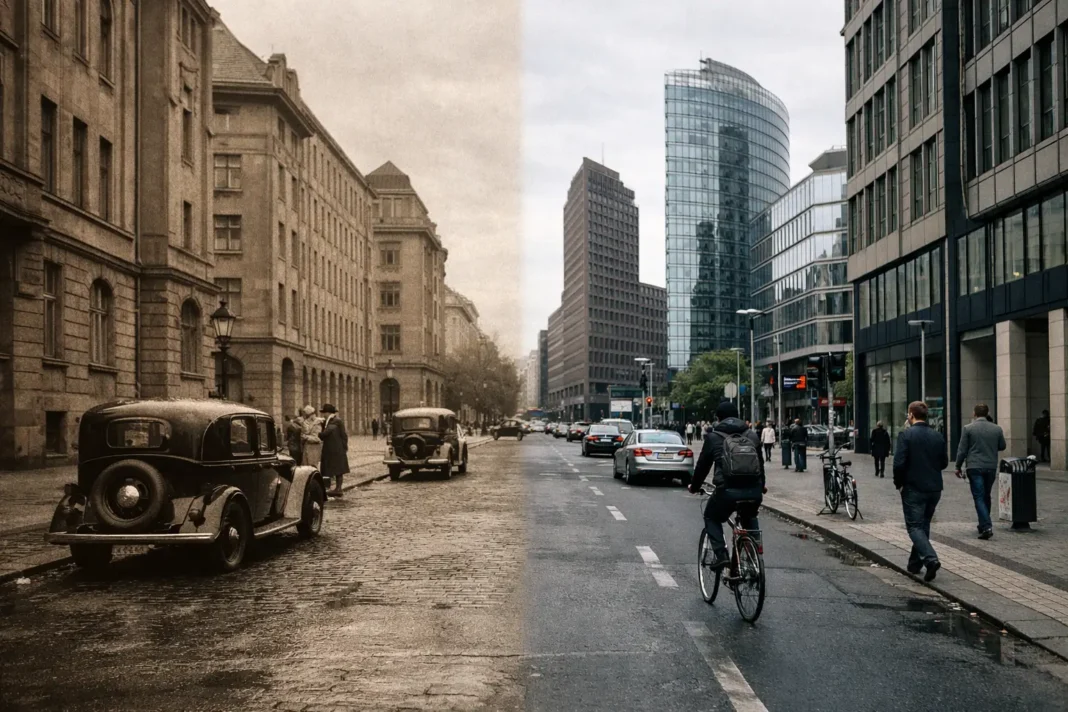

Dark autumn mood in Germany has been intensified by the arrival of the final season of the long-running television series Babylon Berlin. Set in January 1933, the new episodes place viewers at a historical inflection point when Adolf Hitler was appointed Reichskanzler, a moment that the drama treats as both narrative climax and cautionary tale. Produced for public television, the series revisits the cultural and political turbulence of the late Weimar years through a mix of fiction and period detail.
The programme’s renewed visibility has prompted wider public discussion about how historical drama interacts with contemporary perception. Over its decade on air the show has been noted for dramatizing the social dynamics that accompanied Germany’s slide into authoritarian rule. At the same time, scholars and commentators have emphasised that artistic representations, however vivid, do not substitute for detailed historical analysis and can risk encouraging oversimplified comparisons between eras.
Historians point to concrete distinctions between the Weimar Republic’s political landscape and present-day institutional arrangements, electoral systems and international context. Those differences matter for understanding causation and consequence: similar social anxieties do not automatically yield identical political outcomes. Observers also note that a focus on dramatic parallels can obscure the many factors—economic structures, party systems, international pressures—that shaped the 1930s, and which differ markedly from today’s conditions.
The cultural debate around the series highlights a broader civic task: using popular history to foster informed reflection rather than deterministic storytelling. Television can sharpen public attention on democratic fragilities and civic responsibilities, but it may also simplify complex histories when consumed as contemporary allegory. As viewers and institutions respond to the series, the conversation is likely to centre on how to balance artistic interpretation with rigorous historical context and on the role of civic education in grounding present-day political discussion.