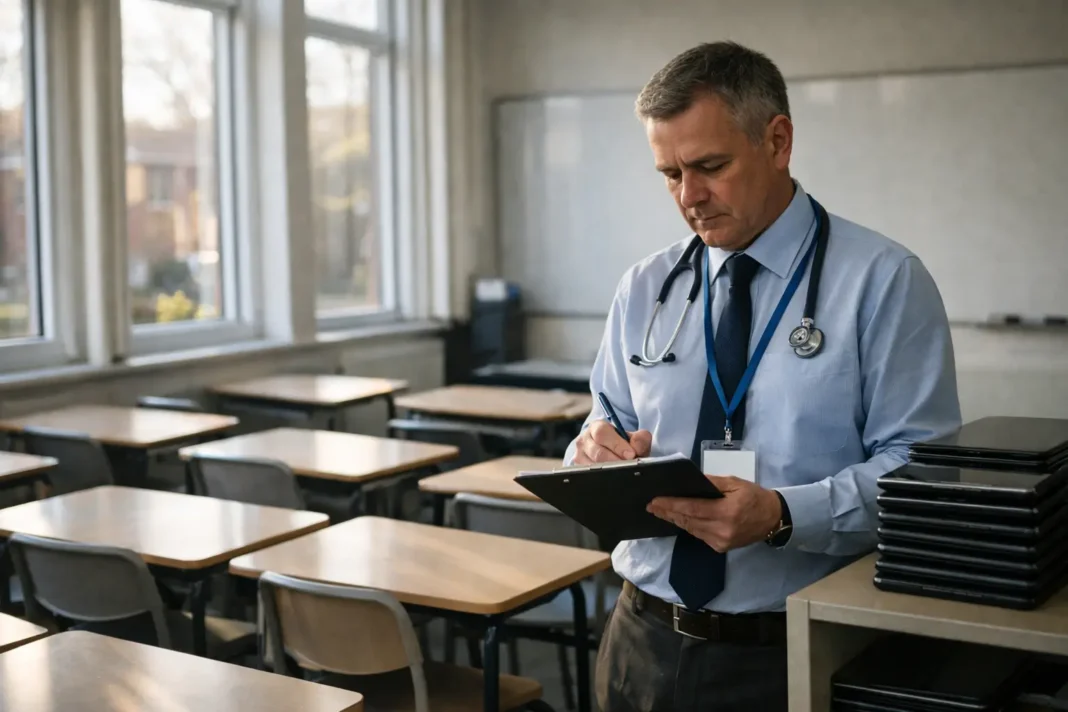

Clinicians warn school technology use in English schools is contributing to a growing burden of pupil health problems, particularly an increase in short-sightedness among children. The group highlights that extended periods of near work on digital devices in classroom settings coincide with trends seen by eye-care professionals, prompting concern about potential long-term visual outcomes for cohorts of schoolchildren.
The clinicians point to patterns that link prolonged screen exposure during lessons with a rise in visual complaints and diagnoses of myopia. They also note that time spent outdoors — which research and eye specialists associate with lower myopia risk — can be squeezed by schools’ expanding digital programmes. While technology brings clear educational benefits, the clinicians stress that its intensification in daily lessons appears to be reshaping children’s visual health profiles.
Their recommendations focus on practical adjustments within the school day: limiting consecutive screen sessions, integrating regular breaks from near work, and ensuring a balance between digital activities and outdoor time. They further call for systematic monitoring of pupil vision so that emerging problems can be identified early and managed through routine checks and corrective measures. Parents and educators can consult guidance on eye care from NHS for practical advice on screening and when to seek specialist assessment.
The warning is likely to feed into discussions among health officials, education leaders and policymakers about how best to align classroom technology use with pupil wellbeing. Any response will need to weigh the pedagogical advantages of digital tools against the potential for avoidable health impacts, and to consider monitoring and research to better define safe limits for screen use in schools.