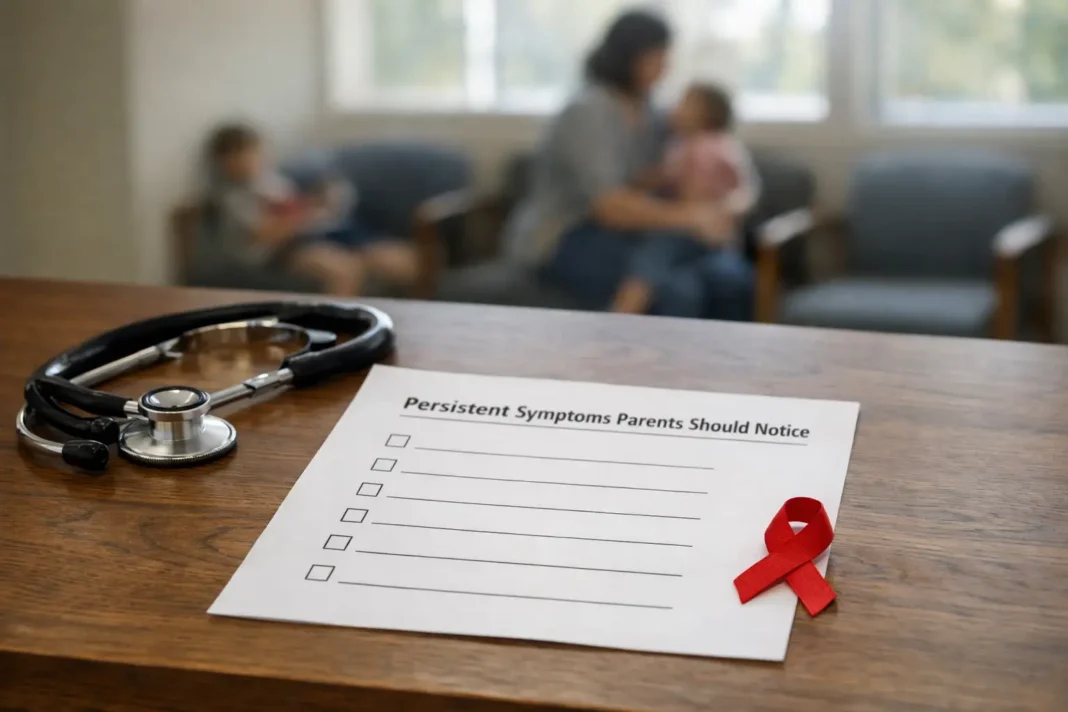

Childhood cancer warning signs can be hard to spot because early symptoms often mimic common childhood illnesses. Cancer, while uncommon in children, is the leading cause of death from disease among those under 15 in the UK, which makes prompt recognition and assessment important. Parents and carers who are unsure should seek advice from primary care or from NHS services.
Symptoms that may warrant further medical review include persistent, unexplained fever; unintentional weight loss or fatigue; a new lump or swelling anywhere on the body; unusual bruising or bleeding; ongoing bone or joint pain, including limping; prolonged headaches sometimes with vomiting; changes in vision or behaviour; and breathing difficulties or a swollen abdomen. These signs are not specific to cancer and often have benign causes, but patterns that persist or worsen should not be dismissed.
Initial assessment typically begins with a general practitioner who will consider the history and examine the child. Basic blood tests and imaging can be used to clarify the cause, and when findings are concerning the child may be referred to specialist paediatric oncology teams for further investigation. Specialist centres and charity-run information pages provide guidance for families on what to expect from investigations; for background and resources see Cancer Research UK.
Awareness matters because early evaluation can reduce delays in diagnosis and ensure timely access to specialist care when needed. Parents and carers are advised to keep a record of symptoms and their duration, raise concerns with school health staff or a health visitor if relevant, and request reassessment if symptoms do not follow an expected recovery course. Serious acute signs such as severe breathing difficulty, major bleeding or sudden neurological changes require immediate emergency attention.