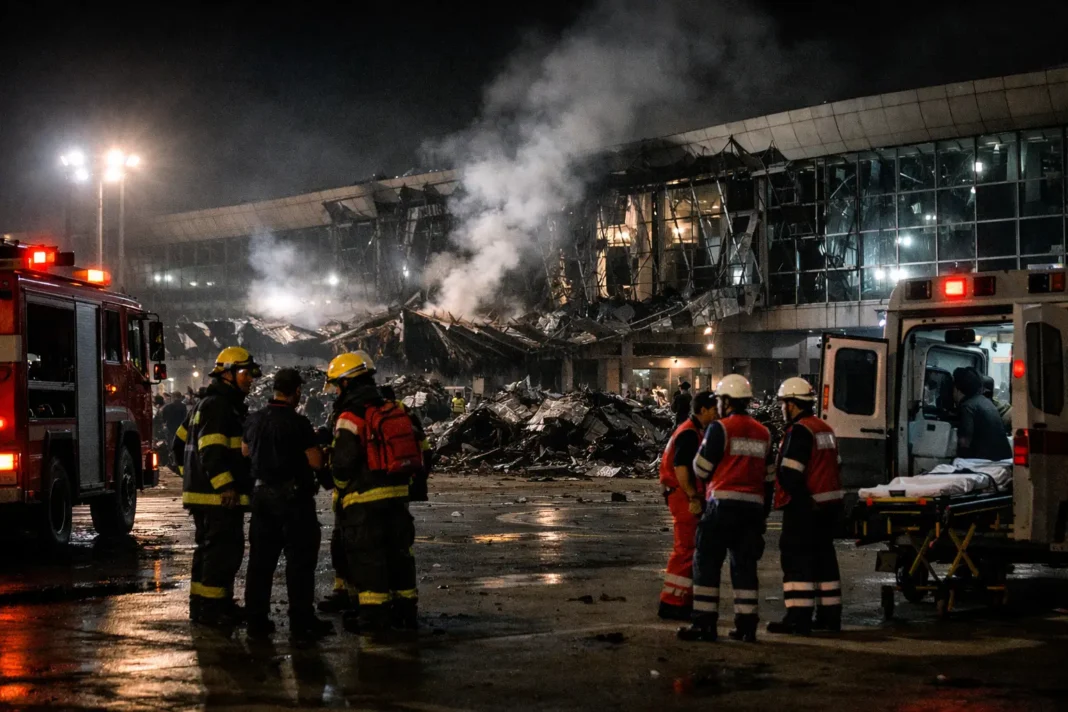

Deadly strike in Riyadh on Saturday transformed a long-standing sense of security across the Gulf. The assault, carried out by Houthi forces, struck Saudi Arabia‘s King Khalid International Airport, causing at least 13 deaths and around 300 injuries and disrupting flights and operations at the capital’s main gateway. The scale of casualties is unusually high for the kingdom and represents a stark escalation from prior incidents that have largely spared major urban centres.
The incident is the most deadly attack on any Gulf state since hostilities involving the United States and Israel and Iran began earlier this year. It punctures assumptions that major Gulf capitals are insulated from the sort of direct strikes that have affected other parts of the Middle East. The strike on a civilian airport — a critical piece of national infrastructure — raises immediate concerns about the vulnerability of transport hubs and the safety of international travel routes that link the region to global markets.
Beyond the human toll, the attack alters calculations for neighbouring states. Governments in the Gulf, including Qatar and the United Arab Emirates, face new pressures to reassess security postures, civil-defence systems and contingency plans for critical infrastructure. Economies that depend on stable air links and investor confidence could see secondary effects if disruptions persist. Diplomatic channels and security partnerships in the region are likely to feature this episode prominently in coming discussions among capitals and international partners.
For now, the attack marks a turning point in a widening regional confrontation. The targeting of a major civilian facility within a Gulf capital underscores the shifting character of threats and the limits of existing deterrence arrangements. How state actors and coalitions respond in the near term will shape whether the episode becomes an isolated escalation or a sustained pressure point affecting politics, commerce and daily life across the region.