
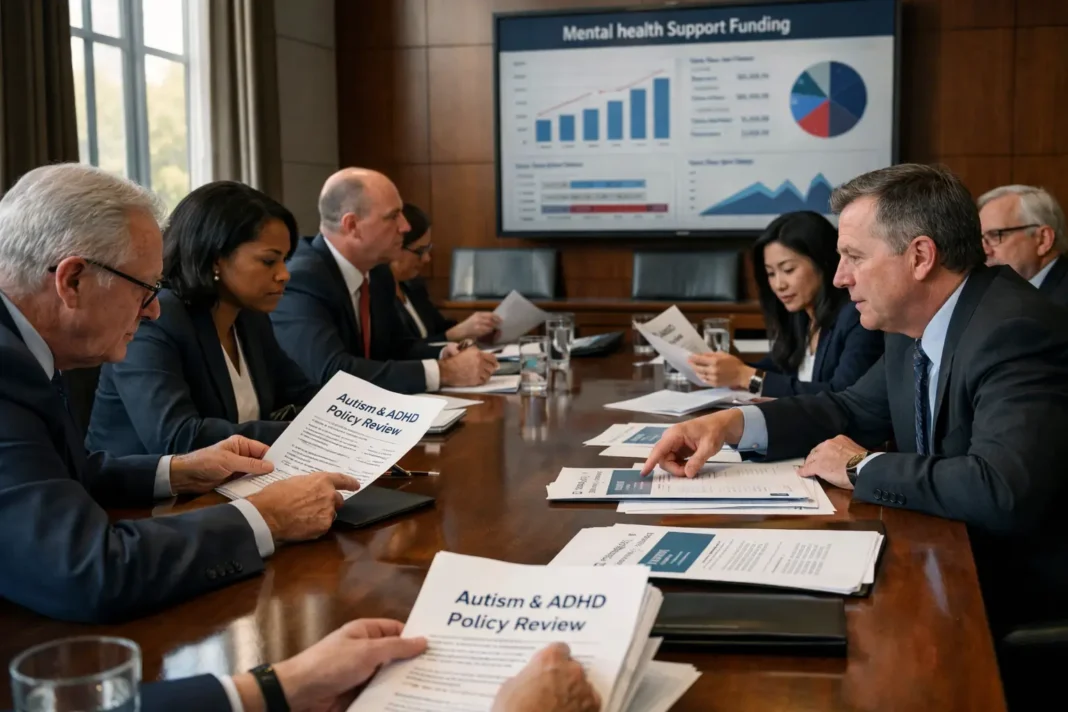

New review highlights how current approaches to autism, ADHD and mental health intersect with public services and everyday life. The analysis identifies lessons for frontline care, benefit systems, schools and workplaces and signals pressure for co-ordinated policy responses. While it does not prescribe a single model, the review makes clear that gaps across diagnostics, continuing support and cross-sector collaboration affect outcomes for individuals and families.
The review underscores the need for more resilient health pathways, including earlier identification and sustained support beyond childhood. Strengthening workforce skills and service integration are recurring themes, with an emphasis on smoother transitions into adult care. The document also points to the necessity of aligning clinical services with community-based provision so that assessments and follow-up are better joined up with social and educational support. These shifts would have implications for resource allocation and service planning within the NHS and partner organisations.
Education and employment systems are also in focus. The review stresses the importance of tailored strategies in schools to reduce barriers to learning and to support staff training. In the workplace, clearer expectations about reasonable adjustments and employer guidance could improve retention and progression for people with neurodevelopmental conditions. Welfare arrangements are highlighted as a critical interface where assessment, benefit access and practical support often determine whether people can sustain education or work participation in the longer term.
Looking ahead, the review calls for stronger data collection, inter-departmental collaboration and clearer routes for translating evidence into operational change. Policymakers will need to weigh short-term implementation choices against longer-term benefits from earlier and better-targeted support. The review’s findings create a framework for debate on how health, welfare, education and employment policies can be adapted to improve outcomes for people with autism, ADHD and related mental health needs.







