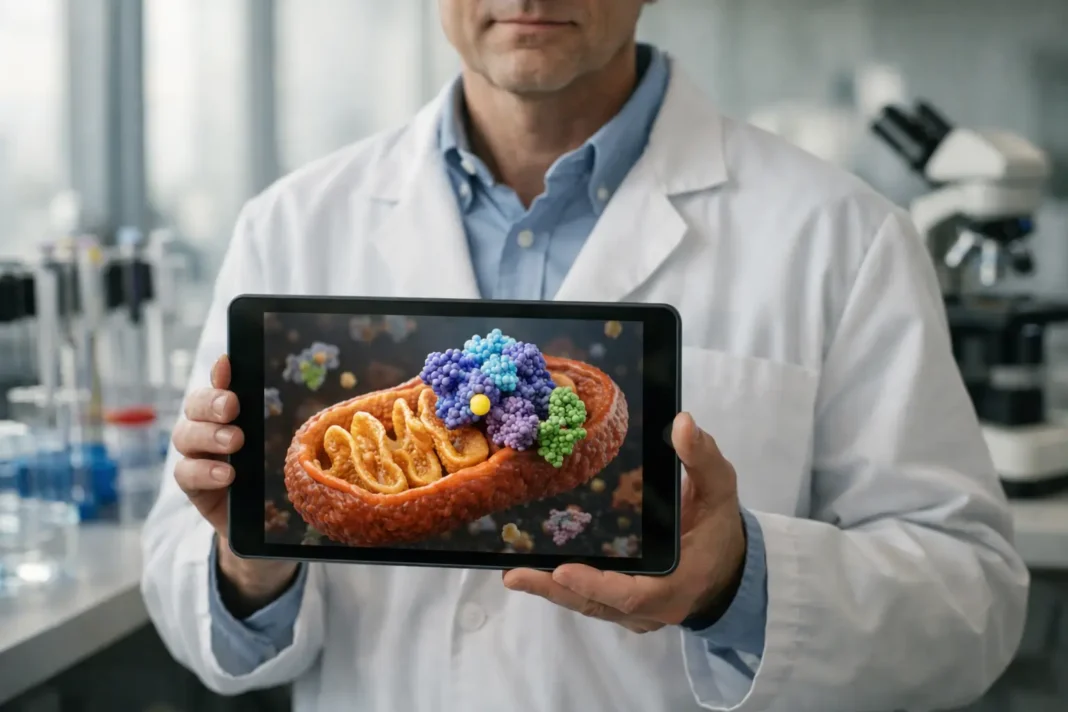

Scientists have identified an enzyme that appears to help liver cells remove damaged mitochondria and process stored fat, a mechanism that could counteract the deterioration of fatty liver disease. The enzyme, named UBE2N, was observed promoting cellular pathways tied to mitochondrial quality control and lipid breakdown, actions that are central to preventing inflammation and tissue damage in the liver.
The condition affects an estimated 100 million Americans and can range from simple fat accumulation to a more severe state known as MASH, which involves inflammation, scarring and cell loss. Impaired clearance of dysfunctional mitochondria and defective handling of lipids are established contributors to that progression; the newly identified role of UBE2N links a single molecular activity to both processes.
At the cellular level, UBE2N activity is associated with pathways that tag damaged components for disposal and facilitate the breakdown of intracellular fat stores. By enhancing removal of malfunctioning mitochondria and promoting lipid turnover, UBE2N may reduce the cellular stress and injury that lead to inflammatory and fibrotic changes in liver tissue. These mechanistic insights frame UBE2N as a potential point of intervention or a biomarker for disease trajectory.
While direct clinical applications are not yet available, the finding offers a clearer map of biological steps that precede tissue scarring and organ dysfunction. For clinicians and public-health planners, better understanding of such protective mechanisms could inform strategies for early detection and targeted therapy development. Further research will be required to establish how modulation of UBE2N activity translates into benefits for patients and to evaluate safety and efficacy in human populations.