
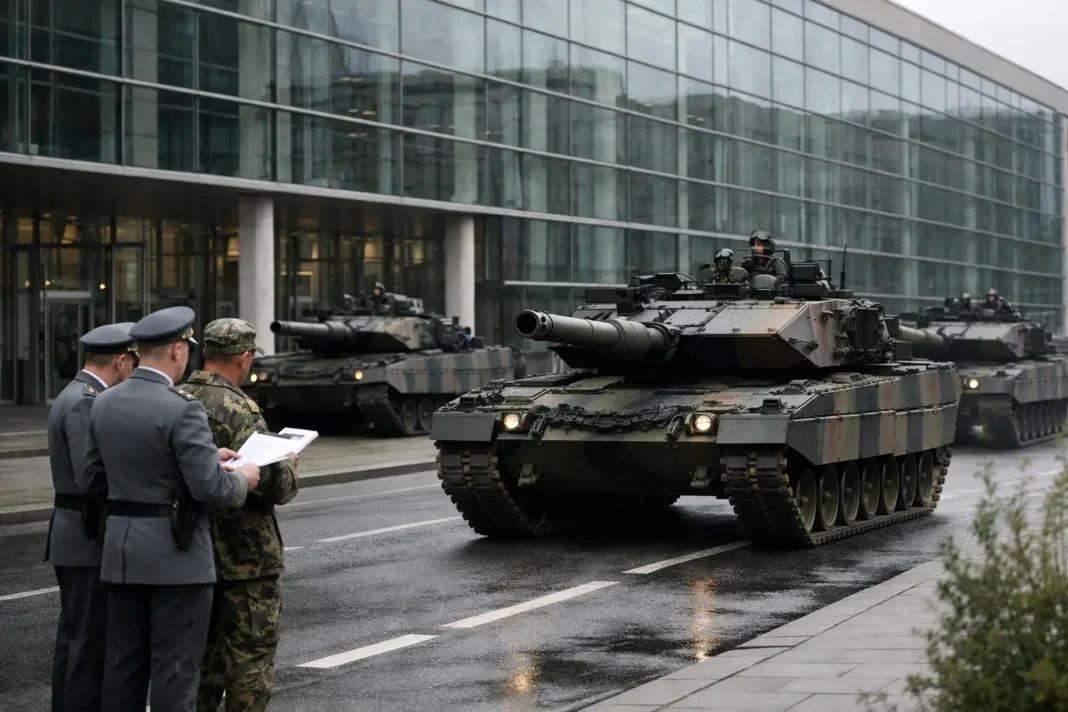

Germany’s rearmament debate has moved from policy papers into high-level diplomacy after Chancellor Friedrich Merz travelled to the White House and hosted a private dinner with a scholar whose warnings about a dominant Berlin have attracted attention. The visit and the conversation underline how decisions in Germany about defence budgets and procurement now resonate across allied capitals and public debate in Europe.
That scholar, Liana Fix, published a pointed essay in Foreign Affairs arguing that an abrupt military ascent could revive anxieties about German power. The essay revisits a longer arc: since reunification the country cultivated a role as a largely civilian actor on the international stage, allowing armed forces and defence investment to lag while emphasising restraint. Those historical choices are central to why current shifts look sudden to neighbours.
Allies have voiced concern that a rapid rise in defence outlays, if pursued without clear coordination, could produce strategic friction. Observers highlight practical risks such as duplication in procurement, gaps in interoperability and political unease among EU partners and NATO members. The debate is not about whether military spending should increase, but how it is planned and implemented to avoid unintended consequences for collective security.
Commentators and policy analysts emphasise that Berlin’s enlargement of capabilities can strengthen European defence if it is embedded in joint frameworks, transparent planning and burden-sharing. Cooperation with multilateral structures—including closer alignment with NATO and pooled procurement initiatives—would help mitigate fears and maximise the utility of new German capabilities. Paul Taylor, identified as a senior visiting fellow at the European Policy Centre, frames the issue as one of timing and method: the shape of Germany’s build-up will determine whether it reassures partners or renews old anxieties.





