
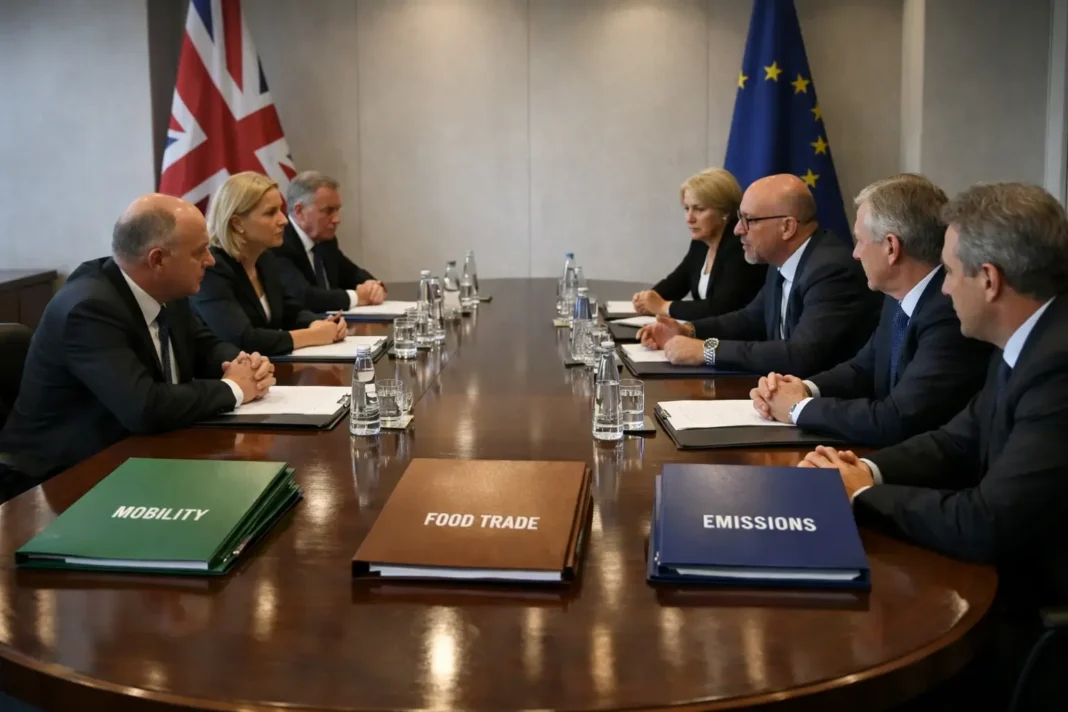

Britain and the European Union are expected to approve a new youth mobility scheme at a UK-EU summit on Friday, in a step that would add a practical channel of cooperation to the relationship rebuilt after Brexit. The plan is set to sit alongside discussions on food trade and carbon emissions, placing travel, commerce and climate policy at the centre of the latest round of engagement between London and Brussels.
The expected agreement would be significant because mobility for young people became one of the most visible changes after the UK left the bloc. While the available outline does not specify eligibility rules, duration or administrative conditions, a youth scheme would create a structured route for some younger citizens to spend time across the Channel. The UK government and the European Union have treated mobility as a sensitive area because it touches on work, study, residence and the wider political legacy of free movement.
Food trade is also on the agenda, pointing to efforts to reduce friction in a sector heavily exposed to checks, standards and border procedures. Any arrangement in this field would matter for businesses moving agricultural and food products between the UK and EU markets. The talks on food trade sit within a broader attempt to make post-Brexit rules more predictable without returning to the previous legal framework that governed Britain’s place inside the single market.
Carbon emissions form the third major area under discussion, reflecting the growing importance of climate-related rules in trade and industrial policy. Alignment or coordination on carbon emissions can affect companies, supply chains and future regulatory planning, particularly where cross-border trade is exposed to environmental standards. The summit therefore carries weight beyond a single mobility arrangement: it will test how far the two sides can build targeted agreements while keeping the overall post-Brexit settlement intact.






