
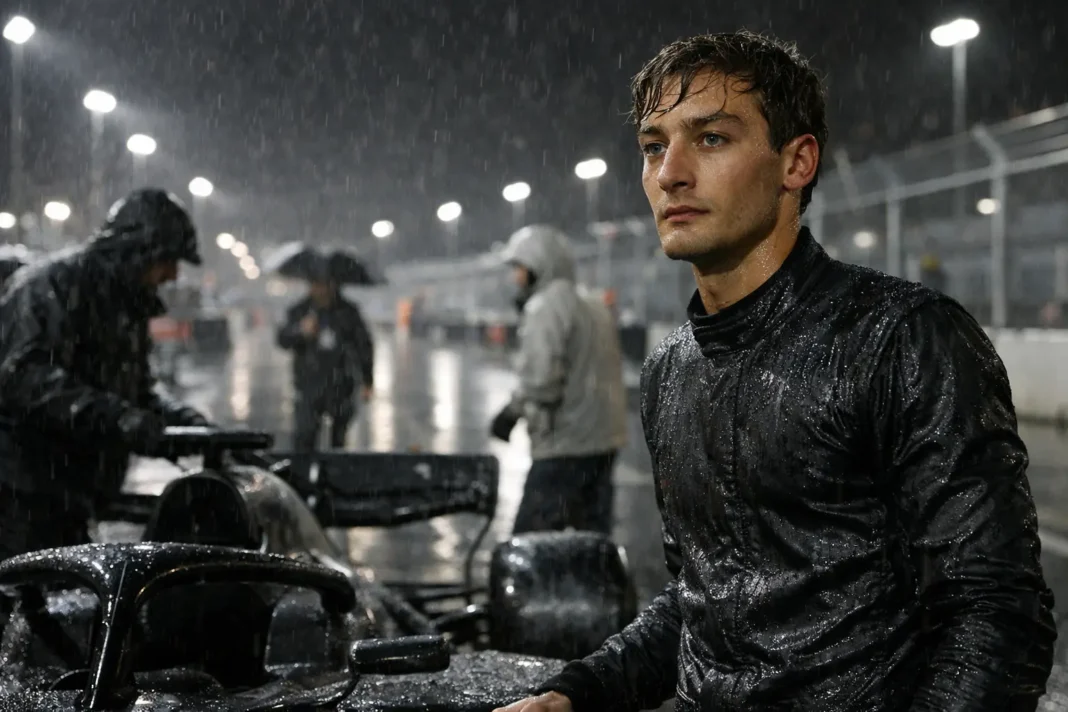

George Russell led a rain-affected second practice session at the Las Vegas Grand Prix, placing Mercedes at the top of the timesheets ahead of Pierre Gasly. The session unfolded in wet conditions, limiting the value of straightforward performance comparisons and placing greater emphasis on tyre management, track evolution and driver confidence on a low-grip street circuit.
The result gave Russell an encouraging start to a crucial phase of the race weekend, although practice rankings can be difficult to interpret when weather affects running. In such circumstances, teams often prioritise data gathering over representative lap times, with engineers assessing how the car responds as the surface changes. The Las Vegas layout, known for its long straights and heavy braking zones, can become especially demanding when rain disrupts the normal preparation rhythm.
Gasly’s second place also stood out in a session where clean laps and timing were central to the order. For drivers outside the usual front-running group, mixed conditions can present an opportunity to show pace and extract performance before qualifying assumptions settle. Even so, practice classification alone does not determine competitive hierarchy, particularly when fuel loads, tyre usage and run plans remain undisclosed by teams.
The session formed part of the wider build-up to a Grand Prix that has become one of Formula 1’s most closely watched modern events. The championship’s official organiser, Formula 1, has positioned Las Vegas as a major showcase on the calendar, combining a high-profile setting with a circuit that rewards straight-line speed and braking stability. Wet running adds another layer of complexity, reducing rubber on the racing line and increasing the importance of driver feedback between sessions.
For Mercedes and Alpine, the outcome of second practice will be reviewed within a broader technical picture rather than treated as a definitive forecast. Russell’s benchmark offers Mercedes a useful reference point, while Gasly’s position provides Alpine with evidence of competitiveness in difficult conditions. The next sessions will be decisive in showing whether the wet-practice order reflects genuine pace or simply the best execution in a disrupted hour of running.






