
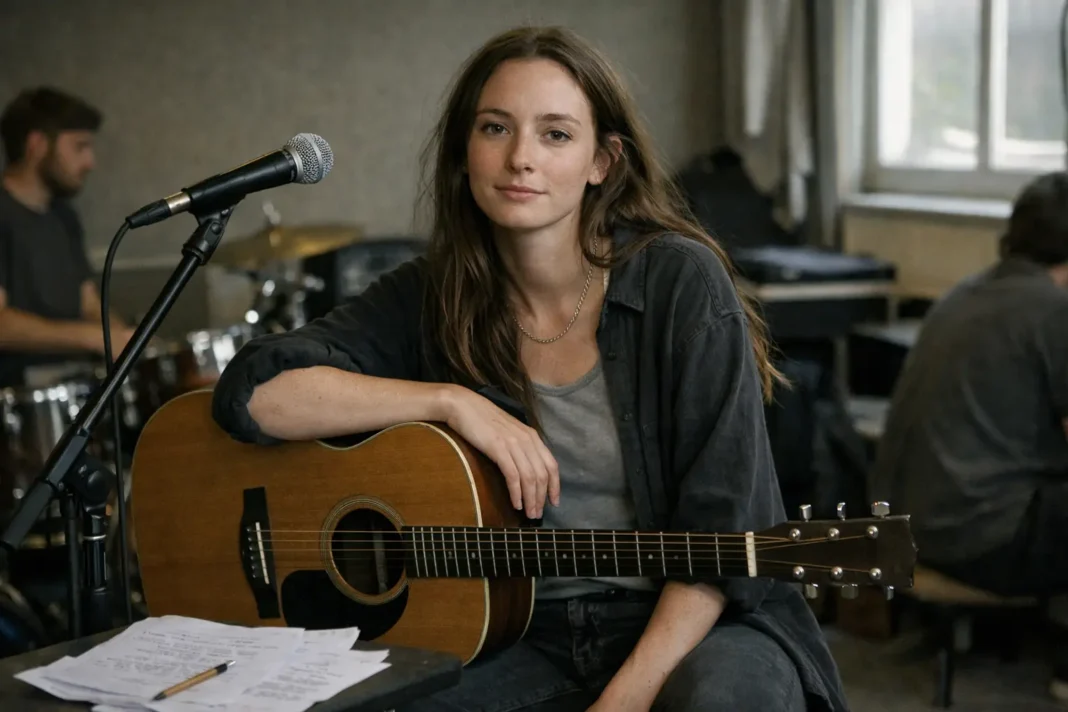

Holly Humberstone’s latest reflection on pop music cuts into one of the industry’s most persistent tensions: how much perfection audiences actually want. The singer has argued that listeners struggle to connect with a pop star who appears “too polished”, placing emotional credibility above a flawless public image. Her point speaks to a market where sound, styling and online presence are often packaged together, sometimes leaving little room for vulnerability.
Holly Humberstone has also described feeling pushed to compete with female peers before reassessing what a sustainable artistic path should look like. That pressure is familiar across the music industry, where careers are measured through constant comparison and women in particular are often framed through rivalry. The result can narrow public attention, shifting focus away from songwriting, performance and artistic development toward rankings, image and perceived momentum.
The singer’s emphasis on longevity offers a different measure of success. Rather than treating a career as a race for immediate dominance, it places value on building trust with an audience over time. For emerging artists, that kind of durability depends on consistency without overexposure, visibility without losing a sense of self, and ambition without allowing market pressure to define every creative decision.
The discussion also reflects a broader reassessment of authenticity in contemporary pop. Audiences are accustomed to highly produced visuals, carefully managed releases and constant promotional cycles, yet digital platforms have also made directness a valuable currency. A heavily polished image can create distance when fans are looking for signs of personality, uncertainty or lived experience. For labels, managers and artists, the balance between professional presentation and human connection has become increasingly central.
Humberstone’s view does not reject ambition or the craft involved in pop stardom. It challenges the idea that control and polish should erase individuality. In a crowded field, her position highlights a practical reality as much as an artistic one: connection can be harder to build when an artist appears untouchable, while longevity often depends on remaining recognisably human.






