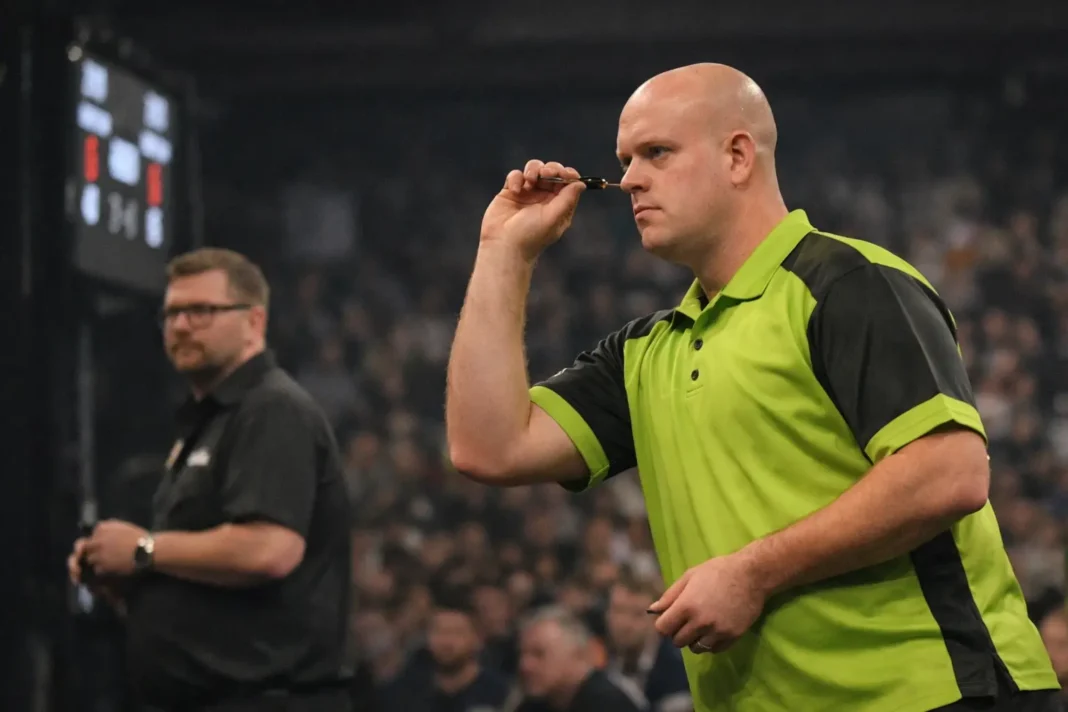

Michael van Gerwen faces a demanding second-round assignment at the Professional Darts Corporation Grand Slam of Darts after acknowledging that James Wade is playing at an exceptionally high level. The Dutchman has made clear that reputation alone will not be enough, saying he will need to bring his “A-game” to move past an opponent he believes is in “some of the best form of his life”.
The comments give the tie a sharper edge than a routine meeting between established names. Van Gerwen remains one of the sport’s most recognisable competitors, while Wade has built much of his career on control, composure and ruthless finishing. In a format where short swings can change the direction of a match quickly, Van Gerwen’s public assessment underlines how little margin he expects to have when the pair meet.
The Grand Slam occupies a distinctive place in the darts calendar because it places leading players under immediate pressure after the opening phase. A second-round match leaves no room for gradual adjustment: scoring rhythm, doubling and decision-making must all arrive together. For Van Gerwen, that makes preparation as important as pedigree, particularly against a player whose current standard has drawn his full attention.
Wade’s presence also changes the tone of the contest. He is not a player who usually depends on spectacle to unsettle opponents; his threat often comes from keeping legs alive, converting chances and forcing rivals to maintain their level for longer than they might prefer. Van Gerwen’s emphasis on producing his best game reflects that challenge rather than any lack of confidence.
The meeting therefore stands as one of the more intriguing second-round matches of the competition. Van Gerwen has framed it in simple terms: only his highest standard will be sufficient. With Wade arriving in form and the Grand Slam offering little tolerance for lapses, the match is set to test not just scoring power but concentration, finishing and the ability to withstand sustained pressure.