
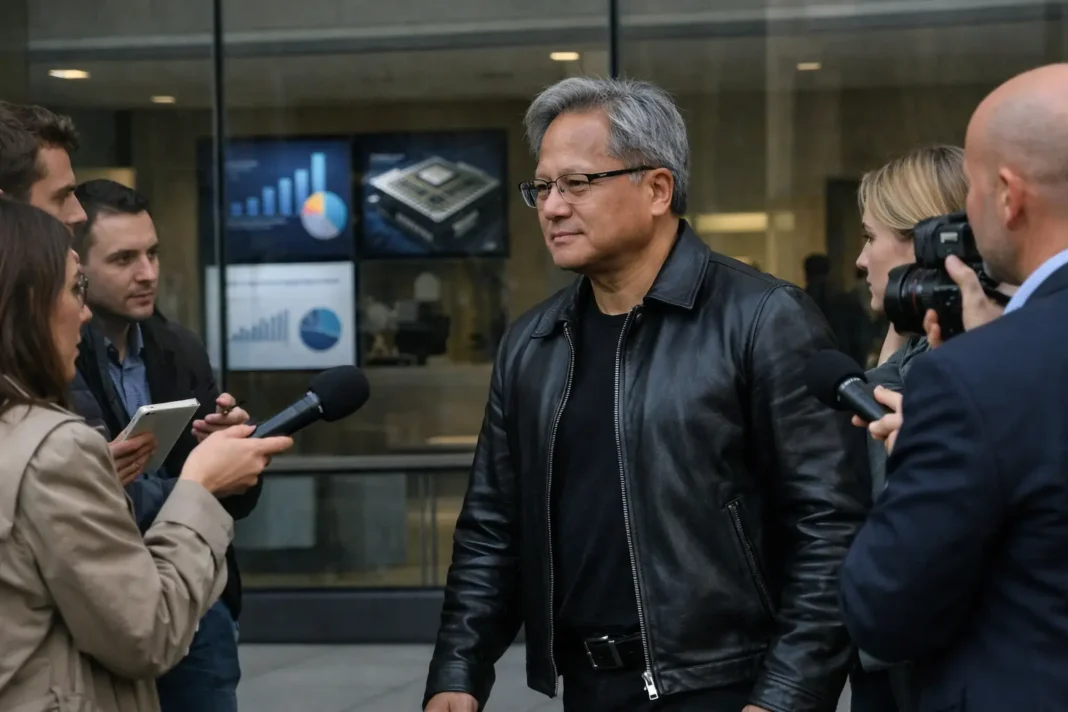

Nvidia has ruled out reinstating Jensen Huang, drawing a firm line under the immediate future of one of the most closely watched figures in the global semiconductor industry. The decision came as Nvidia reported strong quarterly earnings on Tuesday, reinforcing the company’s financial position despite the disruption created by Huang’s dramatic exit.
The announcement places corporate governance at the centre of the story for a company that has become synonymous with the rapid expansion of artificial intelligence infrastructure. Nvidia’s chips are central to the computing systems used to train and run advanced AI models, making its leadership decisions closely monitored by investors, customers and technology partners. By stating that Huang will not return, the company is seeking to clarify a question that could otherwise overshadow its latest financial performance.
The strong results underline the continued commercial momentum behind AI semiconductors, a market in which Nvidia holds a leading position. Demand for high-performance processors has made the company one of the most influential players in the wider technology sector. The latest quarter suggests that customer demand and operational execution remained resilient through a period of internal change, although no detailed figures were provided in the announcement.
Jensen Huang has long been identified with Nvidia’s rise from graphics-chip specialist to AI hardware powerhouse, giving his departure significance beyond a routine management change. The company’s refusal to reinstate him therefore marks an important moment in its transition. For shareholders, the combination of strong earnings and a clear position on leadership reduces uncertainty, even as questions remain about how Nvidia will define its next phase without the executive most closely associated with its modern identity.
The episode also highlights how dependent major technology companies can become on founder or founder-like leadership figures, particularly when markets are expanding quickly. Nvidia’s latest results show that the business remains financially strong, but the company’s next challenge will be to maintain strategic continuity while reassuring the market that its growth in AI chips does not rest on a single individual.







