
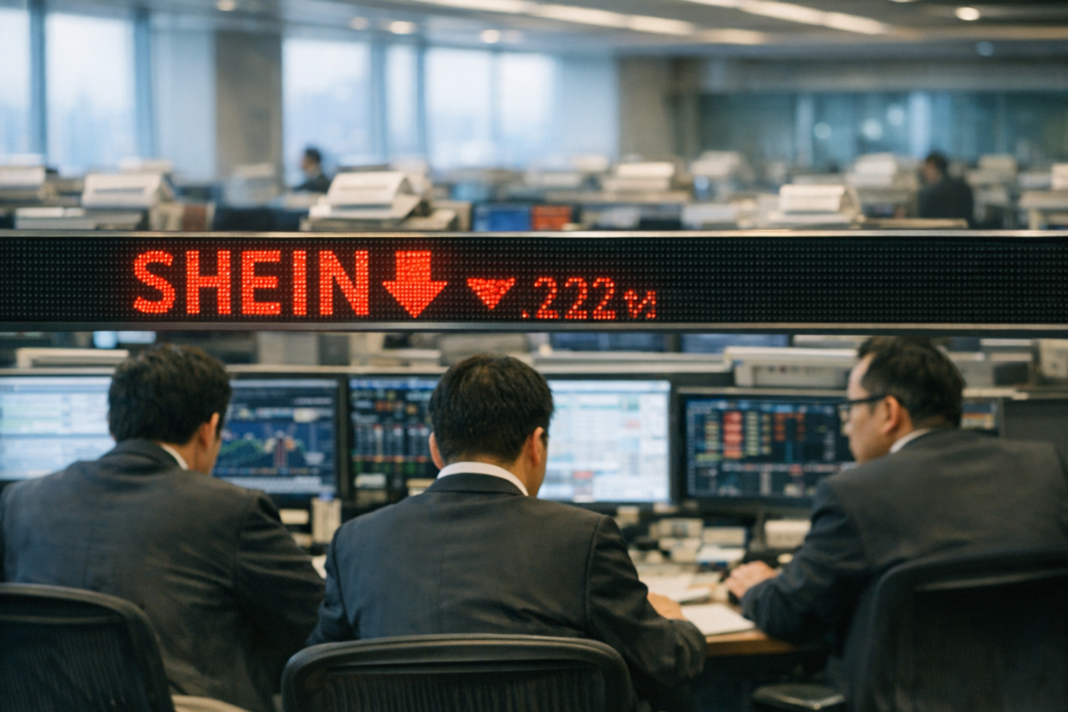

Shein’s Hong Kong debut on Tuesday opened with a decline in the company’s share price, marking a subdued start to the fast-fashion retailer’s first public offering. The listing represents the end of a multi-year effort by Shein to enter public markets after earlier efforts to list in New York and London did not materialize. The listing on the Hong Kong trading venue establishes a public valuation and creates a market for the company’s equity.
The move into the public sphere follows several years in which the firm expanded rapidly in global e-commerce. While details of the listing terms and long-term strategy remain with the company, the appearance of Shein stock on the market converts a privately held operation into a publicly traded enterprise with new reporting and disclosure obligations. Market participants will now be able to track the group’s performance against publicly available financial statements and trading data.
The initial share decline suggests cautious investor sentiment toward the offering, but does not alone determine the company’s prospects. Public listing typically brings greater access to capital and liquidity for existing shareholders, alongside increased scrutiny from investors and regulators. For the broader market, the listing adds another sizable consumer-facing player to the stock market landscape and underscores Hong Kong’s role as a venue for large technology and retail listings.
As trading continues in the coming sessions, the listing will provide a reference price for Shein’s equity and create a new channel for capital allocation and investor engagement. The company’s future performance on public markets will be reflected in subsequent trading, disclosures and corporate governance practices required of listed firms. Observers will monitor how the listing influences Shein’s strategic choices and the competitive dynamics within global online apparel retail.






