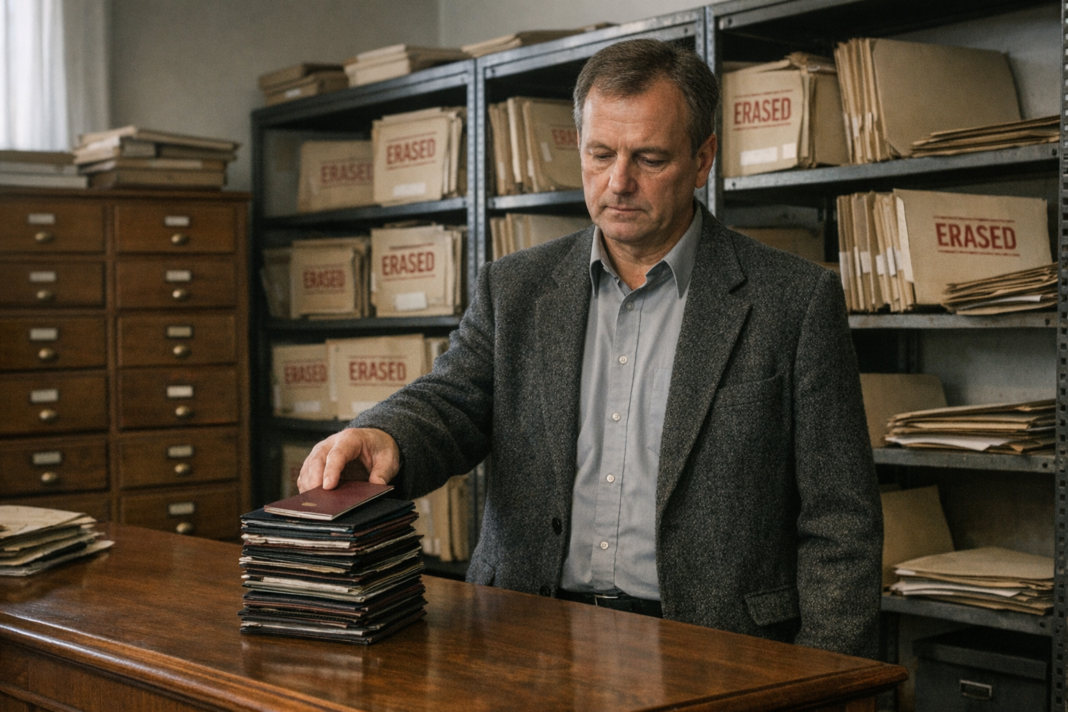

State deletion in 1992 left a profound mark on modern European debates when the Slovenian government removed some 25,000 people from official registers, effectively turning them overnight into illegal residents. The episode is recounted in the book Miha Mazzini compiled, where personal testimonies show how quickly legal belonging can be erased by administrative action. The decision, taken during Slovenia’s early independence, exposed the fragility of rights that rely on a single bureaucratic record.
The human consequences were immediate and practical: losing a name in the registry meant losing recognized access to work, healthcare, education and housing. Survivors’ accounts gathered by Mazzini describe encounters at schools, hospitals and offices where an official absence on a list translated into denial of services and recognition. These stories make clear that state databases are not neutral archives but instruments that determine everyday access to social and civil entitlements.
Beyond the individual cases, the 1992 deletions demonstrate a structural mechanism by which governments can render people legally invisible. The incident has been referenced in wider discussions about policies labelled as “remigration” across Europe, where proposals to return or remove non-citizen populations intersect with administrative processes. The Slovenian example shows how terminological and technical steps—hits on a keyboard, changes in registry status—can translate into large-scale displacement and legal precarity.
The legacy of that winter in 1992 continues to resonate because it combined a bureaucratic procedure with lasting social effects. For scholars, human-rights groups and policymakers the case remains a cautionary instance: administrative decisions over registries can create de facto statelessness and long-term exclusion. For readers seeking the firsthand reporting and testimony that reconstructed these events, further detail is available in contemporary coverage and the original accounts collected by Mazzini via press reports.