

The core problem in contemporary politics is increasingly framed as a breakdown in shared reality rather than only a clash over material interests. In the United States, voters and political leaders often operate from different sets of accepted facts, a condition that reshapes debate, policy priorities and public trust. This divergence complicates efforts to build coalitions around redistributive or regulatory measures because agreement on basic premises is a prerequisite for constructive compromise.
Divergent information environments—shaped by media choices, online platforms and partisan messaging—amplify disagreements about what is true. When communities rely on distinct sources and interpret identical events through opposing frameworks, fact-based deliberation becomes difficult. The result is legislative stalemate, eroded confidence in institutions and difficulty in responding to shared challenges that require collective action.
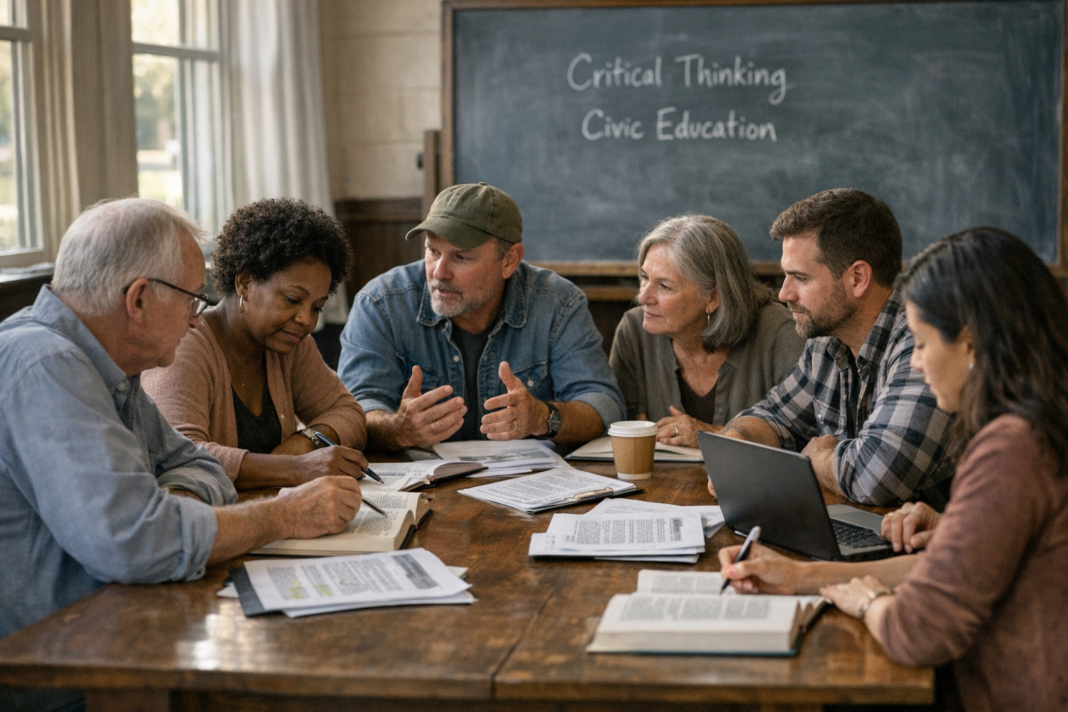
Against this backdrop, attention has shifted toward civic education and media literacy as foundational interventions. Strengthening critical-thinking skills in schools and adult education programs aims to equip citizens to evaluate claims, recognize misinformation and engage with opposing views on empirical grounds. At the same time, calls for greater transparency from platforms and clearer labeling of sources aim to reduce the friction caused by competing narratives without prescribing specific policy outcomes.
Improving public reasoning does not promise immediate resolution of deep economic or political inequalities, but proponents view it as a necessary step toward restoring a functional civic space where policy trade-offs can be debated on a common factual basis. If institutions responsible for schooling, information and civic life can foster better tools for assessing evidence, the conditions for durable policy decisions—on taxation, regulation and social provision—may become more attainable.






