
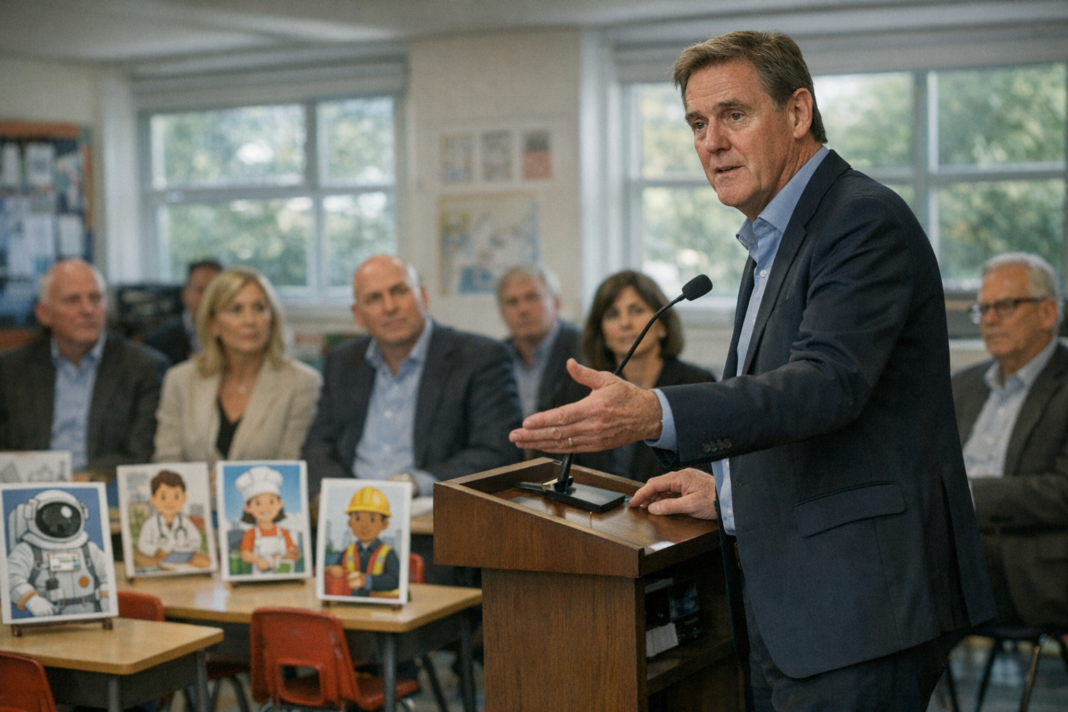

Employers should teach children as young as four about the world of work, argues Milburn in a major report examining youth activity in the UK. The report recommends that businesses take a more active role in early years and primary settings to give pupils first-hand exposure to different jobs and working environments, aiming to broaden horizons well before secondary school choices are made.
The review frames early careers awareness as part of a broader strategy to improve transitions from education into employment. It highlights the potential for structured employer engagement to introduce age-appropriate information about workplaces, roles and routes into different sectors. The author suggests that such contact could help pupils and families better understand the range of opportunities available and how learning connects to work.
Implementing this approach would carry practical and policy implications. Schools and employers would need clear guidance on suitable activities for very young children, alongside arrangements to ensure safeguarding and educational value. Teacher training, resourcing and coordination with local businesses are areas stakeholders will likely need to address if employer-led activities are to become a routine element of primary provision.
The proposal is likely to feed into ongoing discussions about the scope of primary education and the responsibilities of employers in community engagement. Education leaders, local authorities and business groups may now consider how pilot programmes, partnerships or curricular materials could be developed to translate the report’s recommendations into classroom practice. Parents and early years professionals will also play a key role in shaping how careers themes are presented to younger pupils.
While the report does not prescribe a single model for action, it frames early careers education as a potential lever for reducing informational gaps that can affect young people’s aspirations and choices. The author urges collaboration between schools and employers to create practical, age-appropriate encounters with work, a proposal that could influence policy debates on future education priorities in the education sector.






