HomeOpinionChina Turns Trade Dominance Into Geopolitical Pressure

China Turns Trade Dominance Into Geopolitical Pressure

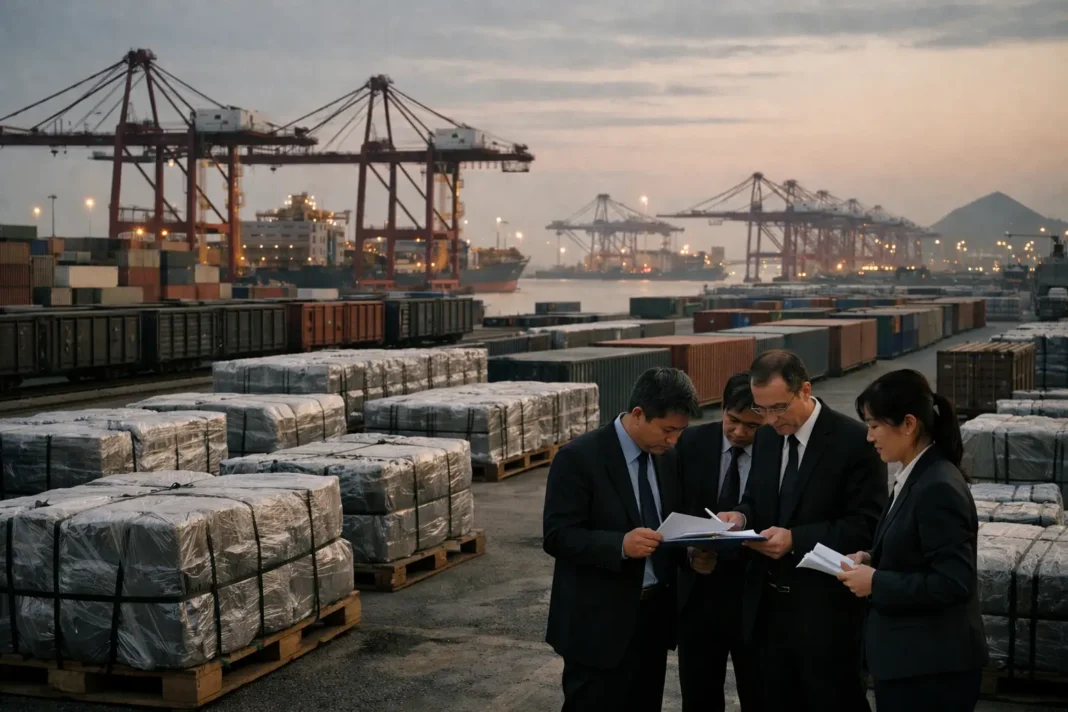
China’s trade leverage is becoming a more explicit instrument of state power, adding a new layer of risk to global commerce. The shift mirrors a broader trend in which large economies use market access, technology and supply-chain control to advance geopolitical objectives. The United States has relied on its consumer market and technological leadership in strategic competition; China is now drawing on its own strengths in production networks and essential materials.

Beijing’s leverage rests on areas where its role is difficult to replace quickly: critical minerals, industrial inputs and specialised manufacturing machinery. These are not marginal products. They sit deep inside the production chain for advanced manufacturing, energy technologies and other sectors that depend on reliable access to components and raw materials. When such goods become tools of pressure, the impact can move far beyond a single bilateral dispute, affecting companies, suppliers and governments that are not directly involved in the political confrontation.

The economic consequences are significant because modern industry is built around efficiency, scale and just-in-time coordination. A country that controls a key input can influence costs, production schedules and investment decisions well beyond its borders. For businesses, the issue is no longer limited to price or quality; it also involves exposure to political risk. For governments, the question is how to protect supply security without dismantling the benefits of open trade. Diversifying sources, building stockpiles or encouraging domestic capacity can improve resilience, but such adjustments require time, capital and technical expertise.

The geopolitical effect is equally important. Trade restrictions, export controls and access to strategic technologies are increasingly part of the language of power between major economies. This can leave smaller and mid-sized states under pressure to balance commercial dependence with diplomatic autonomy. The more indispensable a supplier becomes, the more influence it can exert when disputes arise. That dynamic is reshaping how governments assess economic partnerships, particularly in sectors connected to security, infrastructure and industrial competitiveness.

The rise of trade as a coercive tool underscores a central challenge for the global economy: interdependence can create efficiency, but it can also create vulnerability. China’s dominance in selected inputs gives it a platform for influence at a time when supply chains are already being reassessed. The outcome is not a simple retreat from globalisation, but a more cautious and strategic version of it, in which companies and governments treat geopolitics as a core part of economic planning.


Advertisementspot_imgspot_img

Hot this week

Cricket Australia Creates Player Forum as Sandpapergate Debate Returns

Cricket Australia has created a safe space for players after Usman Khawaja reignited debate over the 2018 Sandpapergate scandal.

Google Declines UK Request to Remove Russell Brand Video From YouTube

Google declined a UK request to remove a YouTube video involving Russell Brand after his wife shared his claim of innocence.

Voy Testosterone Test Kit Ads Banned by UK Advertising Watchdog

UK regulator bans Voy adverts for at-home testosterone tests, citing claims that could mislead consumers about low testosterone.

New Weight-Loss Compound Shows Fat-Burning Promise Without Major Muscle Loss

UC Berkeley scientists identify a preclinical compound that increased energy use, reduced liver fat and preserved muscle in mice.

Milburn Calls for a Legal Right to Work or Training for Young People

Milburn says young people should have a legal guarantee of a job or training, while acknowledging some could lose benefits.

Palestinian Memory Takes Form in Stone, Poetry and Ruins at IMMA

A Dublin exhibition brings Palestinian and Levantine artists into dialogue with memory, displacement and historical violence.

New Weight-Loss Compound Shows Fat-Burning Promise Without Major Muscle Loss

UC Berkeley scientists identify a preclinical compound that increased energy use, reduced liver fat and preserved muscle in mice.

Voyager 1 Reaches a Light-Day From Earth, Deepening a Mission Beyond the Solar System

Voyager 1 is now one light-day from Earth, extending communications delays as the probe keeps studying interstellar space.

Medical Regulator Faces Scrutiny After Doctor Complaint Summaries Were Sent to Newspaper

The General Medical Council mistakenly sent The Times summaries of complaints alleging antisemitism and Islamophobia against doctors.

Anthropic’s $1.5 Trillion Target Raises the Stakes for AI on Wall Street

Anthropic, founded five years ago, is seeking a valuation of up to $1.5tn ahead of its planned stock market debut.

Google Declines UK Request to Remove Russell Brand Video From YouTube

Google declined a UK request to remove a YouTube video involving Russell Brand after his wife shared his claim of innocence.

Xi’s Diplomatic Opening Carries Influence, Visibility and Risk

Xi Jinping faces a delicate diplomatic test as engagement involving Putin and Trump brings visibility but also sensitive questions.

Bancroft’s Comments Put Cricket’s Sandpaper Scandal Back Under Scrutiny

Cameron Bancroft’s remarks have revived questions about Australia’s 2018 ball-tampering scandal in Cape Town.
Advertisementspot_img

Related Articles
