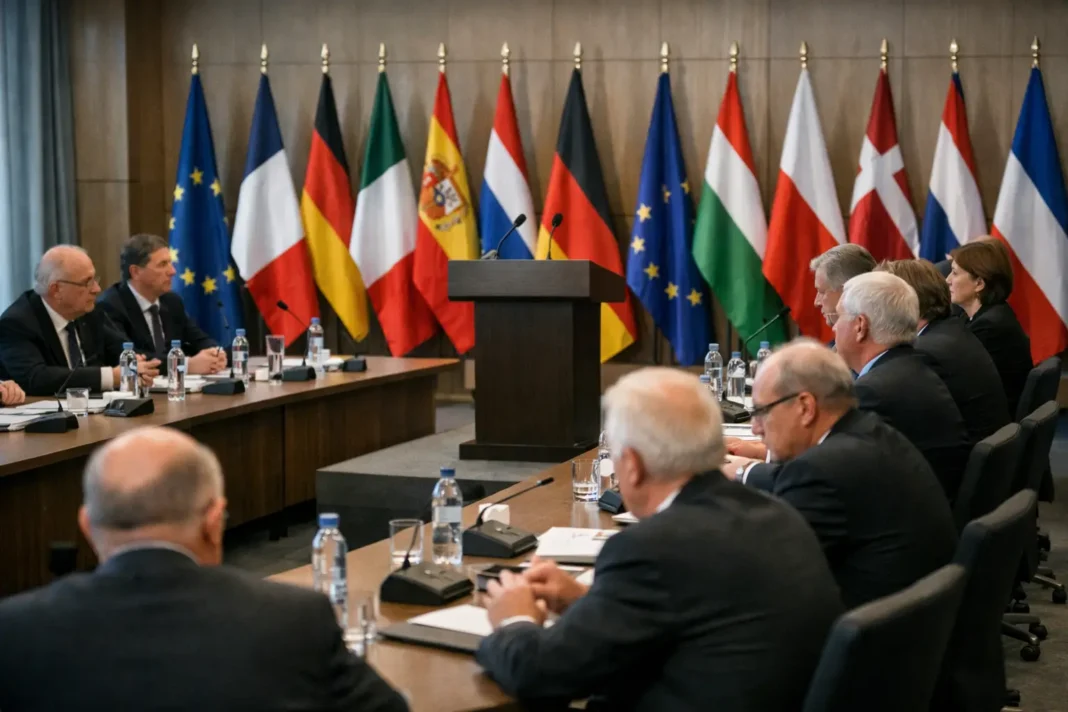

Europe’s diplomatic dilemma over any future peace talks with Russia is not simply a question of finding a prominent negotiator. It points to a deeper institutional problem: the difficulty of turning the collective weight of the European Union into a single, credible political mandate at moments when speed, authority and strategic clarity matter. The issue has renewed attention because any negotiation involving Russia would directly affect the continent’s security order, its sanctions policy and its relationship with the United States.
The EU already has senior figures tasked with foreign policy and institutional representation, including the High Representative and the presidents of the European Commission and European Council. Yet a formal title does not automatically resolve the political question of who can speak for governments whose interests do not always align. In matters of war, borders and security guarantees, member states remain central actors. That makes European Union diplomacy more complex than a conventional national negotiation, especially when the other side expects one interlocutor able to commit politically.
One proposed solution is for the EU to step back from choosing the envoy itself and allow the United Kingdom, France and Germany to make the selection. The idea reflects the diplomatic weight of the three countries rather than the institutional map of the EU. France and Germany remain central to the Union’s political balance, while the United Kingdom, despite leaving the bloc, continues to play a major role in European security and defence. Such an arrangement would also acknowledge that talks with Moscow would not be only an EU matter, but a broader European security question.
The tension is clear. A representative chosen outside the EU’s normal procedures could offer flexibility and stature, but it would also raise questions about democratic accountability, smaller member states’ influence and the coherence of EU foreign policy. For countries in Eastern and Northern Europe, any format that appears to concentrate decisions in a small group of capitals would require careful management. The credibility of a European envoy would depend not only on diplomatic skill, but on the visible backing of governments most exposed to the consequences of any settlement.
The debate underlines a recurring weakness in European diplomacy: the gap between economic power and geopolitical unity. Peace negotiations with Russia, if they occur, would test whether Europe can defend shared interests through a single channel without erasing national responsibilities. The choice of a messenger would therefore be more than a personnel decision. It would reveal how Europe intends to organise its political authority in a security crisis that concerns the whole continent.