
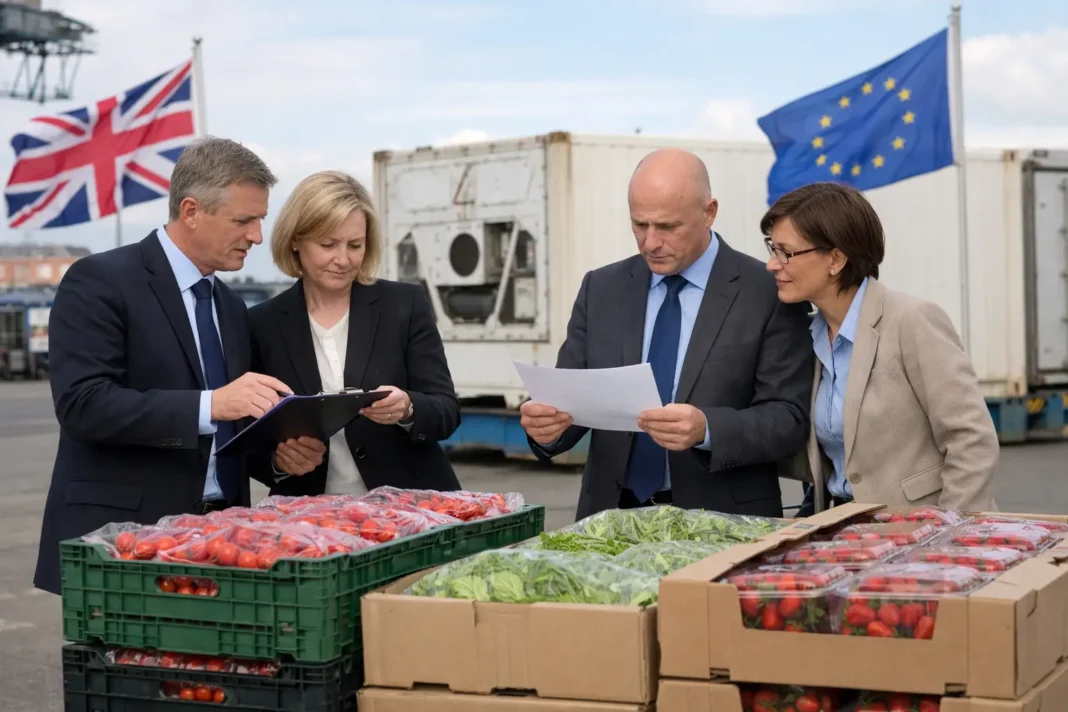

The United Kingdom and the European Union have agreed a draft deal aimed at removing Brexit-related bureaucracy on food exports, in what has emerged as the most substantial element so far of the attempted reset in relations between London and Brussels. The understanding comes ahead of a UK-EU summit scheduled for later this month and focuses on one of the most practical sources of friction created by the UK’s departure from the bloc.
The draft agreement concerns rules affecting food exports, a sector that has faced additional paperwork and border requirements since Brexit changed the trading relationship between Britain and the EU. While the full text has not been formally completed, the move signals a willingness on both sides to address barriers that have complicated trade for producers, distributors and retailers operating across the Channel.
The UK Government and the European Commission have been under pressure from businesses to reduce the administrative burden that followed the end of the transition period. Food and agricultural products have been especially sensitive because they are subject to health, safety and inspection rules. Any easing of checks would therefore carry significance beyond a single industry, touching supply chains, prices, and the wider tone of UK-EU cooperation.
For London and Brussels, the agreement is also politically important. The so-called Brexit reset has been presented as an effort to stabilise relations without reopening the central question of the UK’s status outside the EU. A draft accord on food trade offers a concrete area where both sides can demonstrate progress while avoiding broader institutional changes. Its eventual impact will depend on the final wording and formal approval process, but the outline already shows that technical trade issues remain central to the next phase of the relationship.
The forthcoming summit will now carry added weight, as negotiators seek to turn the draft into an operational arrangement. If confirmed, the deal would represent a notable softening of one of the everyday trade obstacles created by Brexit, though it would not amount to a reversal of the broader settlement. For exporters in the United Kingdom and importers inside the EU, the key question is how quickly any reduction in red tape can translate into simpler procedures at the border.






