

Before government shutdowns end, political blame games begin. And as politicians from both parties try to blame each other, party operatives and pundits scour the poll data to see who wins the game. Often, they look at poll questions that directly ask which party deserves blame or gauge party favorability.
But to my eye, only one poll number really matters in determining whether a government shutdown is having any political impact: the generic congressional ballot test.
The generic congressional ballot test involves some form of the question: if the congressional election were today, which party’s candidate would you vote for in your House district?
In this polarized era, party favorability is low, with blame for most things falling along party lines and a healthy chunk of the electorate quick to cast a pox on both sides. But the generic congressional ballot test forces poll respondents to choose one party over the other.
Take the 17-day shutdown of October 2013, when Republicans, prodded by Senator Ted Cruz, refused to fund the government unless President Barack Obama’s signature achievement, the Affordable Care Act, was defunded. Over the summer of 2013, the Democratic lead in the Real Clear Politics generic congressional ballot average had disappeared, from 6.3 percentage points in April to zero in August. As the threat of a shutdown grew in September, the Democratic lead increased by 2.4 points. By the end of the shutdown on October 17, the Democratic lead was up to 5.5 points and peaked at 6.6 by early November. The public opinion cratering was impossible to deny, so Republicans caved without nicking Obamacare.
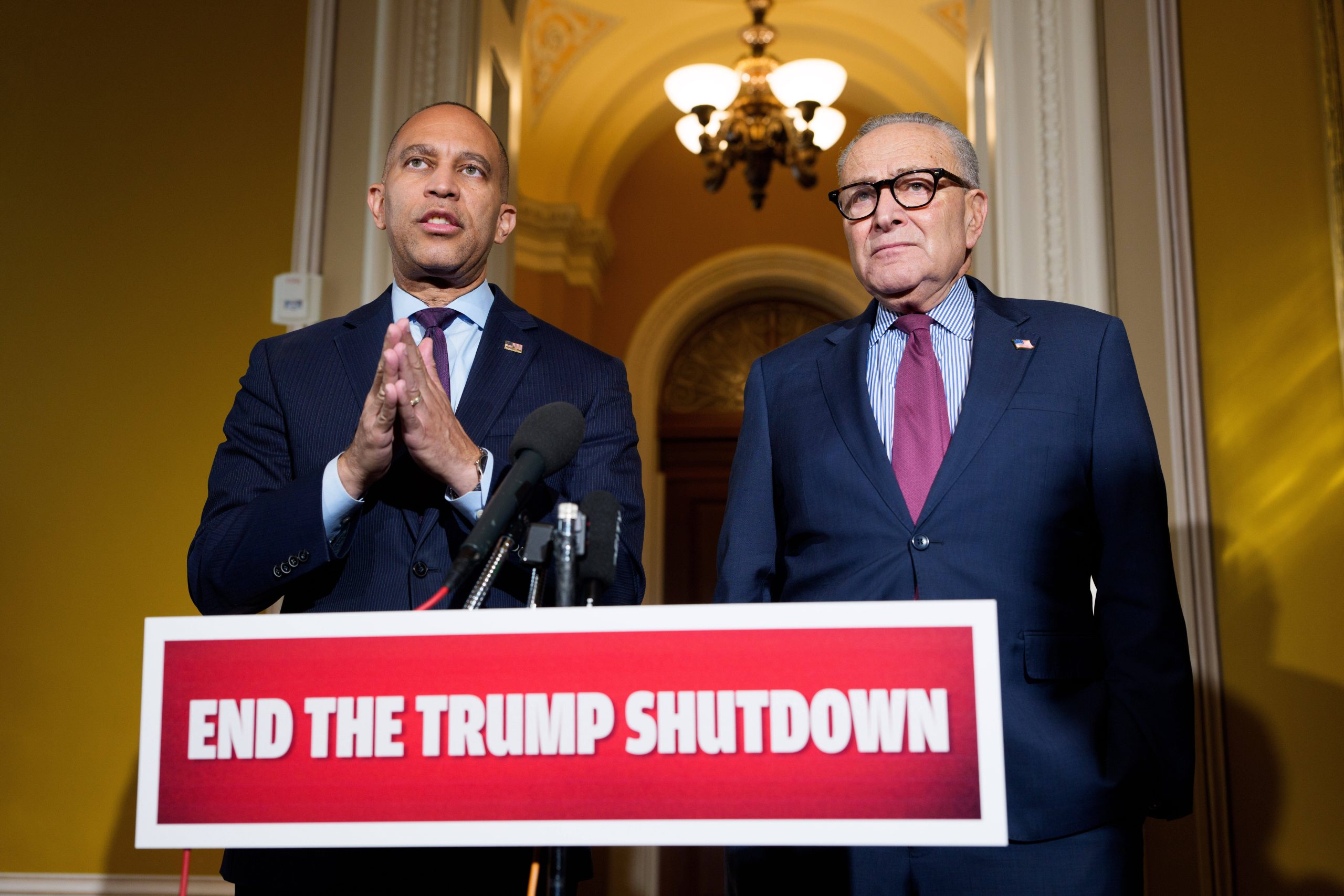
Today marks the 17th day of the 2025 shutdown, with Democrats demanding renewals of expiring Affordable Care Act enhanced subsidies. Yet the Democrats’ electoral standing is essentially unchanged. The average Democratic lead in all generic congressional ballot test polls sampled in September was 3.1 points, and for those taken in October, 2.7 points.
Does this mean the shutdown will help Democrats in November 2026? An argument made after the fact by Republican proponents of the 2013 shutdown (and Democratic advocates for adopting similar smashmouth tactics) was that Republicans had a great 2014 midterm, holding the House and taking the Senate. But Republican improvement in the generic congressional ballot test only improved after they abandoned the shutdown without any policy concessions to show for it. Republicans didn’t win in 2014 because of the 2013 shutdown; they won because they gave up on it and gave the public plenty of time to forget that it happened.
Unless the current shutdown continues for months (which it could!), voters a year from now probably won’t factor it into their Election Day decision-making. But Democratic leaders today must constantly assess whether their highwire tactics are putting their swing district and swing state candidates at risk. So far, the answer is clearly: nope.
Should Democrats be sanguine about a 3-point generic congressional ballot lead in the polling average? Not quite. The aggregate Republican House popular vote margin has beaten the RCP generic congressional ballot average eight out of 12 times, including the last three elections (albeit only by 0.3 points in 2022). But Democrats have beaten the spread before, most recently in 2018—the previous midterm when Donald Trump was president, when Democrats flipped the House. They were already cruising with a poll average lead of 7.3, then outperformed in the popular vote by 1.1 points.
Would a three-point lead in the popular vote be sufficient for Democrats to win, after considering gerrymandering? We don’t know yet what the final lines for 2026 will be, or whether aggressive Republican gerrymandering will help them add seats or backfire by spreading their votes out thinly and failing to account for swing voters, particularly Latinos. But despite past gerrymandering concerns, the winning party’s share of the House popular vote in the last four House elections closely tracked its share of the House seats. Three points may be enough, but Democrats won’t feel comfortable without more of a cushion in the polls.
So congressional Democrats can’t presume the shutdown will seal the Election Day deal, though I doubt they ever held such an assumption. But considering that the existing Democratic lead in the generic congressional ballot test has held up after more than two weeks of a shutdown, with other polls asking about blame showing Republicans are shouldering the most, Democrats appear to keep their base energized without sacrificing swing votes. Without weakening their midterm prospects, Democrats have zero incentive to surrender.