

Israelis love comedies, no matter what is going on in the world, and Independence Day is a great time to sit down and enjoy them.
What follows is a list of some of the best Israeli comedies, both classics and more recent films. Most of these are available in the Israel Film Archive (https://jfc.org.il/en/), on the Israeli movie channels on Hot and Yes, and on Netflix.
Sallah Shabati
This 1964 classic by Ephraim Kishon, which received Israel’s first Oscar nomination in the Best Foreign Film category, is just as funny today as when it was released.
It pokes fun at the Mizrahi-Ashkenazi divide, the corruption of government and bureaucrats, the way Israelis play up to foreign donors, and much more.
Chaim Topol stars as a Mizrahi father who brings his family to Israel and finds the Promised Land isn’t all that he was promised. Like most Israeli comedies, this is truly a dramedy, and there is an especially moving scene where Sallah cries out to God in outrage, although most of the film has a lighter tone.
In addition to Topol, it stars Arik Einstein as a kibbutznik who falls for Sallah’s daughter (Geula Nuni), and Gila Almagor as a social worker who dates Sallah’s son (Shaike Levi).
The Big Dig (aka The Blaumilch Canal)
Another Ephraim Kishon film from 1969 that has aged very well, The Big Dig tells the story of a mental patient with a mania for drilling who breaks out of a hospital, grabs a drill, and tears up the streets of Tel Aviv.
The real joke, though, is how long it takes people to figure out something is wrong, since they are so used to the municipality doing work with no regard for the noise or the hours. When a bureaucrat in city hall gets suspicious about what’s going on, he tries to talk to his superiors, but they all pretend to have approved it, and to take credit for what they describe as an important project.
Shablul, Lool, and Peeping Toms
Arik Einstein, Israel’s most treasured singer, was also quite a movie star and generally played characters based on his carefree, charismatic image.
In Shablul, a 1970 film by Boaz Davidson, he actually played himself in a movie that was heavily influenced by the Beatles classic A Hard Day’s Night. It features songs and sketches with Einstein, Shalom Hanoch, and the rest of the Lool gang, who included Josie Katz, Miki Gavrielov, and Einstein’s great friend, actor/comedian Uri Zohar, who appeared on a television show together. Zohar appears in a skit playing an aggressive gay Yiddish-speaking karate instructor.
A collection of sketches of the Lool gang from the early ’70s was released as a feature film in 1988, called Lool, which includes the classic routine about all the immigrant groups bashing each other.
Einstein also acted with Zohar in several films that Zohar, who later became an ultra-Orthodox rabbi, directed, and the one that holds up best is Peeping Toms (1972), about two buddies who like to hang out at the beach in Tel Aviv. Much of it is incredibly sexist by today’s standards, but there are still lots of laughs.
Charlie and a Half
Ze’ev Revach and Yehuda Barkan were the kings of the sirtei burekas, the classic Israeli slapstick comedies, and this 1974 movie, directed by Boaz Davidson, is the best of their collaborations.
Barkan plays a hustler who takes care of a cute kid and tries to win over a rich girl, and Revach is a local thug. But what people tend to remember most from this movie is the famous egg-eating contest scene.
The Troupe (Halehaka)
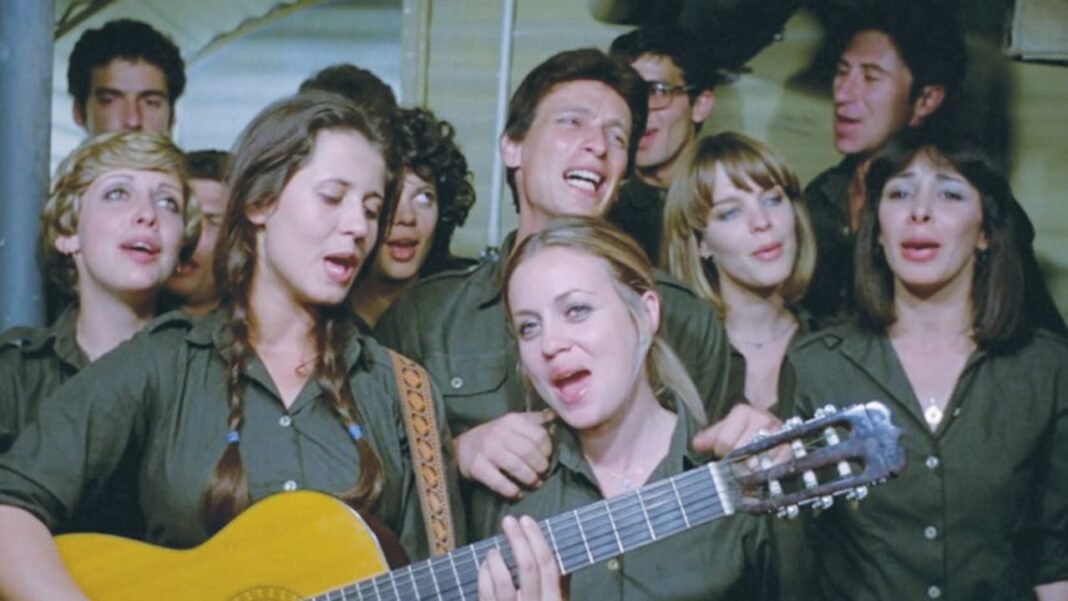
This 1978 comedy-drama about an army entertainment troupe was one of the biggest hits of the ’70s and was Avi Nesher’s directorial debut.
There are rivalries, pranks, romance, and revenge, and the film stars Gidi Gov, Meir Suissa, Dafna Armoni, Sassi Keshet, Gali Atari, Tuvia Tzafir, and many others who went on to stardom.
The soundtrack is full of songs that have become classics, including “Song of Peace.” The playful, fast-paced film is definitely traditional Independence Day viewing.
Zero Motivation
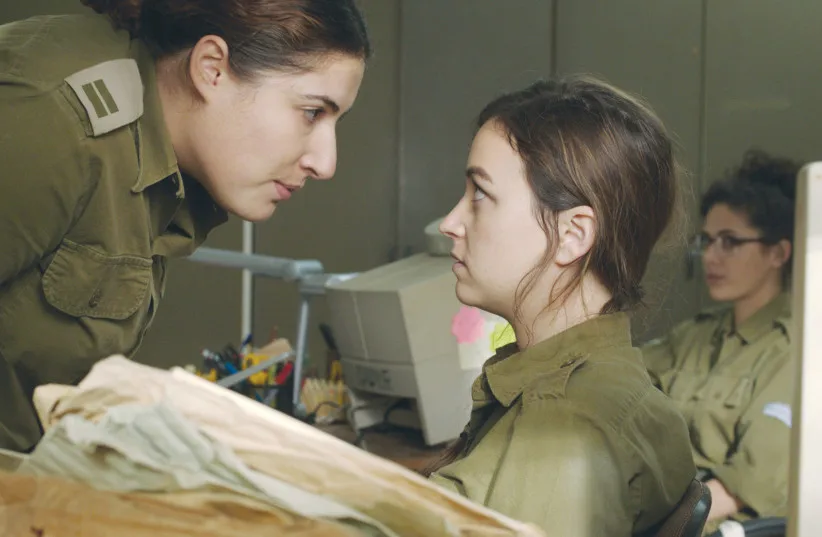
First-time director Talia Lavie had a huge hit with this film about bored female soldiers in a Negev base.
Anyone who has ever had a boring job will relate to the suffering of Zohar (Dana Ivgy) and Daffi (Nelly Tagar), whose dream is to be transferred to military headquarters in Tel Aviv so she can get iced coffee on her lunch break.
Forgiveness
Guy Amir and Hanan Savyon are a new, popular comedy duo and have made several movies together, the best of which is Forgiveness (2019).
It’s about two friends who need money and commit a robbery that goes wrong. One goes to prison, while the other hides out and becomes ultra-Orthodox, and eventually they team up again to try to find the lost stash from the botched robbery.
There are a lot of good jokes, such as how they get caught: One of the thieves wears flip-flops to the robbery, a very Israeli touch, and he stubs his toe and cries out.
The soundtrack also includes a version of “La Bamba” in Arabic, played by Bedouin.
The late Alon Aboutboul is very good as a gangster who keeps his money in a stable, which means it doesn’t smell so great.
Matchmaking 2
This 2024 comedy about dating in the ultra-Orthodox world is the sequel to a 2022 film, but I thought this one was even funnier.
Baruch (Maor Schwietzer) does odd jobs for a matchmaker and falls for her daughter, Shira (Omer Nudelman), but he isn’t considered good enough for her.
There’s also some culture-clash comedy about a Mizrahi-Ashkenazi wedding, and the yeshiva students all turn for advice to a charismatic Arab (Hitham Omari) who runs the kitchen in their dormitory.
Saving Shuli-San
Saving Shuli and its sequel, Saving Shuli-San, were the two biggest Israeli box-office hits in decades.
Both films star the Ma Kashur comedy trio – Tzion Baruch, Shalom Michaelshwilli, and Asi Israelof – in the story of the search for Shuli (David Shaul), the son of one of the trio, who keeps getting kidnapped.
In the first, he was taken by a drug cartel in Colombia, but in the sequel he was held prisoner by a gang of not-really-so-scary yakuza in Tokyo.
The 2025 sequel works better because the culture clash between Israel and Japan is funnier than with the drug cartel. Also, the second movie has Emma Medding, the daughter of a Japanese mother and an Australian father, who grew up in Israel and speaks perfect Hebrew and she really steals the show.
Bella
This recently released film about two couples, one Jewish and one Arab, searching for a rare and valuable dove all over the West Bank, dared to find laughs in the Israeli-Palestinian conflict at an especially sensitive time. A collaboration between a Jewish director, Zohar Shahar, and a Palestinian, Jamal Khalaile, this movie pushed boundaries and was very funny, although some people were put off by the concept and stayed away. That’s too bad, because it’s a real treat.
Source:
www.jpost.com




