

By: Isac Hammouch
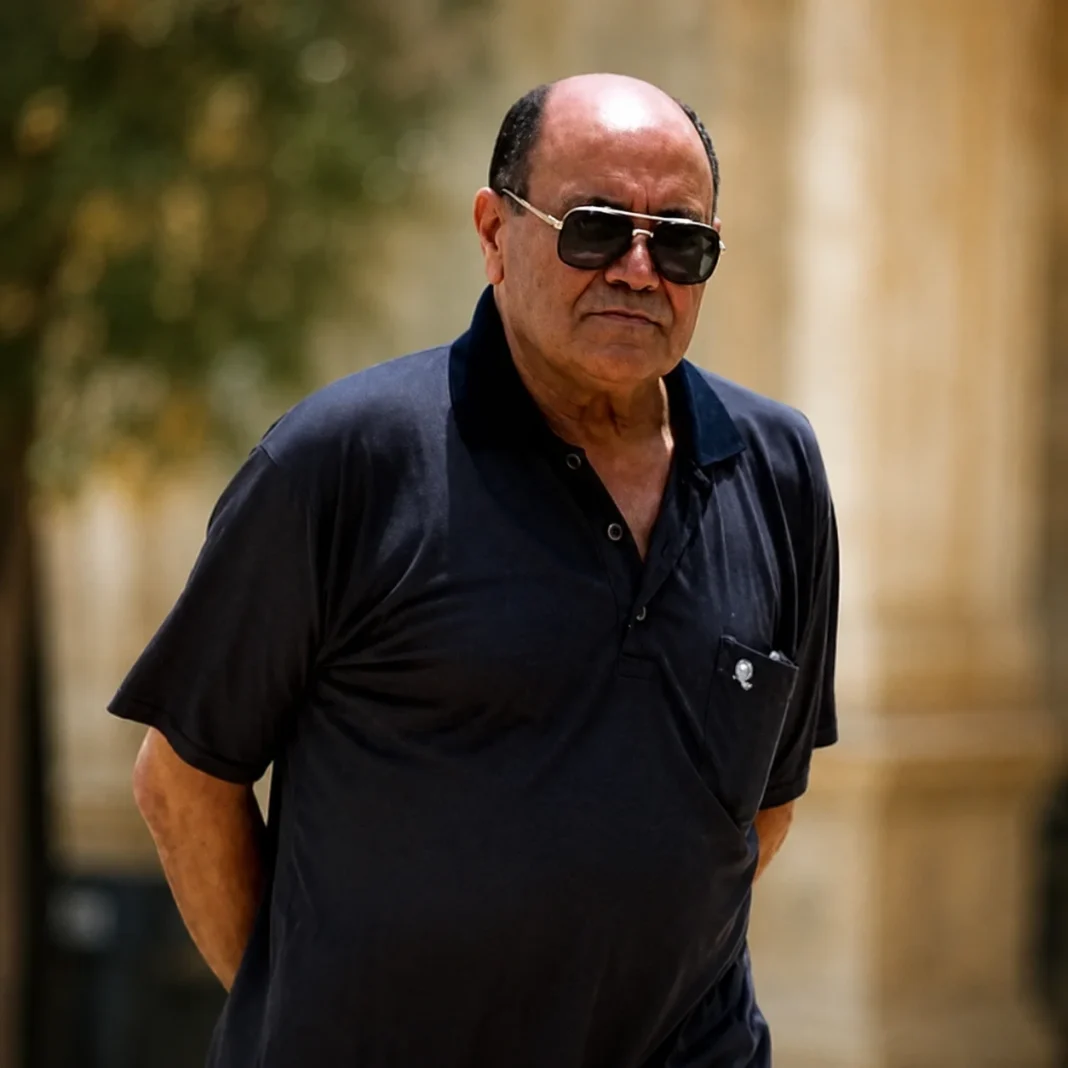
In the history of states and authoritarian regimes, there exist men crafted to be living tombs for secrets. They are carefully selected, trained in the virtue of silence, and summoned to be nothing more than shadows moving in the corridors of power, executing orders without leaving a trace. Ahmed Boukhari was one of these men. He was not merely an intelligence officer among many—he was the “black box” that had swallowed, for decades, the details of one of the darkest periods in modern Morocco: the “Years of Lead.” Yet, this man made to stay silent chose, in the twilight of his life, to speak. And when he spoke, he did not only shake the throne of the Makhzen—he paid a tragic price that touched his own flesh and blood, in a story that seems straight out of a Kafkaesque novel about the cruelty of the State when it decides to take revenge on its own children.
Boukhari was born in Safi in 1938, in a Morocco still searching for its path toward independence. He quickly joined the ranks of the National Security before entering the formidable “Cab-1” unit, the political cell of the General Directorate for Territorial Surveillance (DST). This unit, whose first officers were trained by CIA agents, was the hammer that came down upon the political opposition—particularly the left—throughout the 1960s and 1970s. Boukhari was at the heart of this machine: he was not its supreme decision-maker, but he was the cog that saw, heard, and archived everything.
To measure the weight of Boukhari’s confessions, one must first understand what the “Years of Lead” truly signified. It was not a mere period of political tension—it was a machine designed to crush human beings, methodically and industrially. We are talking about an era that saw terrifying secret prisons flourish: Tazmamart, Derb Moulay Cherif, Agdez—places where dissidents were buried alive in cells untouched by sunlight. Boukhari himself summarized the scale of the disaster in blood-curdling words during an interview given to the Associated Press in 2005: “We knew that what we were doing was outside the law. But we obeyed orders… About twenty thousand people were arrested during the reign of Hassan II, and to this day, there is no trace of nearly fifteen hundred of them—neither a grave nor a body.” In a few words, Boukhari summarized the martyrdom of an entire generation that the State had not only killed, but erased from existence.
The time bomb detonated in the summer of 2001. Suddenly, Boukhari decided to break the wall of silence. In a series of explosive revelations published by the French daily Le Monde and the Moroccan weekly Le Journal, he unveiled the backstage of the affair that had haunted Morocco and France for decades: the kidnapping and assassination of leftist leader Mehdi Ben Barka in Paris in October 1965. With unsettling composure and an implacable photographic memory, Boukhari recounted how Ben Barka had been tortured to death by General Mohamed Oufkir and Ahmed Dlimi. He went even further, revealing the most appalling detail: Ben Barka’s body had been secretly repatriated to Morocco aboard a military plane, then dissolved in a vat of acid at the secret detention center “Dar El-Mokri” in Rabat, under the direct instruction of an American agent known as Colonel Martin, head of the CIA station in Morocco—a man who reportedly learned this barbaric method in Iran under the Shah’s regime.
These revelations were an earthquake that struck the official narrative right at its core. But Boukhari did not stop at statements. He documented his testimony for history in two books that have become indispensable references. The first, published in 2002 under the title “Le Secret — Ben Barka et le Maroc : un ancien agent des services spéciaux parle” (The Secret — Ben Barka and Morocco: A Former Special Services Agent Speaks), detailed the circumstances of the kidnapping and assassination, exposing Moroccan, French, and American responsibilities. The second, published in 2005 under the title “Raisons d’État — tout sur l’affaire Ben Barka et d’autres crimes politiques au Maroc” (Reasons of State — Everything on the Ben Barka Affair and Other Political Crimes in Morocco), was even more relentless: it detailed the secret operations of the Moroccan intelligence services between the 1960s and 1980s and drew up a named list of 123 individuals he accused of having directly participated in torture and forced disappearances. To this day, Boukhari remains the only figure from the Moroccan security apparatus who dared to publish such documents and testimonies. In his final years, he pursued his fight in another form, recording over 466 video episodes broadcast on his YouTube channel, revealing hitherto unpublished details—and publishing his final episode just two days before his death.
The Makhzen’s response was swift. In the logic of power, when the shadow speaks, it must be crushed. Barely a few weeks after his first revelations, Boukhari was arrested—not for disclosing state secrets, which would have constituted an implicit admission of their truth, but on a fabricated charge: issuing bounced checks dating back several years. He was sentenced to one year of firm imprisonment in a trial that the International Federation for Human Rights (FIDH) described as a political masquerade designed solely to prevent him from traveling to France to testify before the judge in charge of the Ben Barka investigation. His lawyer publicly denounced the court’s deliberate disregard for defense arguments showing that two of the four checks had already been the subject of an executed conviction in 1998. Boukhari went on a hunger strike in protest, declaring from his cell that what was happening was not justice, but the vengeance of a State. He was only able to travel to France in 2006, after five years of legal battles and a travel ban, winning back his passport through a ruling by the administrative court.
But prison was only the first act of punishment. When the deep state decides to destroy a man, it strikes where he is most vulnerable: his family. Suddenly, under murky and suspicious circumstances, Boukhari’s wife fell victim to a severe car accident. This was no ordinary accident on the streets of Casablanca—it was a message written in blood and metal. She survived, but was left with a severe physical disability that plunged her into lasting suffering. It was the regime’s way of saying to Boukhari, without ambiguity: “Every word you utter will be paid for by the bodies of those you love.”
Faced with this psychological and physical terror, daily life for the family became a living hell. Constant surveillance, half-veiled threats, and suffocating isolation made the very air unbreathable. His son, the brilliant journalist Karim Boukhari—who would later become editor-in-chief of the historical magazine Zamane and a columnist for the website Le360—had no choice but to flee. He packed his bags and left his country, heading into exile in France. Karim fled to save his life and his pen, leaving behind a father facing alone the wrath of a State that never forgets its debts of vengeance, and a mother paying with her body the price of a truth she had not spoken.
On February 16, 2025, Ahmed Boukhari passed away in a clinic in Casablanca at the age of 87. The man who wanted to cleanse his conscience before leaving departed, leaving behind a legacy heavy with truths that continue to haunt many minds. It is worth recalling that the Ben Barka affair remains the subject of an ongoing judicial investigation in France, and that Mehdi’s son, Bachir Ben Barka, announced progress in the investigations in 2025—meaning that the truth for which Boukhari sacrificed his life did not die with him.
The story of Ahmed Boukhari is not simply that of a repentant intelligence agent who finally spoke out. It is a precise dissection of the psychology of authoritarianism: a regime capable of dissolving bodies in vats of acid, fabricating charges, causing car accidents, and driving sons into exile. But it is also, and perhaps above all, a story about the victory of truth. Boukhari proved that the repressive machine, however powerful it may be, cannot silence memory. Bodies can be broken and families scattered—but the spoken word, once uttered, becomes a bullet that can no longer be put back into the barrel.
Boukhari is dead. But his secrets live on. And the question he leaves hanging like a rope over the sky of contemporary Morocco is not “what happened in the past?”—it is far more disturbing than that: can a nation truly reconcile with itself when it founded its State on vats of acid? Or are those vats simply waiting, somewhere, to be filled once again?





