

Scientists have detected a substantial magma body extending beneath central Italy’s countryside that had shown no clear surface signals until now. The newly mapped structure, estimated at about 6,000-cubic-kilometer in volume, was revealed by analysis of natural ground vibrations recorded across the region. Researchers stress the discovery does not indicate imminent volcanic activity, but it reshapes understanding of the subterranean architecture beneath Tuscany.
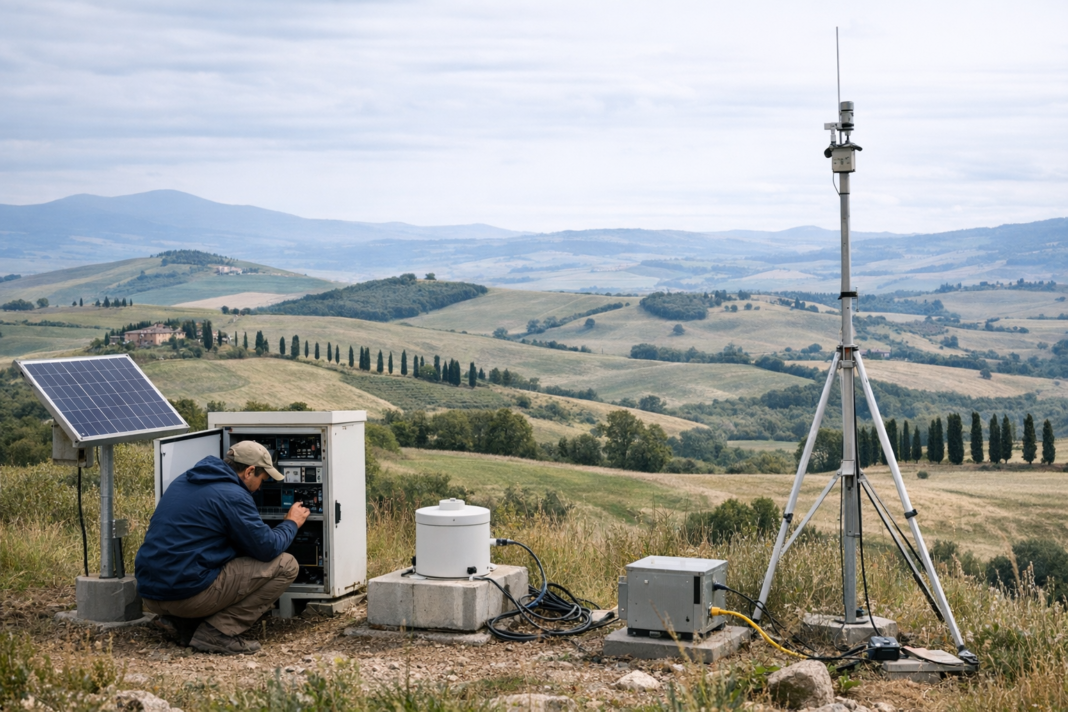
The imaging relied on continuous ground noise measured by dozens of instruments distributed across the area. By processing those ambient vibrations, teams produced a detailed subsurface image that exposed the previously concealed body. Key elements of the work centered on data from multiple stations and advanced signal-processing techniques to differentiate the deep magmatic signature from surrounding rocks. The equipment array — referred to in the study as seismic sensors — provided the critical observations that made the mapping possible.
The identified feature is described in the study as a persistent, molten or partially molten reservoir, often termed a magma reservoir in volcanological literature. Despite its scale, investigators report no current surface deformation, increased seismic unrest, or other indicators that would signal a heightened hazard to local communities. Authorities and the research team concluded the structure poses no immediate danger based on available measurements and standard hazard indicators.
Beyond hazard assessment, the finding has implications for resource and energy research. The presence of an extensive magma body can influence temperature gradients and fluid circulation at depth, factors of interest for geothermal energy exploration. Additionally, magmatic systems can concentrate metals, so the discovery may inform searches for critical minerals and guide future geochemical surveys. Researchers caution that follow-up studies are required to evaluate any practical potential.
Scientists involved in the work recommend continued monitoring and targeted surveys to refine models of the reservoir’s extent and behavior. The study demonstrates how ambient seismic methods can uncover large but subtle subsurface features and provides a new dataset for geoscientists assessing the geological framework of central Italy.







