
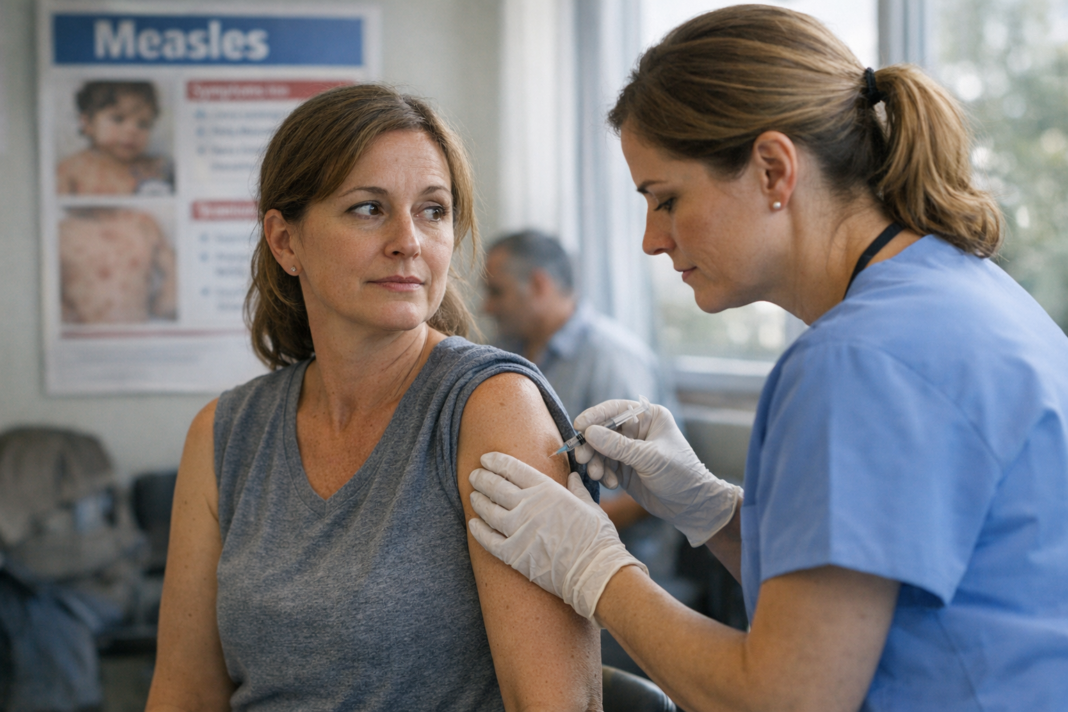

Two residents of Lancaster County, Pennsylvania, have died from measles, health officials confirmed, marking the first measles fatalities in the United States this year and the first in the state in 35 years. The Pennsylvania Department of Health said both individuals were not vaccinated. The agency declined to release further identifying details to protect family privacy.
Statewide, Pennsylvania has recorded 393 confirmed measles cases across 28 counties so far this year, while national tracking shows 2,813 cases in the United States to date. The Johns Hopkins U.S. Measles Tracker (Johns Hopkins) indicates the 2026 total already exceeds the 2,289 cases reported in 2025, a year that included more than 240 hospitalizations and three deaths, according to the Centers for Disease Control and Prevention. Most infections this year have resulted from local transmission rather than imported cases.
Public health data show the outbreak is concentrated among people who are unvaccinated or whose vaccination status is unknown: roughly 96% of reported cases fall into those categories. Two doses of measles-containing vaccine provide about 97% protection, public health guidance notes, and vaccination coverage among young children has declined while exemptions have risen. Observers warn that the United States may lose its official measles elimination status later this year if sustained domestic transmission continues. The topic intersects with broader concerns about vaccination uptake and public health preparedness.
Measles can cause high fever, rash, cough and eye irritation, and carries risks of pneumonia, brain inflammation and longer-term effects such as immune impairment. One in five unvaccinated people who contract measles may require hospital care, and historical estimates put measles mortality at about 1 to 3 deaths per 1,000 infections. Dr. Debra Bogen, Pennsylvania’s secretary of health, noted the public is largely unfamiliar with the disease after decades of low circulation and emphasized the need for clear information to protect communities. State health officials reiterate that full vaccination remains the most effective protection against measles spread and severe outcomes.






