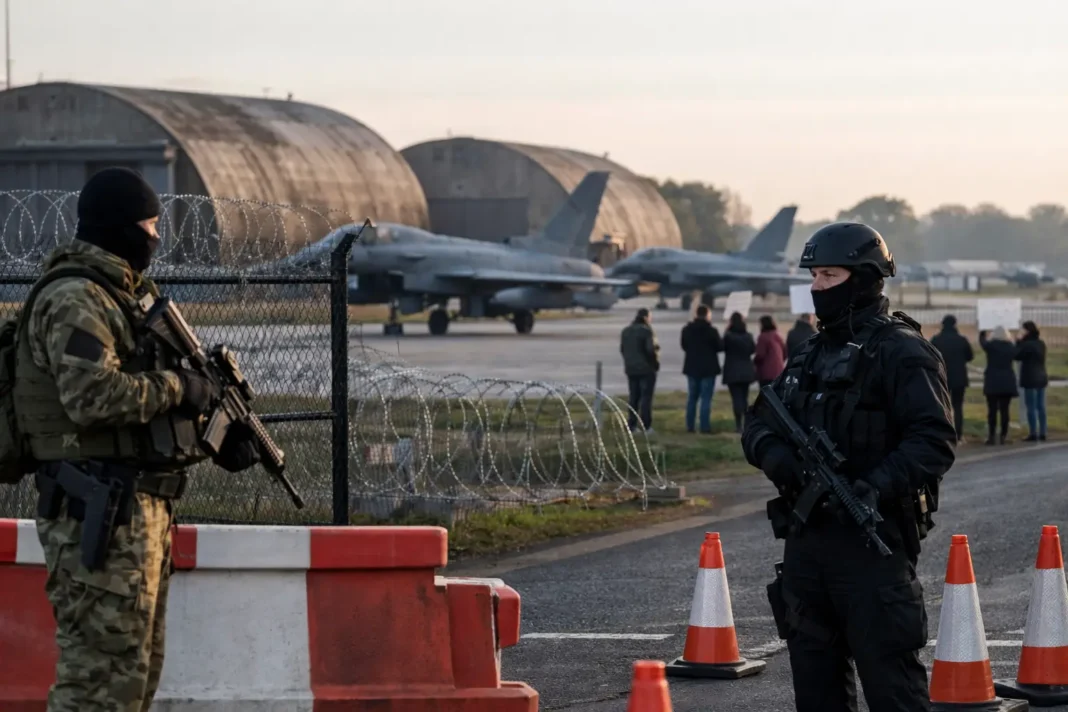

Britain is facing a tightening security environment as the intersection of international hostility and domestic vulnerability becomes harder to ignore. Deployments of long-range aircraft from bases on British soil have underlined that conflicts elsewhere can have immediate effects here, from airborne activity over rural counties to the wider economic consequences felt at the pumps and in household bills. The episode has drawn attention to the need for resilience across infrastructure and supply chains as citizens prepare for higher costs in energy and food.
The recent pause in missions from RAF Fairford followed reports of an alleged plot targeting the base and prompted the United States to reposition assets; UK leaders have said there are indications of involvement by Iran. The presence of foreign military activity on British territory and the targeting of key sites have elevated the country’s threat picture, provoking urgent discussions among security services, the armed forces and allied partners about protective measures and intelligence sharing. The Royal Air Force remains central to posture and response planning.
The incident has immediate and longer-term implications. In the short term, households face tangible economic pressures as energy and food markets respond to geopolitical instability. Over the longer term, policymakers must weigh bolstering protective measures, enhancing surveillance and strengthening international cooperation against preserving the civil liberties and open institutions that define democratic life. Debates about where to draw that line are intensifying, with public authorities under growing pressure to explain both preventive steps and the safeguards that will limit overreach.
Uncertainty persists about whether the current pattern of incidents marks a temporary spike or a sustained elevation in threat levels. What is clear is that the mix of external aggression and domestic exposure has created a complex challenge for the United Kingdom and its allies. Officials will need to provide clarity on security priorities and preparedness measures while ensuring that responses are targeted, proportionate and transparent, so that both safety and democratic norms are maintained.