
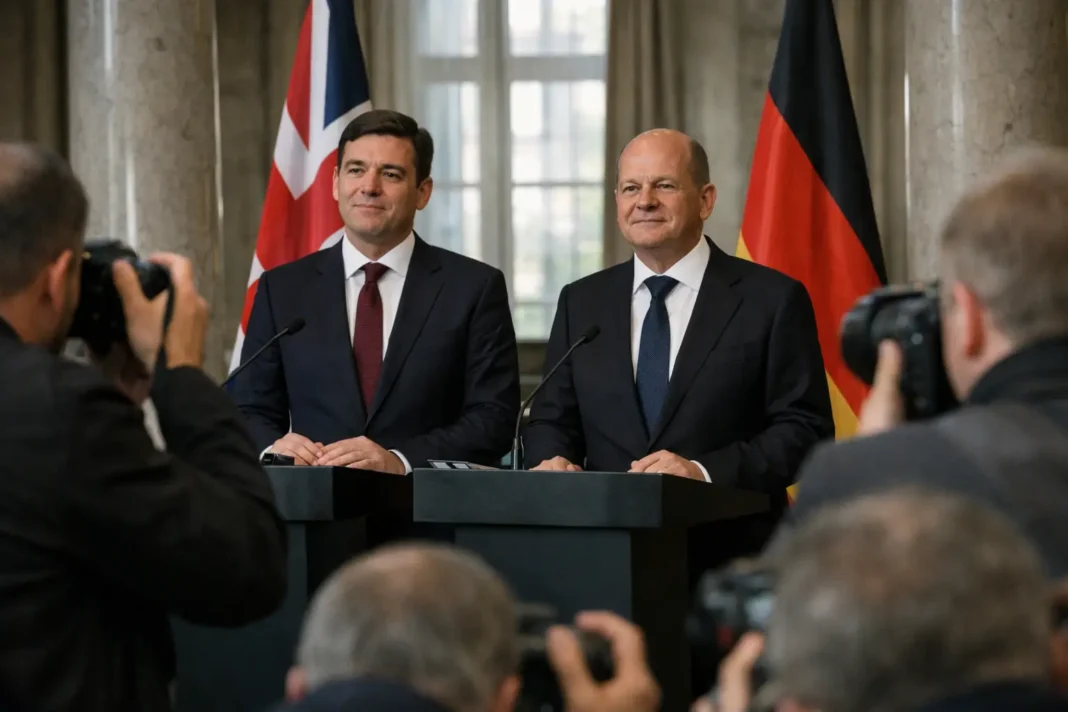

Burnham will travel to Berlin this week for what Downing Street has described as his first official visit to Germany. Downing Street said deeper co-operation on responses to a rise in hybrid threats from Russia will be a central item on the agenda when Burnham meets the German chancellor in the German capital. The visit signals a stepped-up focus on collective resilience between the two governments amid an evolving security environment.
The term hybrid threats encompasses a range of measures used to undermine states below the threshold of conventional warfare, including cyber intrusions, disinformation campaigns and interference with critical infrastructure. European capitals have increasingly prioritised such risks as part of national security planning, and the UK and Germany are among the states seeking closer alignment on detection, deterrence and mitigation tools. Officials describe hybrid activity as persistent, complex and requiring coordinated responses across agencies and borders.
While details of the talks have been kept succinct, cooperation between London and Berlin typically involves enhanced information sharing, coordinated cyber-defence exercises and joint efforts to counter malign influence. Strengthening legal and technical frameworks for rapid exchange of threat data, and synchronising public communication to limit the reach of disinformation, are common elements of such partnerships. Both capitals have shown interest in reinforcing private–public collaboration to protect energy, transport and digital infrastructure from disruptive actions.
The encounter in Berlin underscores the importance both sides place on maintaining close strategic ties. As an inaugural official trip to Germany, the visit may set the tone for further ministerial exchanges and working-level agreements focused on resilience. Observers will watch how any commitments emerging from the meetings are translated into operational steps, given the cross-border nature of hybrid threats and their potential impact on democratic institutions, economic life and day-to-day security across Europe.






