
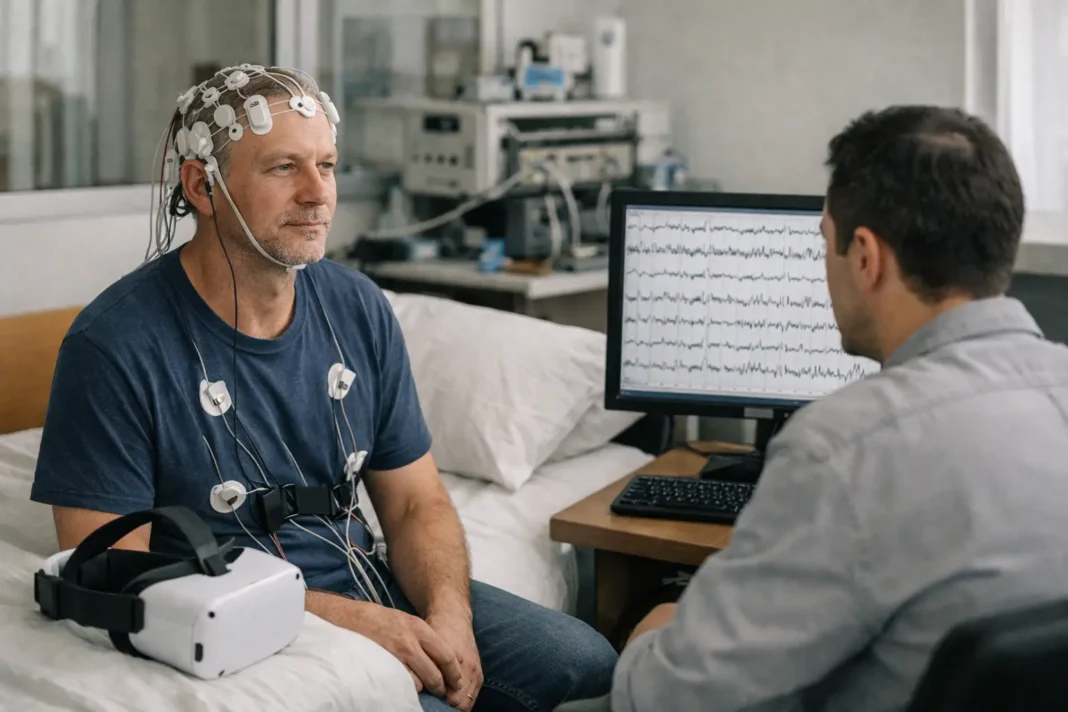

Lucid dreaming is moving from a niche curiosity into a wider conversation about sleep, memory and self-awareness. After a recent research claim that people could be trained to recognize dreams while asleep through meditation and virtual-reality-assisted exercises carried out while awake, Live Science asked readers whether they would try to learn the technique. The response suggested broad interest: more than 300 people took part, and 77% said they would want to attempt dream control if training were available.
The rest of the responses showed that enthusiasm is not universal. Seventeen percent said they already experience lucid dreaming often enough without formal practice, while 3% saw no purpose in learning it and another 3% were undecided. The split points to a central tension in the field: lucid dreaming is appealing to many because it appears to combine sleep, imagination and conscious agency, but for others it is either already familiar or not clearly useful. The National Institute of Neurological Disorders and Stroke describes sleep as an active process involving multiple brain functions, a context that helps explain why dream awareness attracts attention from both scientists and the public.
Reader experiences also highlighted the deeply personal nature of the phenomenon. One participant described experimenting with hypnagogic napping, a practice associated with the borderland between wakefulness and sleep. The method has often been linked to Thomas Edison and Salvador Dalí, who used brief dozing to access ideas before fully falling asleep. That reader said the practice led to spontaneous lucid dreams and described the episodes as among the most meaningful experiences of their life.
Another account showed that lucidity in dreams is not always playful or creative. A reader who experiences lucid dreams only once or twice a year recalled becoming aware during a dream involving a recently deceased spouse. The realization brought sadness, but the dream also offered a moment of emotional closeness. Other readers said they can already steer dreams regularly, with one comparing the experience to making a film and others describing the ability to pause or restart unwanted dream scenarios.
The poll does not establish whether the proposed training method works, and it cannot measure the wider population’s views. It does, however, capture why neuroscience research into dreaming often resonates beyond laboratories. Lucid dreaming sits at the intersection of consciousness, creativity and emotional memory. The strong interest among readers suggests that, if reliable training methods develop, public demand may extend well beyond academic study.





