
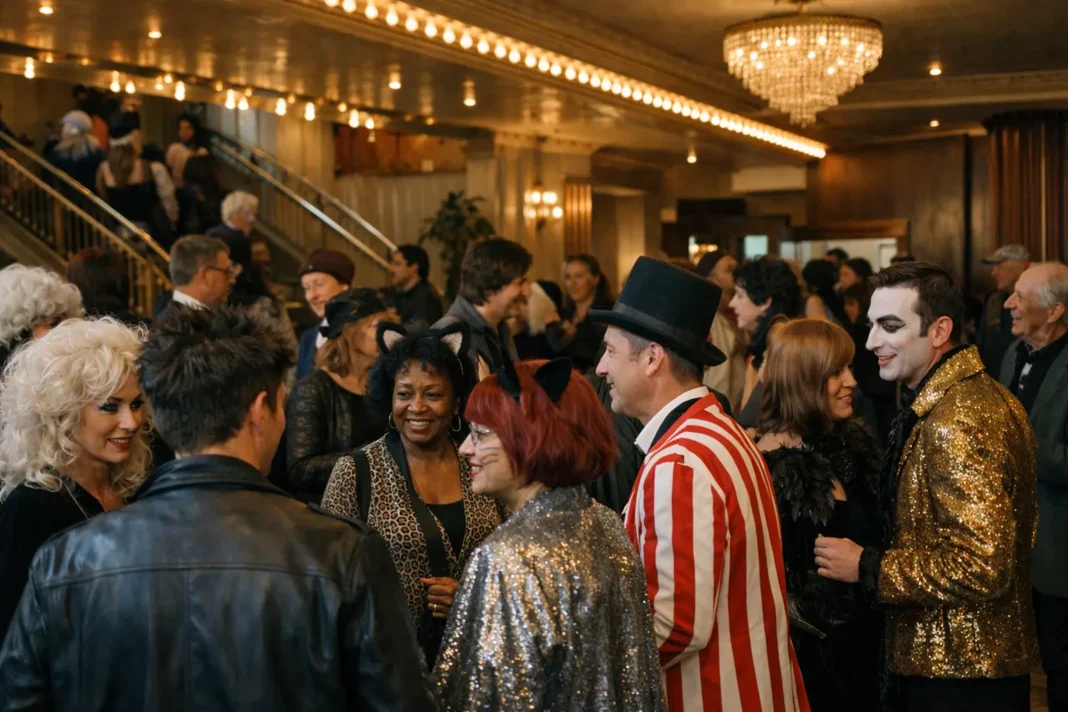

A night at the theatre is increasingly beginning before the curtain rises. In London’s West End, audiences are turning queues, foyers and stalls into extensions of the stage, arriving in outfits inspired by the shows they have come to see. The trend is especially visible around major musicals, where fans use clothing, wigs and makeup to signal affection for a production before a note is sung or a line is spoken.
On Halloween night, the line outside Beetlejuice The Musical offered a vivid snapshot of the phenomenon. The production, adapted from the 1980s film, drew theatregoers of different ages in green wigs, blue faces and black-and-white stripes. The outfits did not replace the performance but framed it, creating a shared visual language among people who may never have met but recognised the same references.
The practice reaches beyond one production. Fans of Hamilton have been seen adopting regal styling linked to the show’s historical world, while audiences for Six echo the pop-concert glamour of its royal heroines. At Harry Potter and the Cursed Child, wizarding references naturally appear among ticket-holders. Other shows invite equally specific responses: skeleton-style clothing for The Phantom of the Opera, a “Don’t Tell Mama” look associated with Cabaret, and feline ears or leotards for Cats.
This form of cosplay changes the social rhythm of theatre-going. Dressing for the theatre once suggested formality; now, for many spectators, it can mean immersion. The costume becomes a personal contribution to the evening, a way to mark loyalty to a show and to participate in a community built around repeated viewing, visual codes and shared enthusiasm. It also reflects how stage productions live beyond the auditorium, circulating through fan culture, photography and pre-show gatherings.
The boundaries remain clear: the ticketed performance is still the central event, and the cast remains on stage. Yet the growth of themed dressing shows how contemporary audiences are seeking more active ways to experience live entertainment. For producers and venues, the spectacle outside the auditorium can strengthen recognition around a title. For fans, it offers something simpler and more immediate: the chance to walk into a theatre already feeling part of the world they have paid to enter.






