
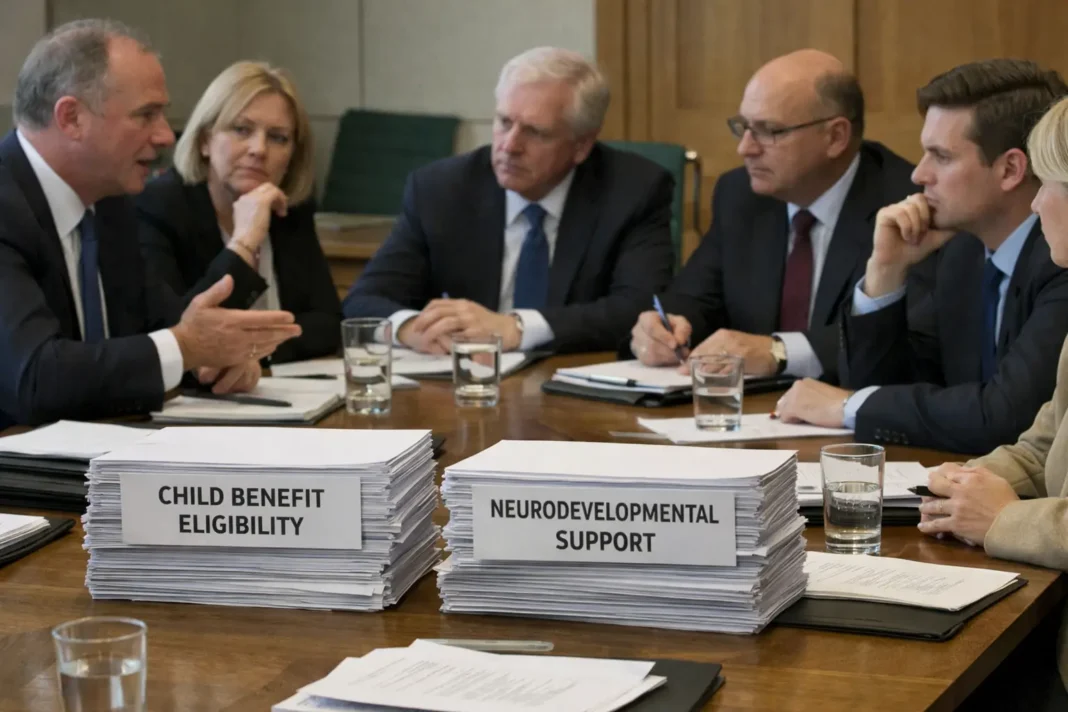

The Conservative welfare pledge to reduce benefit support for children with what it describes as milder cases of ADHD has placed disability-related payments back at the centre of Britain’s political debate. Helen Whately, a Conservative shadow minister, said the current system risked placing children on a ‘conveyor belt’ towards a ‘lifetime on benefits’, setting out a sharper approach to eligibility for families seeking state support.
The proposal comes from the opposition Conservative Party as welfare policy becomes an increasingly contested issue in UK politics. While the party has not, in the material available, set out full administrative details of how such a change would be applied, the pledge signals a focus on narrowing access where ministers or assessors consider a child’s condition less severe. ADHD, or attention deficit hyperactivity disorder, can affect concentration, impulsivity and behaviour, with impacts varying significantly from one child to another.
Benefits linked to childhood disability are designed to help families meet additional costs arising from a child’s needs, rather than to serve as a wage-replacement payment for the child. Any tightening of entitlement would therefore raise practical questions over assessment, consistency and the line between lower-level needs and support that remains essential for daily life. The policy also touches on a broader concern for governments: how to contain welfare spending while avoiding rules that exclude families facing genuine additional costs.
Whately’s language points to a political argument that early contact with the benefits system can create long-term dependency. That framing is likely to be challenged by disability organisations and clinicians who stress that neurodevelopmental conditions do not fit neatly into simple categories of mild and severe. For families, the central issue is not only diagnosis but how symptoms affect schooling, care routines and household finances. The debate may therefore turn on how any future Conservative proposal would define evidence, need and eligibility.
The pledge adds to continuing scrutiny of disability benefits in the United Kingdom, where successive governments have faced pressure to reform support systems while maintaining protection for vulnerable people. For the Conservatives, the announcement is intended to show a firmer stance on welfare. For affected families, it introduces uncertainty over how children with ADHD could be assessed if the party’s approach were translated into policy.





