
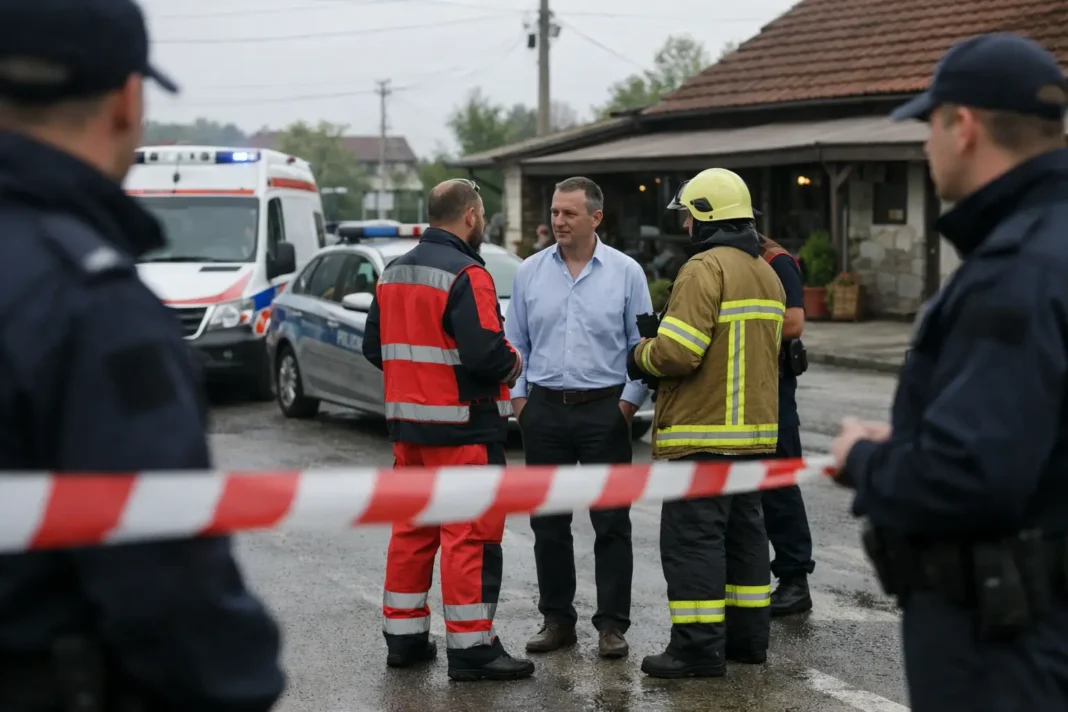

A surgeon eating lunch near the scene of a shooting in the Krakow area is being credited with a decisive medical intervention that a colleague said saved the life of an injured police officer. The account has added a stark human detail to an already serious incident in Poland, where two officers have also been praised for preventing the gunman from inflicting further harm.
The shooting has drawn attention not only because of the violence itself, but because of the rapid response that followed. Details now emerging point to a chain of actions in which medical skill and police restraint both played central roles. The surgeon, who was nearby at the time, intervened before the officer could receive hospital treatment. A colleague later described the intervention as lifesaving, underlining the importance of immediate care in the minutes after a serious injury.
The two officers involved have been hailed for stopping the armed man from causing more casualties. While the full official account of the incident has not been laid out in the available details, the response has been framed around the officers’ role in containing the threat. In violent incidents, the first police decisions can determine whether an attack escalates or is brought under control. The recognition given to the officers reflects that broader reality of frontline policing.
The case also highlights the overlap between emergency medicine and public safety. Trauma care often begins before a patient reaches an operating theatre, and the presence of a trained surgeon near the scene appears to have changed the outcome for the wounded officer. For the Polish Police, the episode is likely to reinforce the value of coordination between officers, medics and bystanders with professional training when violence erupts without warning.
Authorities have not released every detail publicly, and the focus remains on the confirmed elements: a shooting near Krakow, an injured officer, two police officers credited with stopping the attacker, and a surgeon whose immediate action is said to have saved a life. The incident has become a reminder that the first minutes after an attack can be critical, shaping both the survival of victims and the prevention of further violence.






