
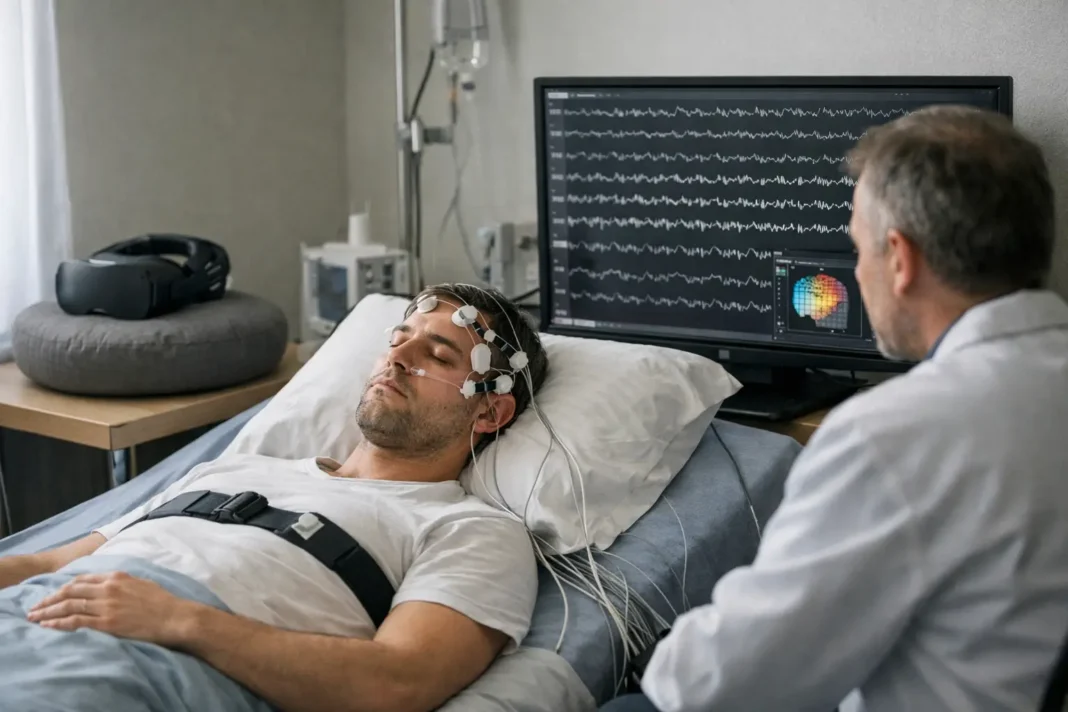

Lucid dreaming sits at the boundary between ordinary sleep and conscious self-awareness. In these episodes, a person recognizes that a dream is taking place while it is still unfolding. The experience can make an unreal scene feel both immersive and observable, because the sleeper regains a form of metacognition: the ability to reflect on one’s own thoughts. In some cases, lucid dreamers can also influence the direction or content of the dream, although the degree of control varies from person to person.
The phenomenon has moved beyond popular fascination into the field of neuroscience, where researchers are testing whether it can be encouraged through structured practice. A recent study involving a few dozen participants examined a training programme combining meditation with exercises supported by virtual reality while participants were awake. The aim was to strengthen awareness of mental states before sleep, so that similar awareness might reappear during dreaming.
Participants who repeated the training twice a week for one month experienced lucid dreams more often. The finding is modest in scale, but it is relevant because lucid dreaming has long been difficult to study under controlled conditions. Sleep itself is a complex biological process involving changing brain activity across different stages; the National Institute of Neurological Disorders and Stroke describes sleep as essential for brain and body function, not simply a passive state of rest. Any method that alters dream awareness therefore needs careful scientific assessment.
The possible clinical interest lies in distressing dreams. Researchers behind the training approach suggest it could one day be explored for people affected by recurring nightmares, anxiety or post-traumatic stress disorder. Those applications remain theoretical at this stage. The National Institute of Mental Health identifies intrusive memories, sleep disturbance and nightmares among symptoms that can occur in PTSD, which explains why dream-focused interventions attract attention. Still, a small study showing increased lucid dreaming is not the same as proof of therapeutic benefit.
For now, lucid dream training remains an emerging research area rather than a standard health intervention. Its appeal is clear: it offers the possibility of greater awareness inside an experience that usually feels beyond voluntary control. Its limits are just as important. Larger studies, longer follow-up and clearer measures of psychological outcomes will be needed before scientists can determine whether deliberately cultivating lucid dreams can help people who suffer from disruptive or frightening sleep experiences.






