

Ancient Maya artists used red on temples, ceramics, monuments and funerary objects with such intensity that the pigment may have altered nearby aquatic ecosystems. A new study identifies high mercury concentrations in Maya-era sediments from the Yucatán Peninsula, linking them to cinnabar, a brilliant mercury sulfide mineral widely used to produce vermilion paint. The research adds an environmental dimension to the cultural importance of red, a color associated in Maya symbolism with blood, life and the sun.
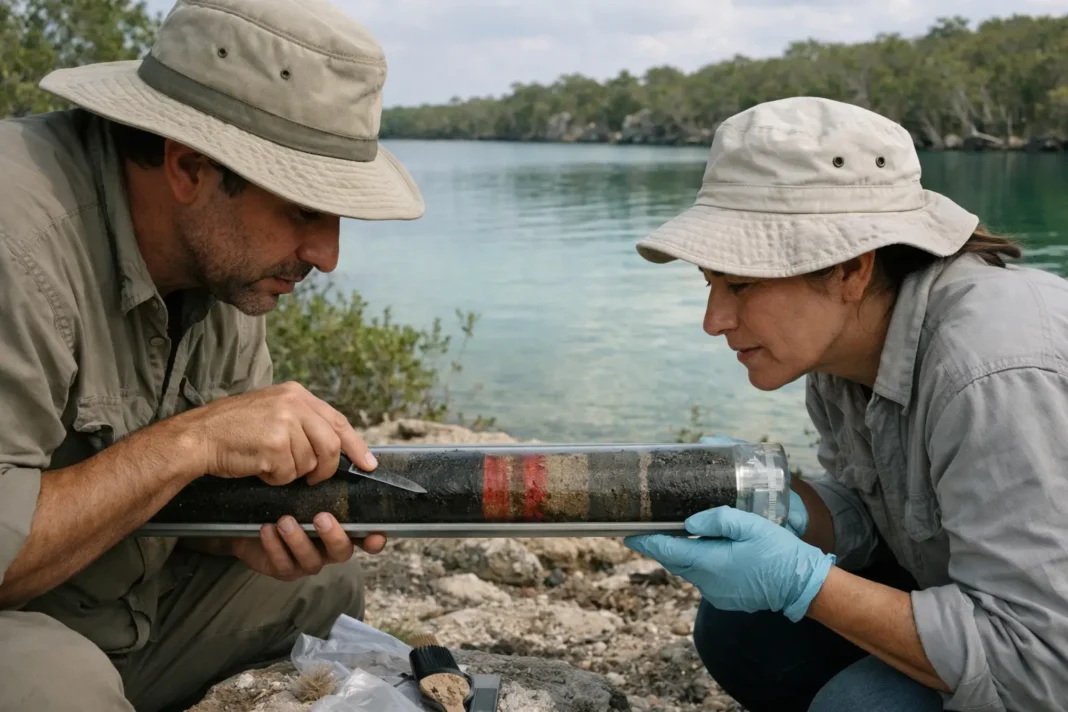
The findings, published in Science Advances, are based on sediment cores from Cobá Lake and Cenote Xcach, two water bodies associated with ancient Maya settlements in what is now Mexico. The cores preserve more than 2,000 years of environmental history and show mercury contamination during parts of the Preclassic and Classic periods, roughly from A.D. 40 to 820. Matthew Waters, a paleolimnologist at Auburn University, led the study, which found the strongest Yucatán evidence so far for pollution tied to imported cinnabar rather than naturally occurring local sources.
Cinnabar does not occur naturally in the Yucatán, making long-distance exchange central to the story. The mineral was likely brought from areas including present-day Honduras and then used in ritual and civic settings across Maya communities. Once pigment washed into lakes and sinkholes, microorganisms in oxygen-poor sediments could transform mercury compounds into methylmercury, a form that can accumulate through food chains. The study recorded mercury levels reaching 2.3 parts per million in the most polluted sections of the cores. For context, the Environmental Protection Agency sets strict limits for mercury exposure in water and fish because of the metal’s risks to the nervous system and other organs.
The sediment record also points to ecological stress. Researchers found few traces of freshwater shellfish fossils in highly contaminated layers, and they identified a lack of algal bloom evidence where such blooms might otherwise have been expected. These patterns suggest that mercury affected aquatic life and reduced the productivity of waters that could have supplied food, including fish and shellfish. The evidence expands earlier work on mercury in the southern highlands and south-central lowlands by documenting a similar problem in the Yucatán, where lakes and cenotes were essential resources for settlements and ritual landscapes.
The study does not present mercury as a single explanation for the later decline of many Maya cities in the eighth and ninth centuries. Drought and food disruption remain central to that debate. In some locations, contamination had already diminished centuries earlier: at Cobá Lake, mercury levels appear to have returned near background levels by around A.D. 520, while Cenote Xcach remained affected until the period of collapse. The discovery nevertheless shows how artistic and ceremonial practices could leave measurable environmental consequences, placing ancient archaeology in direct conversation with the history of pollution and public health.





