
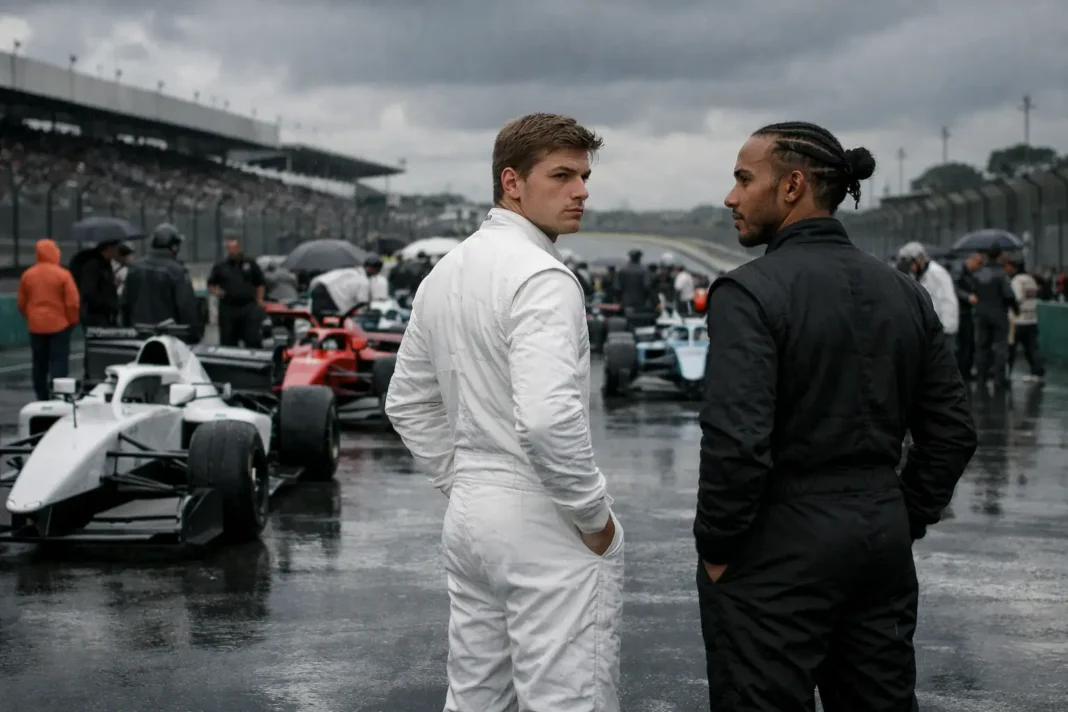

A scrambled starting order has turned Sunday’s Sao Paulo Grand Prix into one of the most unpredictable races of the season, with Max Verstappen and Lewis Hamilton facing the challenge of making progress from the back. The grid has taken on the character of a reverse-order contest, even without a formal reverse-grid format, creating a race in which strategy, patience and timing could matter as much as raw pace.
For Verstappen and Hamilton, the task is clear but difficult: avoid early trouble, manage traffic and use any changing conditions to recover positions. In a normal dry race, starting deep in the field often means losing time behind slower cars, overheating tyres and taking risks in overtaking zones. At Sao Paulo, those challenges are amplified by the circuit’s short lap, frequent traffic compression and the limited margin for error in wheel-to-wheel battles.
The weather forecast adds another layer of uncertainty. Rain would make the race less predictable, opening the door to safety cars, tyre changes at decisive moments and shifting grip levels across the circuit. Wet conditions can help drivers with strong race craft move forward, but they can also punish aggression. For teams, the balance will be delicate: an early stop may win time if the conditions change quickly, while waiting too long can leave a driver exposed on the wrong tyre.
The Formula 1 field rarely offers straightforward recovery drives when the grid is this disruptive. Cars running out of their usual competitive order can create unusual battles throughout the pack, with faster drivers forced into moments they would normally avoid. That dynamic gives the race its central intrigue: whether Verstappen and Hamilton can turn a compromised starting position into a points-scoring result, or whether the congestion ahead will limit their recovery.
Sunday’s race therefore carries significance beyond the front row. A mixed grid can reshape the rhythm of a Grand Prix, testing decision-making on the pit wall and discipline inside the cockpit. In Sao Paulo, where variable weather has often influenced the spectacle, the combination of rain risk and leading names starting from the rear gives the event a competitive edge before the lights go out.






