
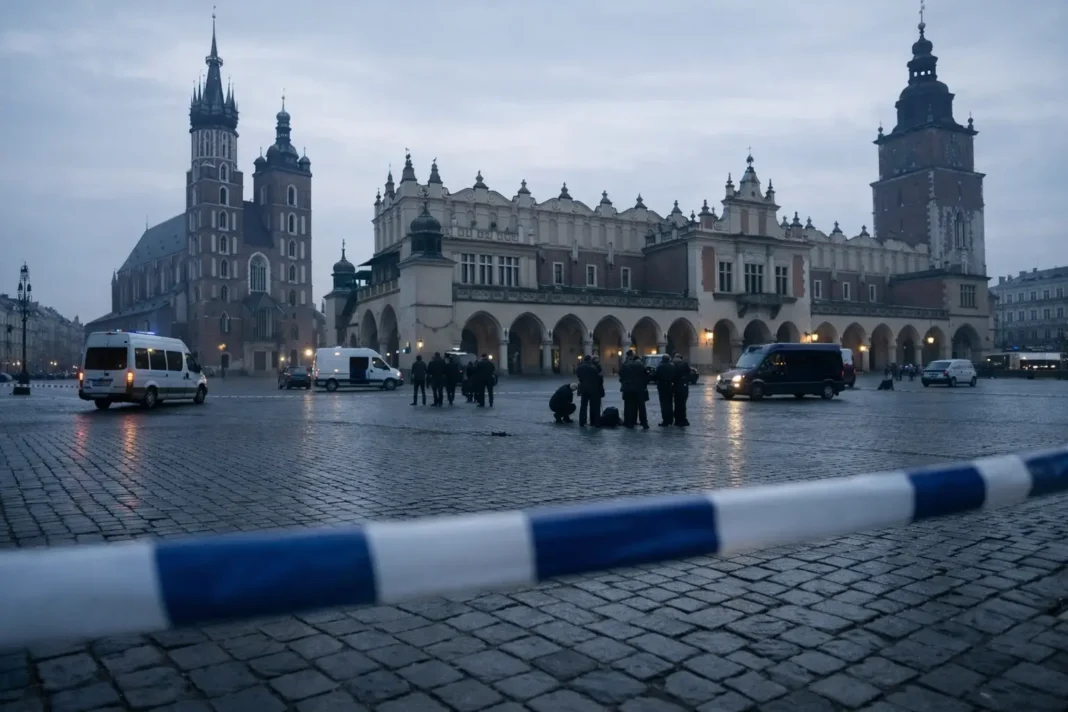

A gun attack in Krakow has left six people dead in the city’s main square, before investigators later found three additional bodies at the home of the attacker. The available facts point to two connected scenes: a public shooting in one of the city’s most visible civic spaces and a subsequent discovery at a private residence linked to the person identified as the gunman.
The shooting has been described as random, a detail that sharply alters the nature of the case. An attack without an identified targeted victim creates a broader public safety concern, particularly when it occurs in a central square, a place normally associated with residents, visitors and everyday movement through the city. No further verified details have been made public in the information available, including the timing of the attack, the identity of the victims, the attacker’s motive or the circumstances in which the three bodies were found at the residence.
Krakow, one of the best-known urban centres in Poland, draws large numbers of people into its historic core throughout the year. A fatal shooting in such a setting carries consequences beyond the immediate crime scene, affecting transport routes, access to public areas and the sense of security in a city space used by both locals and tourists. The discovery of three more bodies at the attacker’s home also widens the investigation from a single public act of violence to a broader case involving multiple deaths across separate locations.
The confirmed death toll stands at nine: six victims killed in the square and three bodies later located at the attacker’s home. Until more verified information is released by competent authorities, the central questions remain the sequence of events, the relationship, if any, between the victims found at the residence and the shooting in the square, and the factors that led to the attack. For now, the case is defined by its limited but grave facts: a public gun attack in Krakow, followed by a second discovery that deepened the scale of the loss.





