
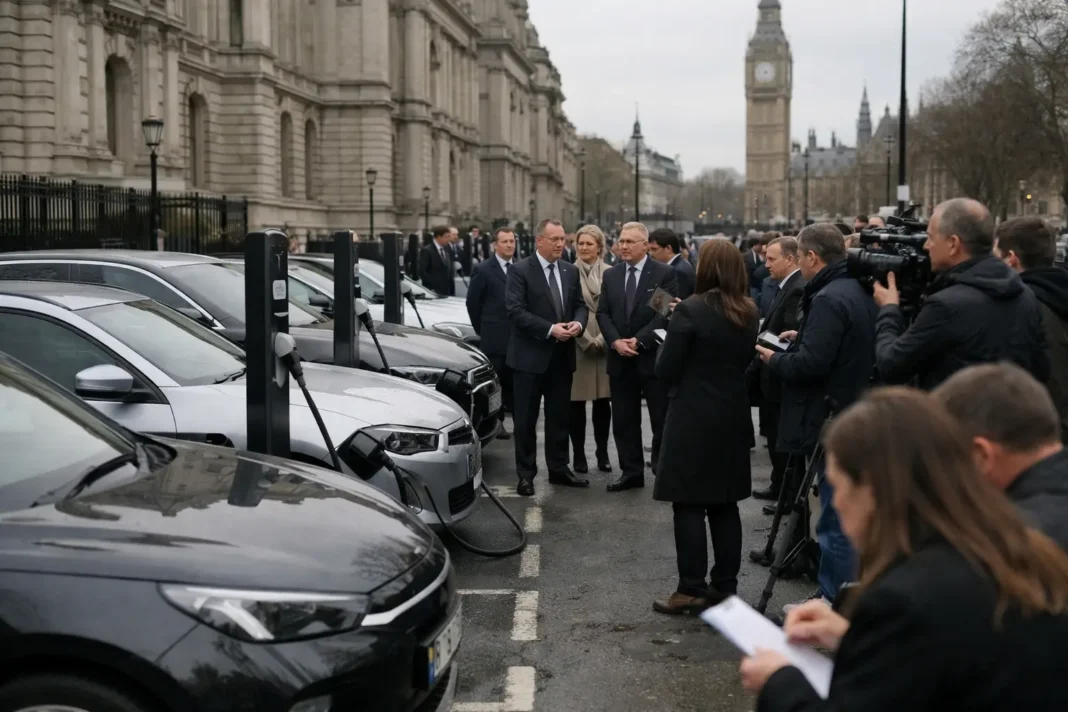

The UK’s electric car timetable is heading for a politically sensitive adjustment, with the government expected to reduce its electric vehicle targets this week. The move would affect the pace at which the car market is pushed toward battery-powered models, while the central deadline remains unchanged: new petrol and diesel cars are due to be phased out by 2030.
The policy sits at the heart of the country’s transition to cleaner transport. By 2035, all new cars sold must be zero emission, a requirement designed to complete the shift beyond combustion engines. That timeline has shaped decisions across the automotive sector, from factory planning and model launches to charging infrastructure and consumer finance. Any reduction in interim electric vehicle targets would therefore be closely watched by manufacturers, dealers and drivers.
The UK Government, through transport and climate policy, has used sales targets to steer the market before the final phaseout dates take effect. The approach is intended to give industry a gradual pathway rather than a sudden change at the end of the decade. A lower target would not remove the 2030 or 2035 milestones, but it could ease near-term pressure on carmakers at a time when demand for electric cars depends heavily on purchase costs, model availability and access to reliable charging.
For consumers, the practical consequences are likely to be felt through choice and pricing rather than immediate legal restrictions. Petrol and diesel vehicles already on the road are not covered by the new-car phaseout, and the policy concerns future sales. The broader question is how quickly the United Kingdom can align household demand, industrial capacity and public charging networks with its emissions goals. Transport remains one of the most visible areas of the energy transition because the change involves everyday purchases as well as national infrastructure.
The expected decision comes at a critical point for the motor industry, which needs stable rules to plan investment and supply. Car companies have warned in past policy debates that uncertainty can delay commitments, while environmental policy depends on deadlines that remain credible over time. The balance the government strikes this week will indicate how firmly it intends to maintain the long-term move to zero-emission motoring while managing the short-term pressures facing the market.





