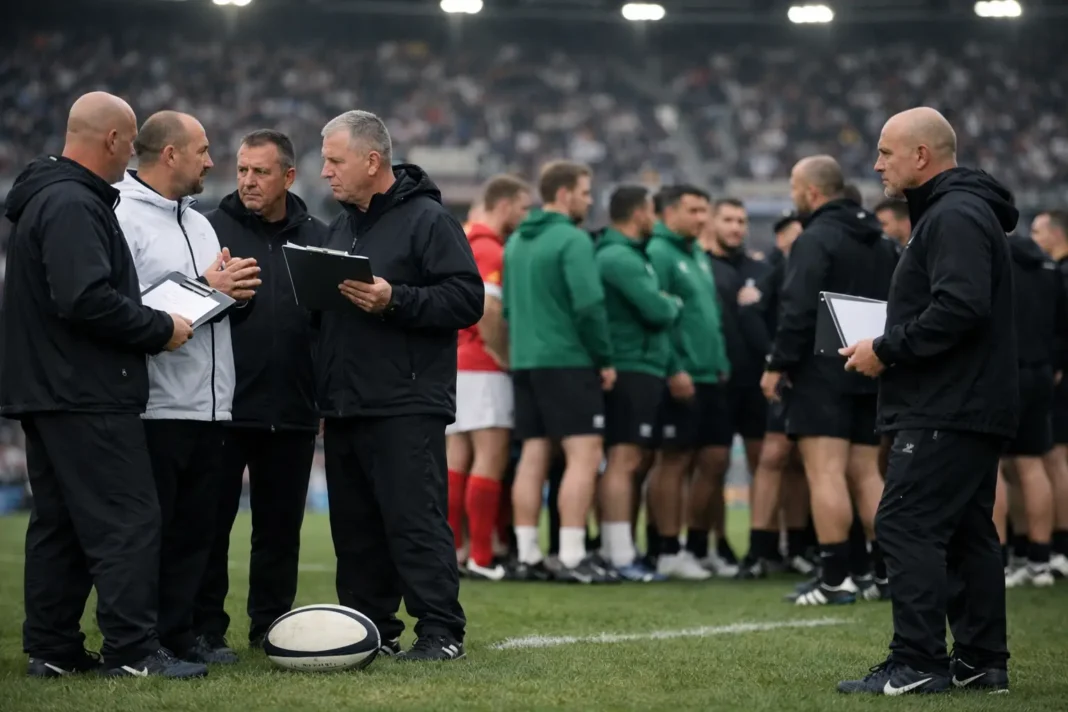

The final weekend of the inaugural Nations Championship arrives with a tone that reaches beyond the immediate standings. For England, the Tests against New Zealand have been framed as a form of World Cup practice, a useful measure of standards against one of the sport’s defining benchmarks. Steve Borthwick, Andy Farrell and Dave Rennie all addressed the media before the closing round, placing the emphasis on preparation, performance and the messages their teams can take from a high-pressure international window.
The language around England’s meetings with the All Blacks matters because it reflects where rugby nations now locate their progress: not only in isolated results, but in how they respond to the tempo, discipline and execution demanded by elite opposition. England Rugby, under Steve Borthwick, has used heavyweight fixtures as a way to stress-test combinations and decision-making. Against New Zealand, the margins usually expose whether a side can sustain accuracy when territory, possession and momentum turn quickly.
For Ireland, the conversation carries a different charge. The suggestion that Farrell’s team is still not among the contenders sits awkwardly beside its established place near the top of the international game, yet it also underlines the unforgiving nature of global rugby judgments. Irish Rugby has built much of its recent standing on cohesion, tactical clarity and resilience, but labels such as “contenders” continue to be shaped by showpiece fixtures and the capacity to deliver when the competition narrows.
New Zealand’s role in the build-up remains central. The All Blacks are rarely treated as just another opponent, and New Zealand Rugby continues to represent a reference point for teams measuring themselves against the game’s most exacting traditions. With Dave Rennie speaking ahead of the final weekend, the New Zealand perspective adds weight to a round that is being read not merely as the end of a new tournament phase, but as a checkpoint in longer international cycles.
The inaugural Nations Championship has given coaches a fresh competitive frame in which to assess their squads. Its final weekend brings together immediate stakes and longer-term questions: how England translates top-level exposure into World Cup readiness, how Ireland answers doubts over contender status, and how New Zealand maintains its role as a standard-setter. The results will matter, but so will the evidence each coach gathers before the next stage of the international season.